Where to Eat in Marrakech: The Unmissable Tables for a First Visit
17 April 2026
From a terrace above Jemaa el-Fna to a brunch garden twelve kilometres from the medina: twenty addresses that cover the full register of Marrakech restaurants, from local tradition to contemporary fine dining.
Lunch in Gueliz
Two restaurants on the same boulevard in Gueliz, both with terraced seating and alcohol licenses, open for lunch from midday. The better choice for an arrival day or a slow morning that runs long.
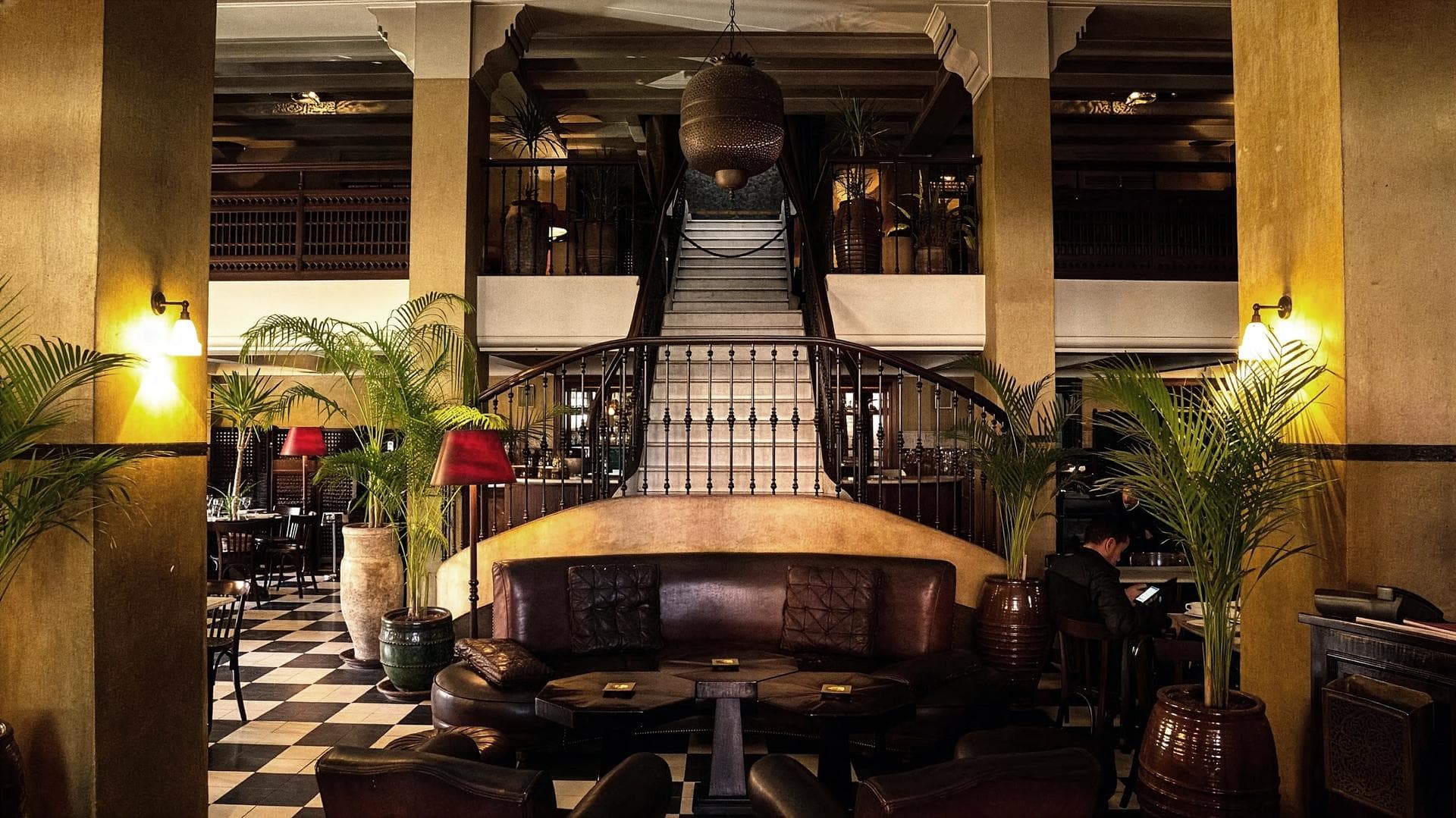
The building was a post office in the 1920s and is said to be among the first structures built in Gueliz when the French protectorate was still drawing its streets. Jacques Majorelle used to sit here with General Lyautey; that particular booth has been replaced, but the spirit of the colonial veranda, with its ceiling fans, dark wood, and the sound of the boulevard filtered through bougainvillea, has not been entirely dismantled. The Grand Cafe de la Poste is not a museum piece; it is a working brasserie that understands what the room demands. The menu follows a French brasserie template with clear gestures toward Morocco: brochettes, pastilla, a steak tartare assembled tableside, salads that use local produce with a Parisian sense of proportion. Chef Philippe Duranton adjusts the menu seasonally without disrupting the regulars. Lunch on the veranda, with a glass of rosé and no particular agenda, remains one of the more reliable pleasures of Gueliz.
Angle Boulevard El Mansour Eddahbi et Avenue Imam، Marrakech 40000, Morocco
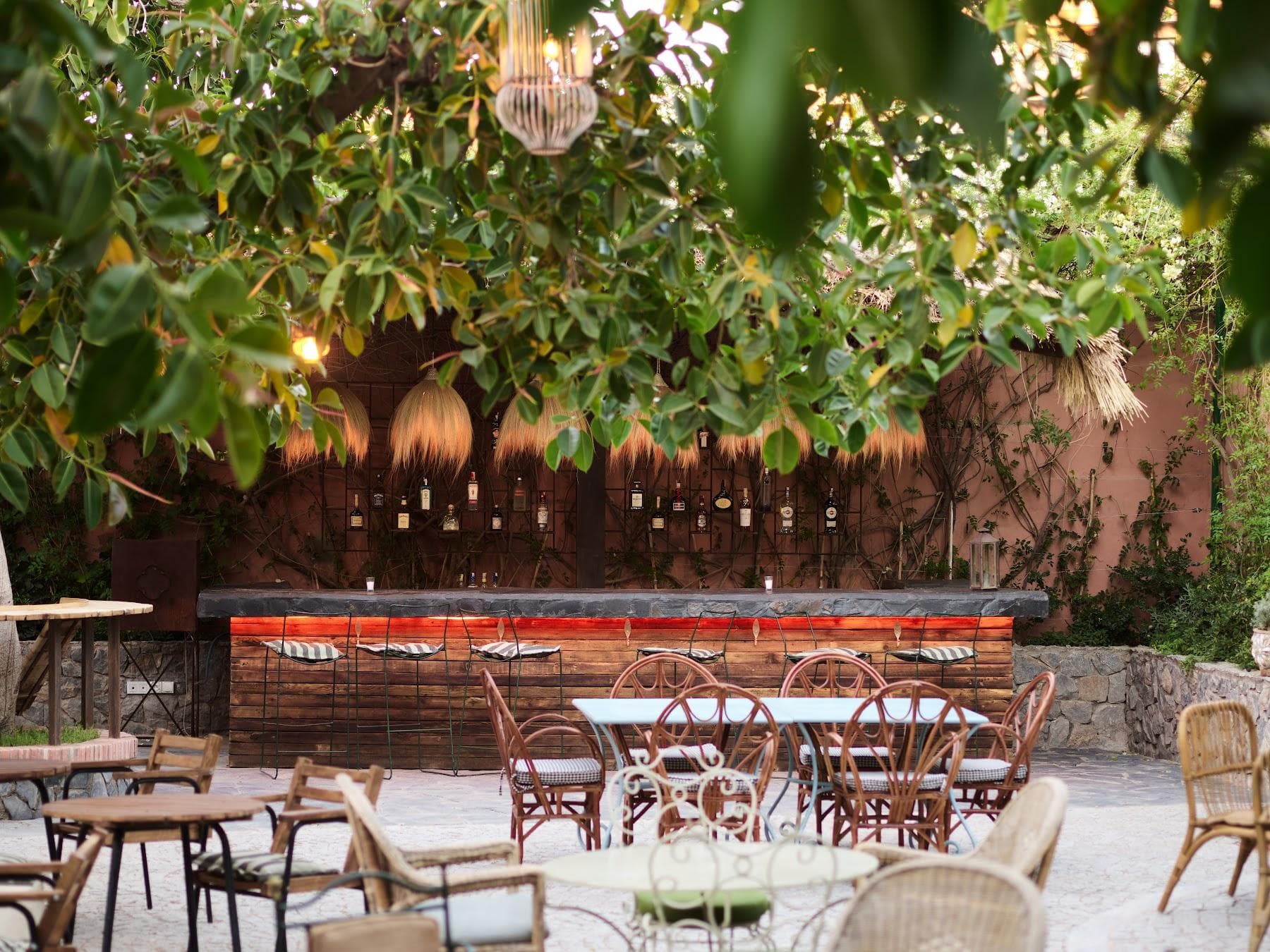
Before it was a restaurant it was a petanque club, and the 1920s grounds that once hosted the game now hold a jasmine courtyard, a vaulted dining room, and a kitchen running a menu that sits comfortably between the Mediterranean and the Atlantic. The building was restored with enough care to preserve its specific atmosphere: the proportions of a private club, a certain unhurriedness, a quality of light that belongs to a room not built to be seen. Wallpaper* covered the opening and the attention was justified. The cooking is confident, the produce carefully sourced, the room arranged so that a lunch here does not feel rushed from either end. The cocktail list is serious. At noon on a weekday, it absorbs the overflow from the nearby offices without losing its tone.
Rooftop Lunch in the Medina
Five rooftop addresses across the medina, from the edge of Jemaa el-Fna to the lanes of Rahba Kdima. Most open for lunch at noon; El Fenn at 12:30. Le Salama, Mo-Mo, and El Fenn serve alcohol; L'mida and Nomad do not.
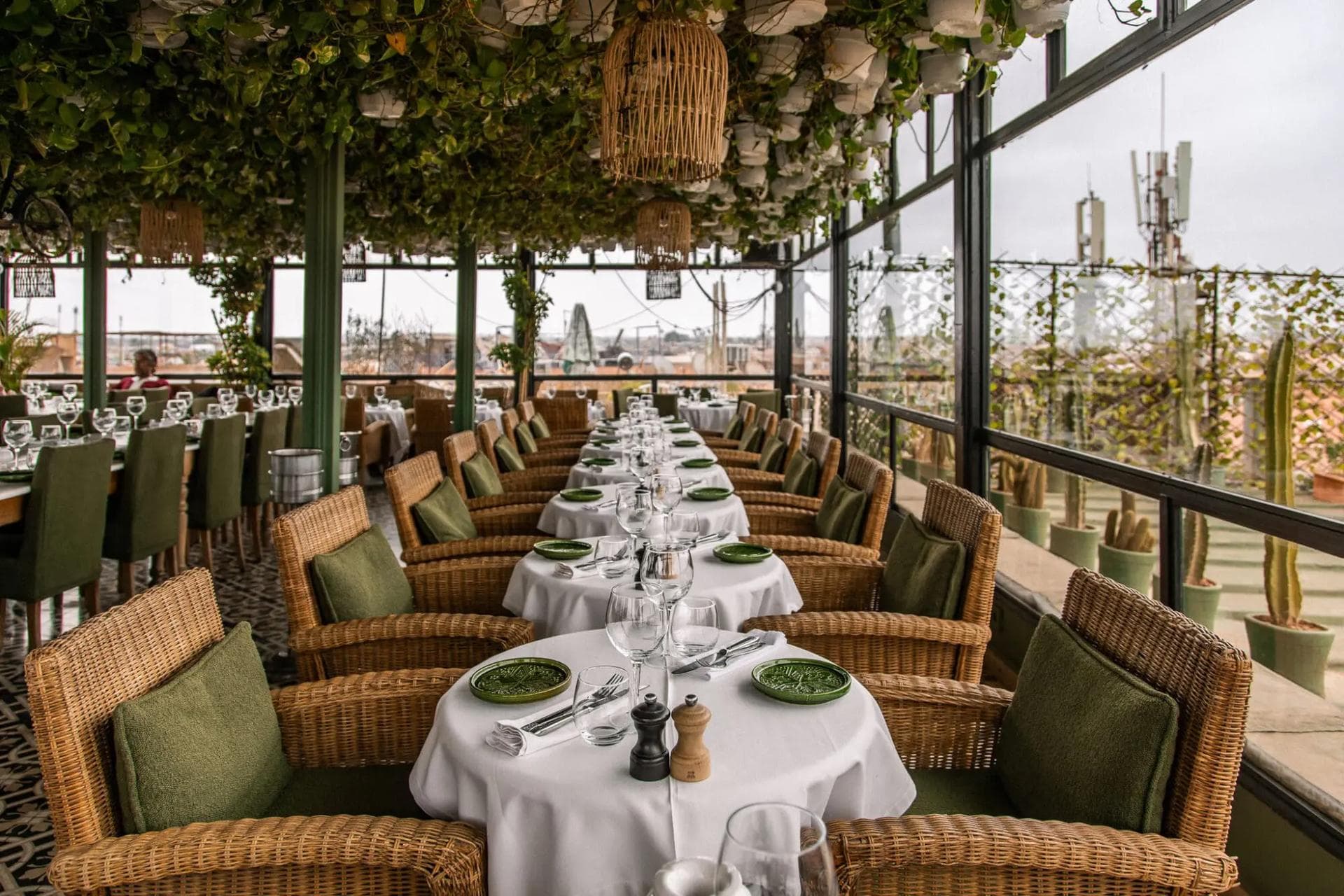
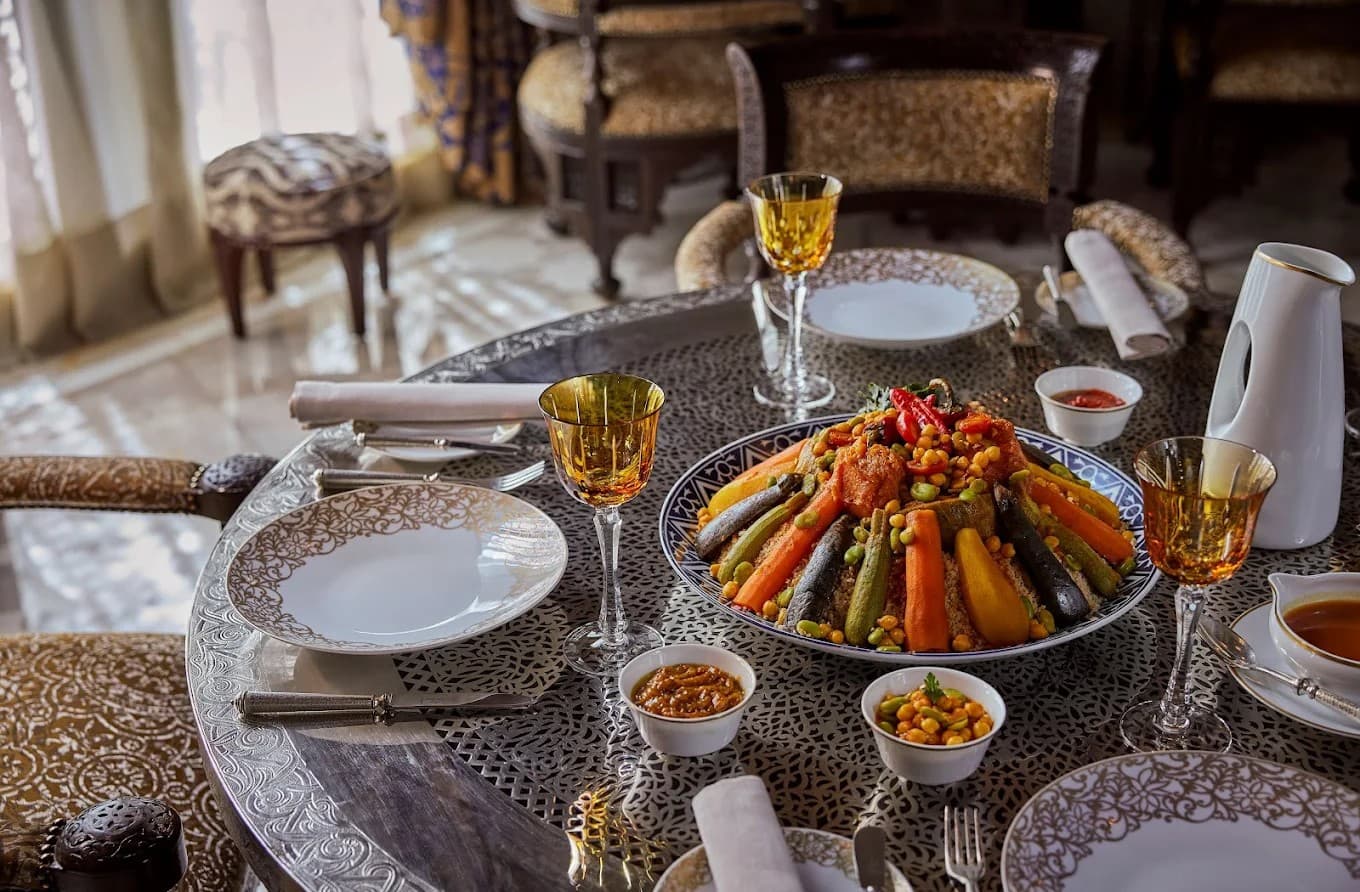
Le Salama occupies a riad on Rue des Banques, steps from the north end of Jemaa el-Fna, and its rooftop is one of the few in the medina where the view reaches in four directions simultaneously: the Atlas to the south on clear days, the flat red roofscape of the medina in every other direction, and the constant spectacle of the square below. The Skybar, a terrace planted with banana trees and tropical foliage that manages to feel genuinely cool against the afternoon light, is a considered piece of design. The kitchen focuses on Moroccan classics executed at a register appropriate to the room: slow-cooked tangia marrakchia, lamb shoulder that has had the time it needs, a couscous with seven vegetables that arrives when it is ready rather than when the table expects it. Le Salama serves alcohol throughout the day and into the night, making it one of the medina's more functional choices for a table that extends past lunch.
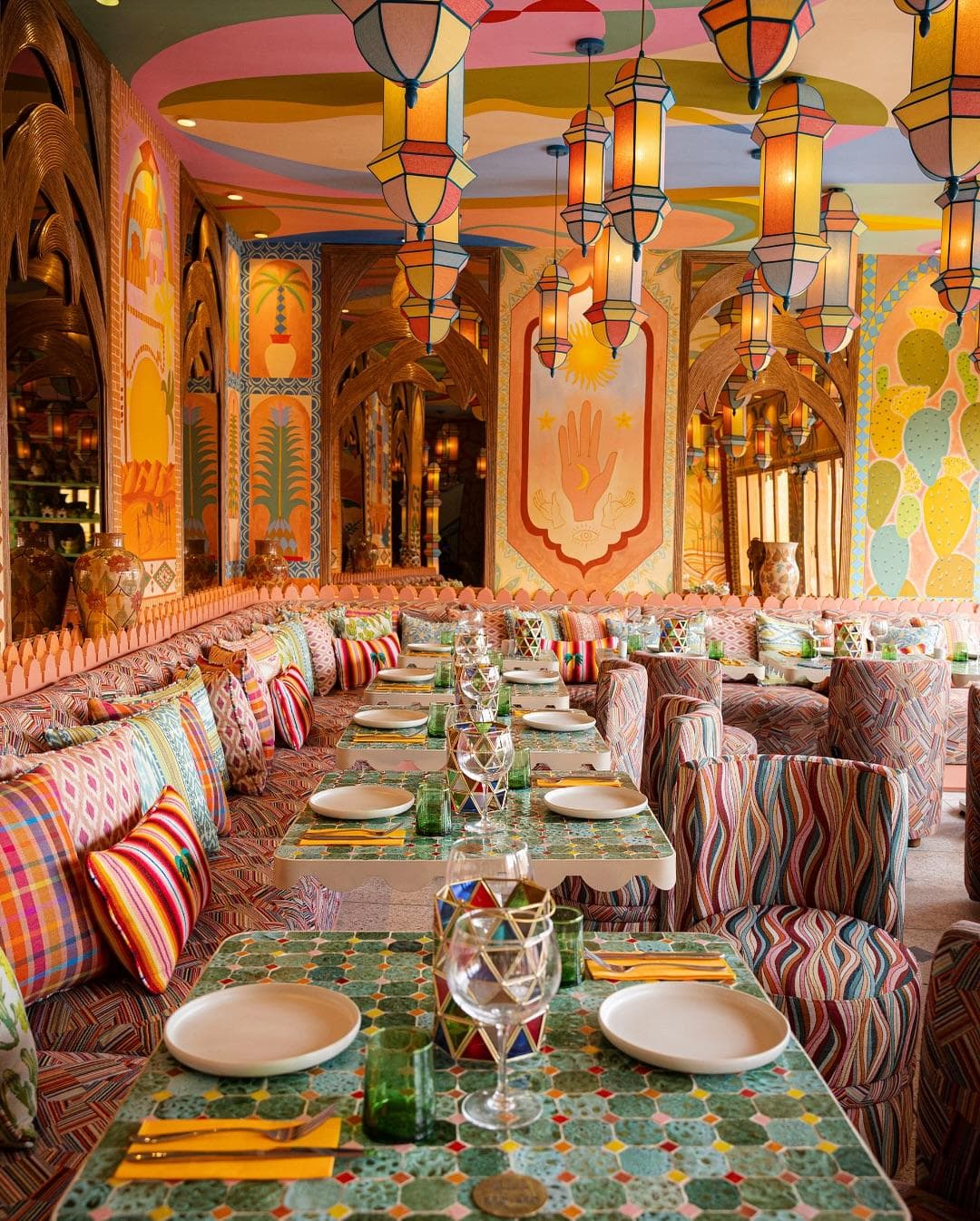
Mo-Mo opened on the edge of Jemaa el-Fna in 2025 and has already accumulated a following disproportionate to its age, which suggests it understood correctly what was missing: a colourful, relaxed terrace at the centre of the medina that does not demand a reservation. The palette is vivid and the kitchen behind it is earnest about its Mediterranean and Moroccan-inflected menu. The views across the square are not diminished by the informality of the setting. It operates without reservations, which in practice means arriving before noon or after three. The lunch crowd is mixed during the week, and the pace of service reflects the volume without being careless about it.
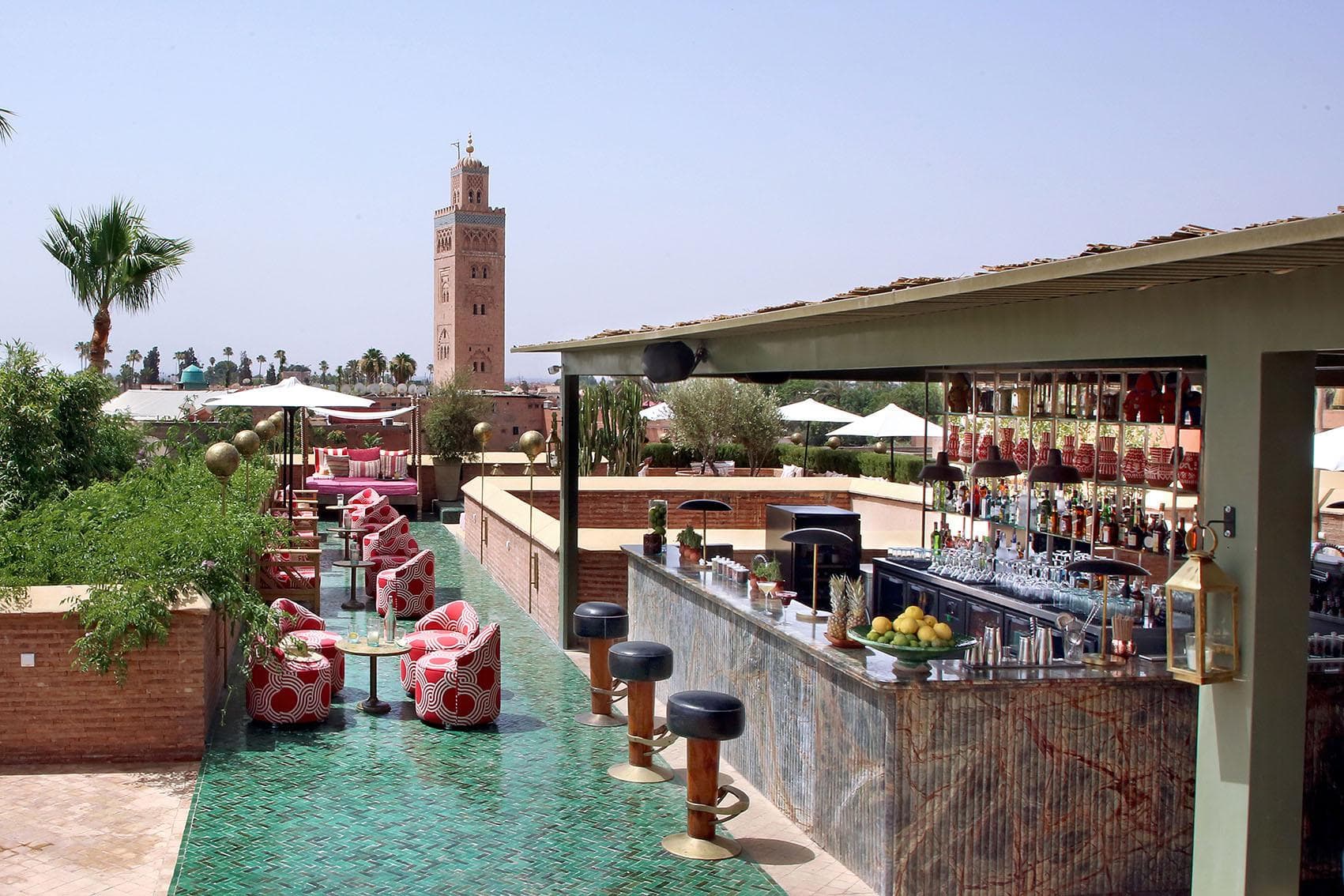
El Fenn is one of the medina's most coherent boutique hotels, assembled over time from adjacent riads by owners who cared about how the pieces fit together. The rooftop restaurant and bar, open to non-residents from 12:30, sits above a pool terrace and a series of interconnected lounges that make the hotel feel like a private house thoughtfully expanded rather than a commercial property in costume. The menu is eclectic in the way that suits a place this size: a kitchen that sources carefully and changes its selection seasonally, with a leaning toward lighter preparations and shared plates that work at both lunch and late afternoon. The entrance for non-residents is through the El Fenn Boutique on Rue Lalla Fatima Zahra.
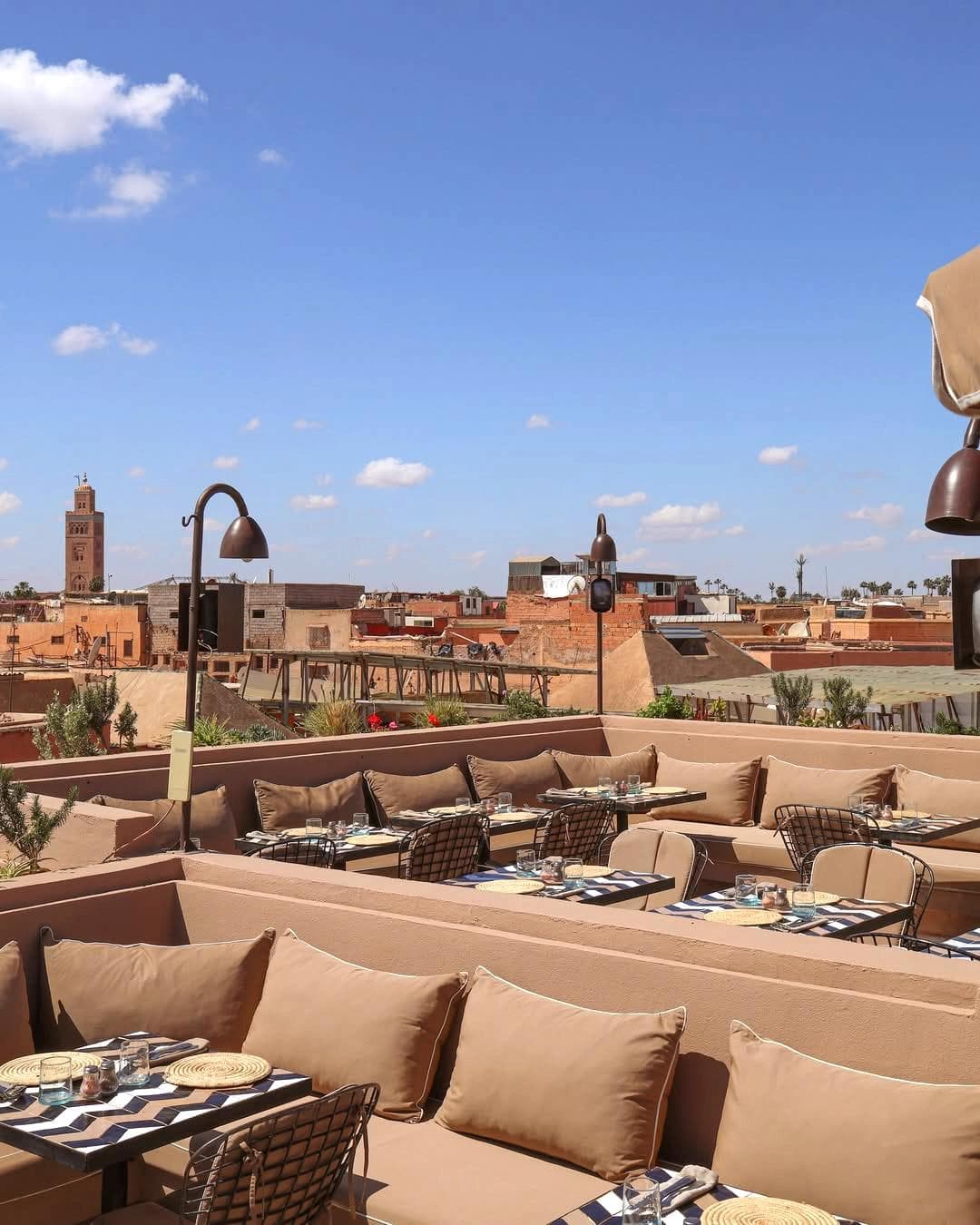
Nomad operates across four floors in a narrow building at the edge of Rahba Kdima, the Spice Square, with two terrace levels at the top that look out over the medina toward the Atlas. The cooking is described as Modern Moroccan: traditional techniques and ingredients reconsidered with enough confidence that the results feel current without feeling translated. The date cake with saffron has been on the menu since the beginning and functions as a reliable indicator of what the kitchen is actually capable of. The address is unmarked in the way of most good medina restaurants. The approach is to find Rahba Kdima and look for the staircase on Derb Aarjane.
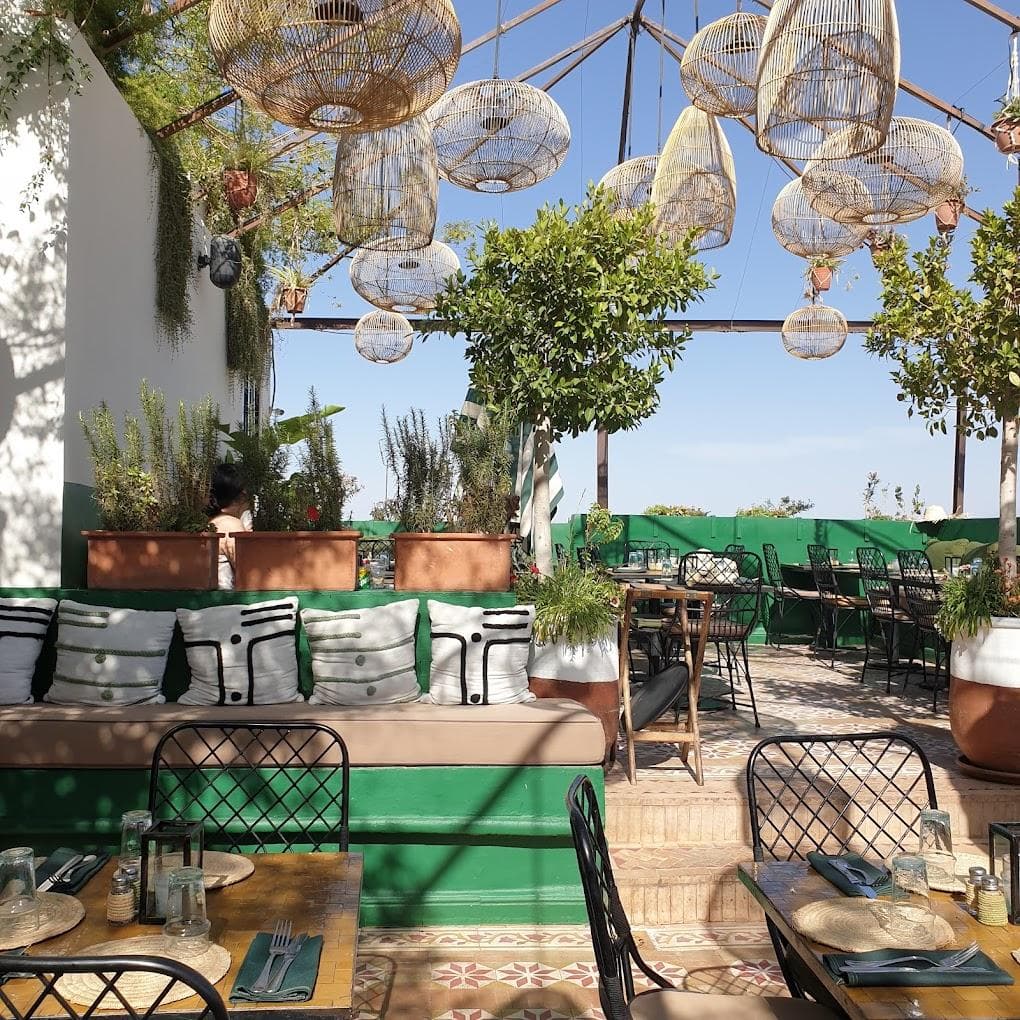
L'mida was named after the Moroccan dialect word for table, and the informality that implies extends through everything: the coloured tiles, the communal presentation of dishes, the jasmine that rises from the courtyard below the highest rooftop in this part of the medina. Founded by two friends, Omar and Simo, the restaurant brought in chef Narjisse Benkabbou to build a menu around sharing plates and local produce, with results that are lighter and more inventive than the rooftop-with-a-view category usually produces. The views take in the medina roofscape and the Atlas in the middle distance. L'mida does not serve alcohol. Reservations for the rooftop are essential, particularly at lunch on weekends.
Eat Like a Local
Two addresses where the Moroccan table operates at its most direct: one a mechoui counter near Jemaa el-Fna open until the lamb runs out, the other a family restaurant in the southern medina. Neither requires reservation. Both serve lunch.
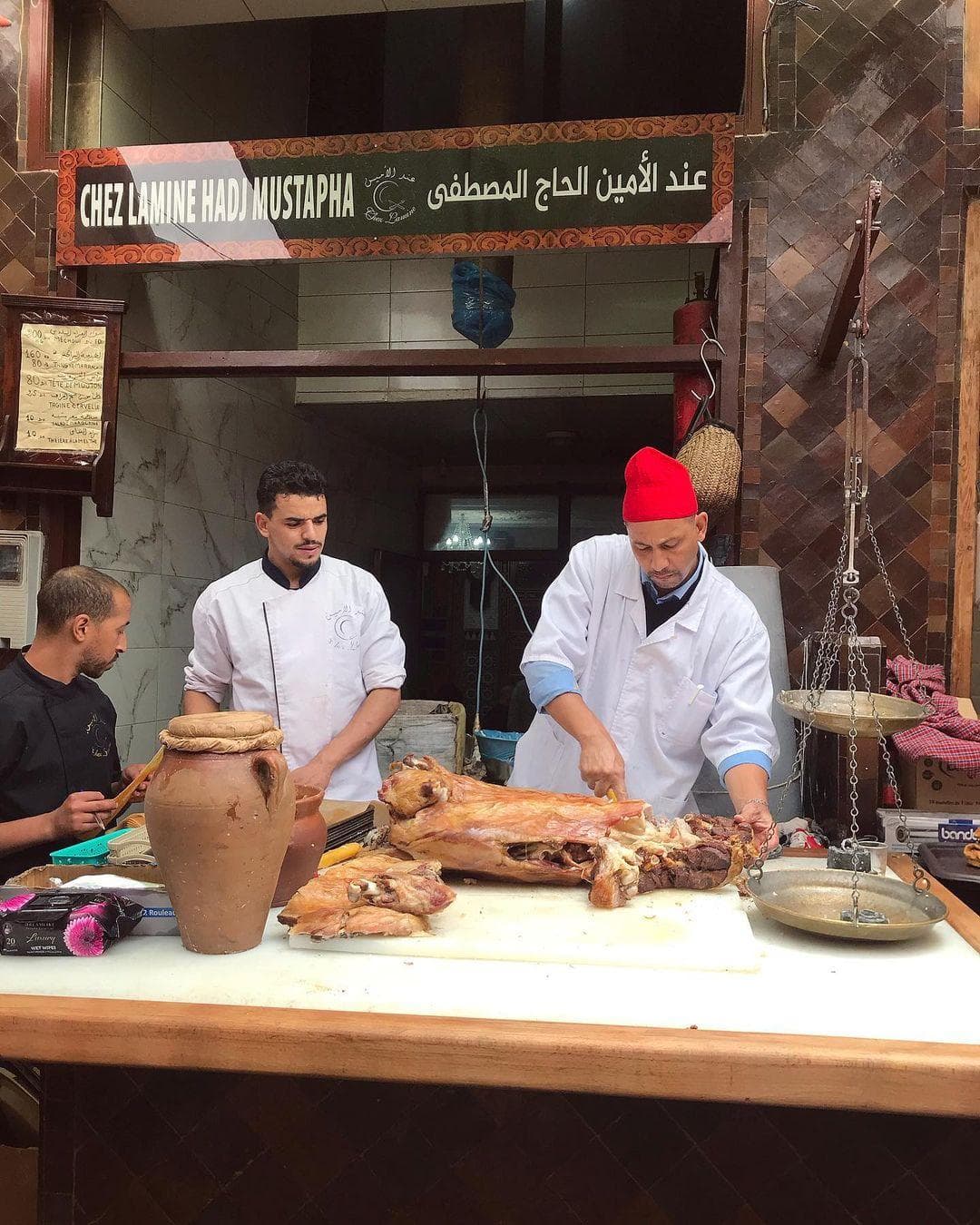
Every morning, whole lambs are lowered into underground wood-fired ovens below the kitchen in Mechoui Alley, just off Jemaa el-Fna, and roasted for three to four hours. The counter opens at noon. By early afternoon, the good cuts are gone. You arrive, you point at the cut you want, you eat standing or at a simple wooden table in a room that has never been asked to be anything other than what it is. The experience is less about the meal than about the directness of it: no menu to negotiate, no ambiance to manage, no performance of tradition. Just the animal, the salt, the cumin, and the bread.
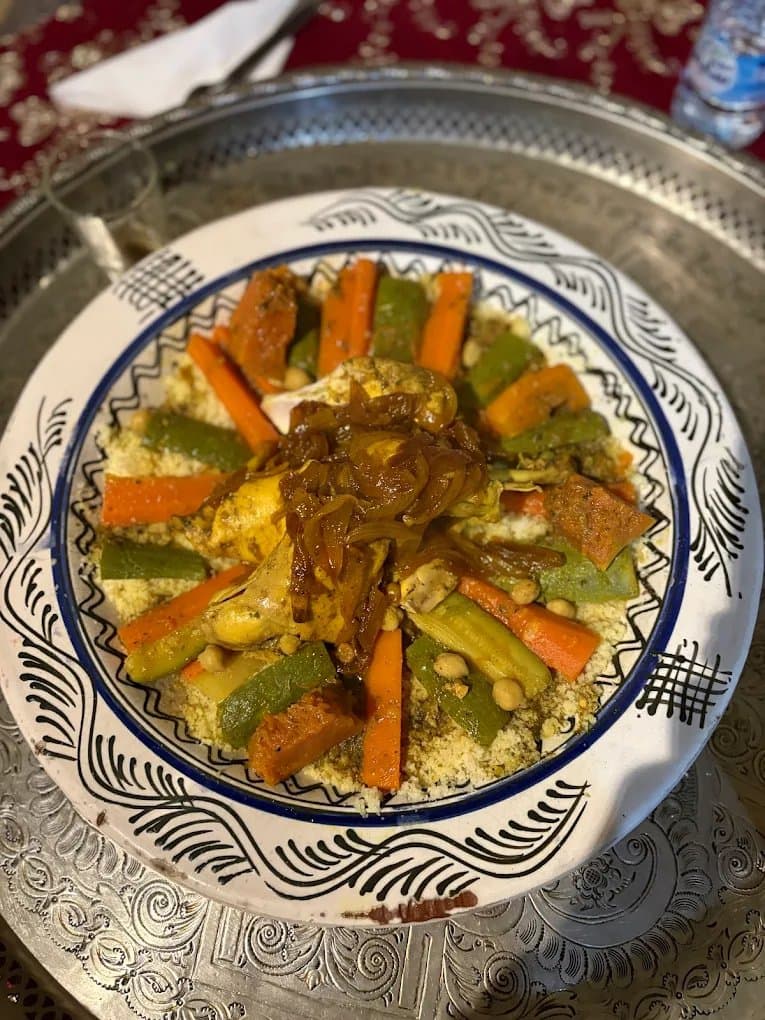
Naima sits on Rue Azbezt in the southern medina and runs a Moroccan menu at a price point that has always reflected its neighbourhood rather than its reputation. The couscous, available daily at lunch, is the reason most people with local knowledge come here. The room is simple; the welcome is direct. The lunch crowd is primarily Marrakchi, which is useful information when choosing where to sit and what to order. Point to what the adjacent tables are eating. The harira, the briouats, the tagine of the day are all reliable. Nothing on the menu is more than it claims to be.
Rue Azbezt, Marrakesh 40000, Marocco
Weekend Brunch
Three brunch venues operating on Sundays, each at a different distance from the medina and a different register of occasion: a city hotel garden, an olive grove estate on the Route du Barrage, and a country club with twelve thousand rose plants. All three require advance reservation.
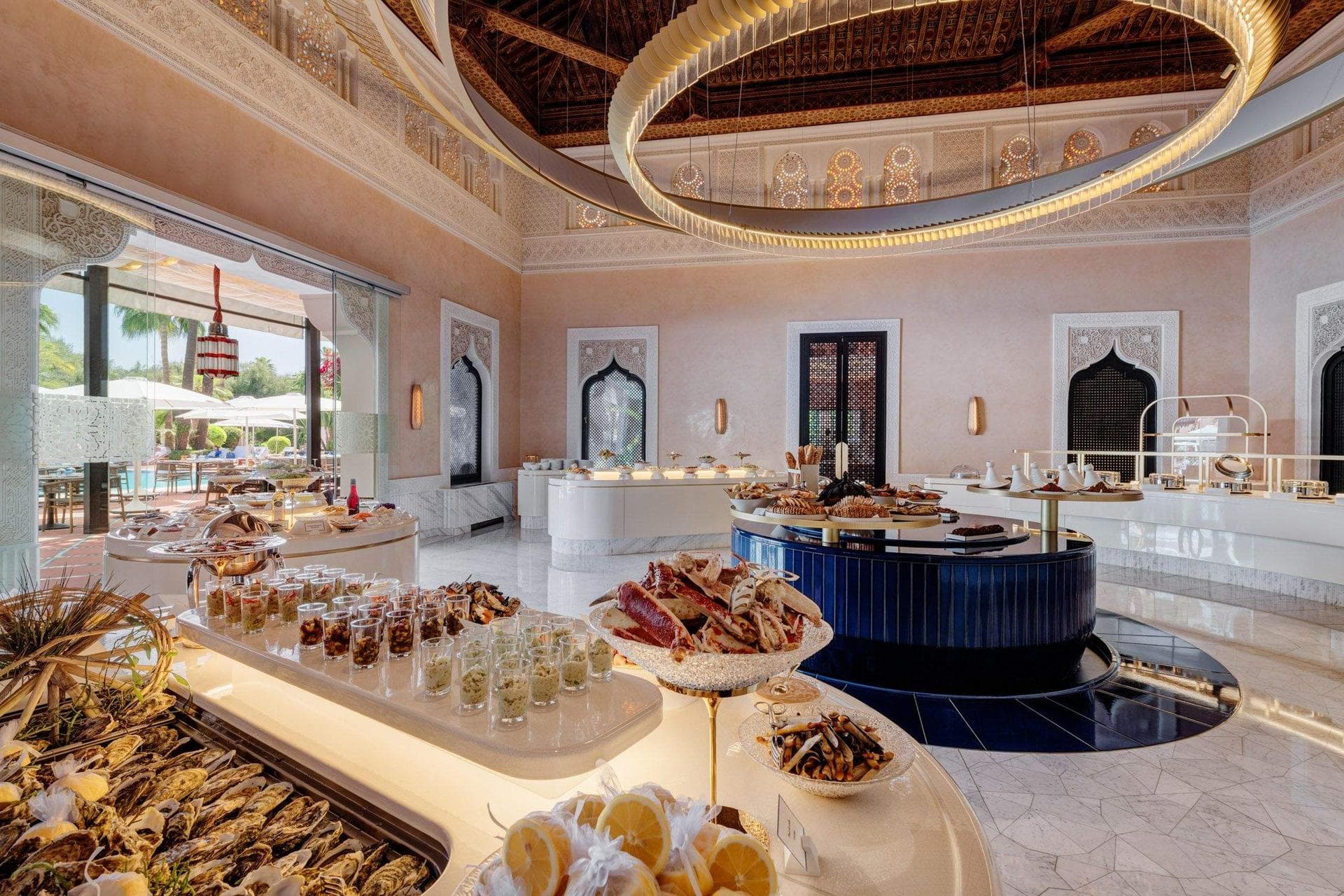
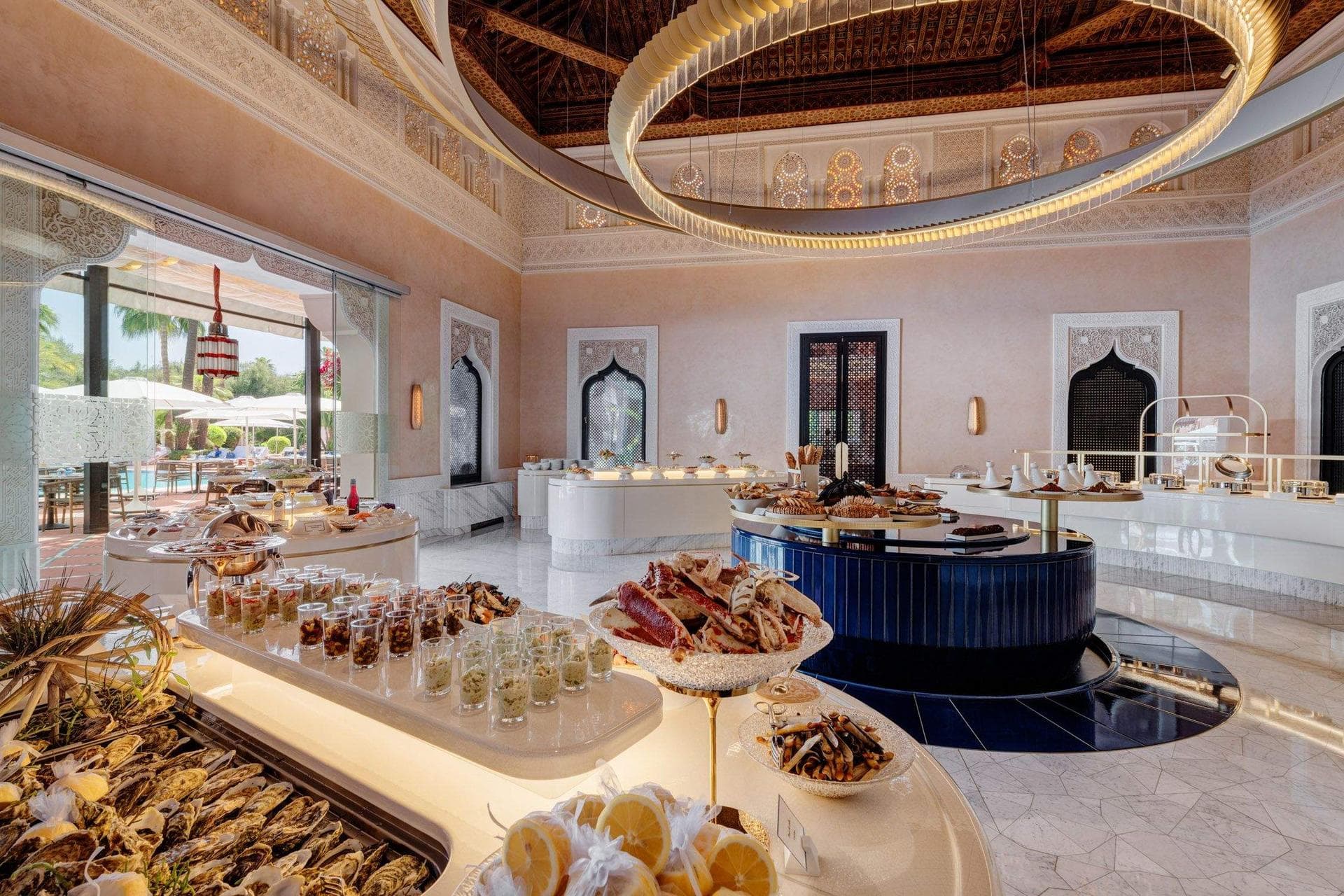
La Mamounia's Sunday brunch is one of the most established weekend rituals among Marrakech's resident community and among visitors who plan around it. Held in the hotel gardens, among the palms and olive trees of the historic grounds, tended for over a century, the brunch operates at the scale and formality appropriate to the institution: a buffet of considerable range, Moroccan specialties prepared table-side, pastries by Pierre Hermé. The setting is as much the point as the food. La Mamounia's gardens have been described as among the most beautiful hotel grounds in Africa, and the brunch is one of the few occasions when a visitor can inhabit them at length, at a pace that the gardens themselves seem to encourage.
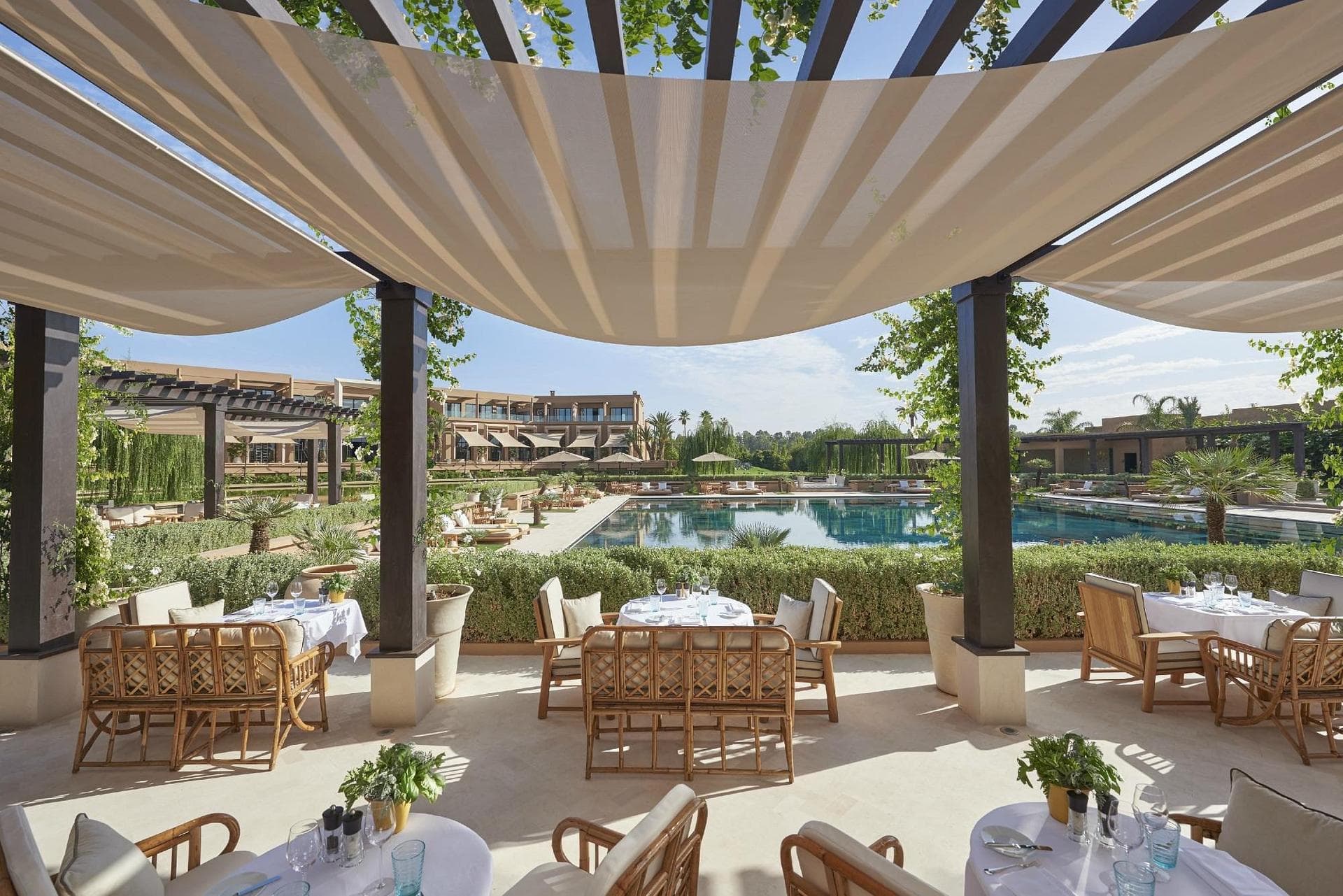
Every Sunday from 12:30 to 16:30, the Pool Garden of the Mandarin Oriental becomes the city's most technically polished brunch operation: live band, seasonal buffet composed with a precision uncommon at this format, pool access available at the higher ticket level, and a separate children's programme at the Kids' Kasbah that functions as advertised. The hotel sits on Route de l'Ourika, about fifteen minutes from the medina. The cooking follows a Mediterranean arc and the quality of produce is consistent with the hotel's positioning. Prices are MAD 1,390 per person without pool access and MAD 2,090 with it.
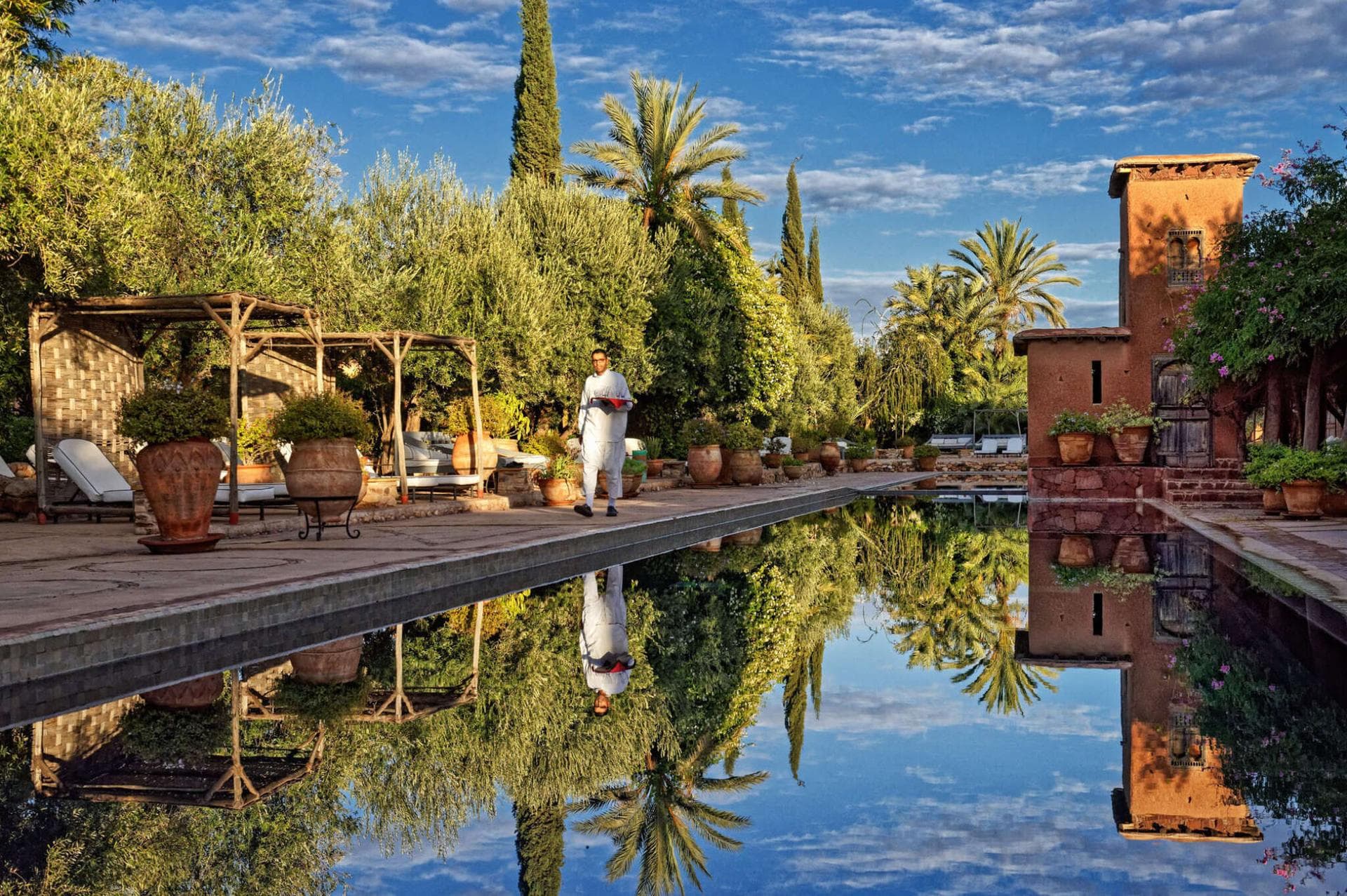
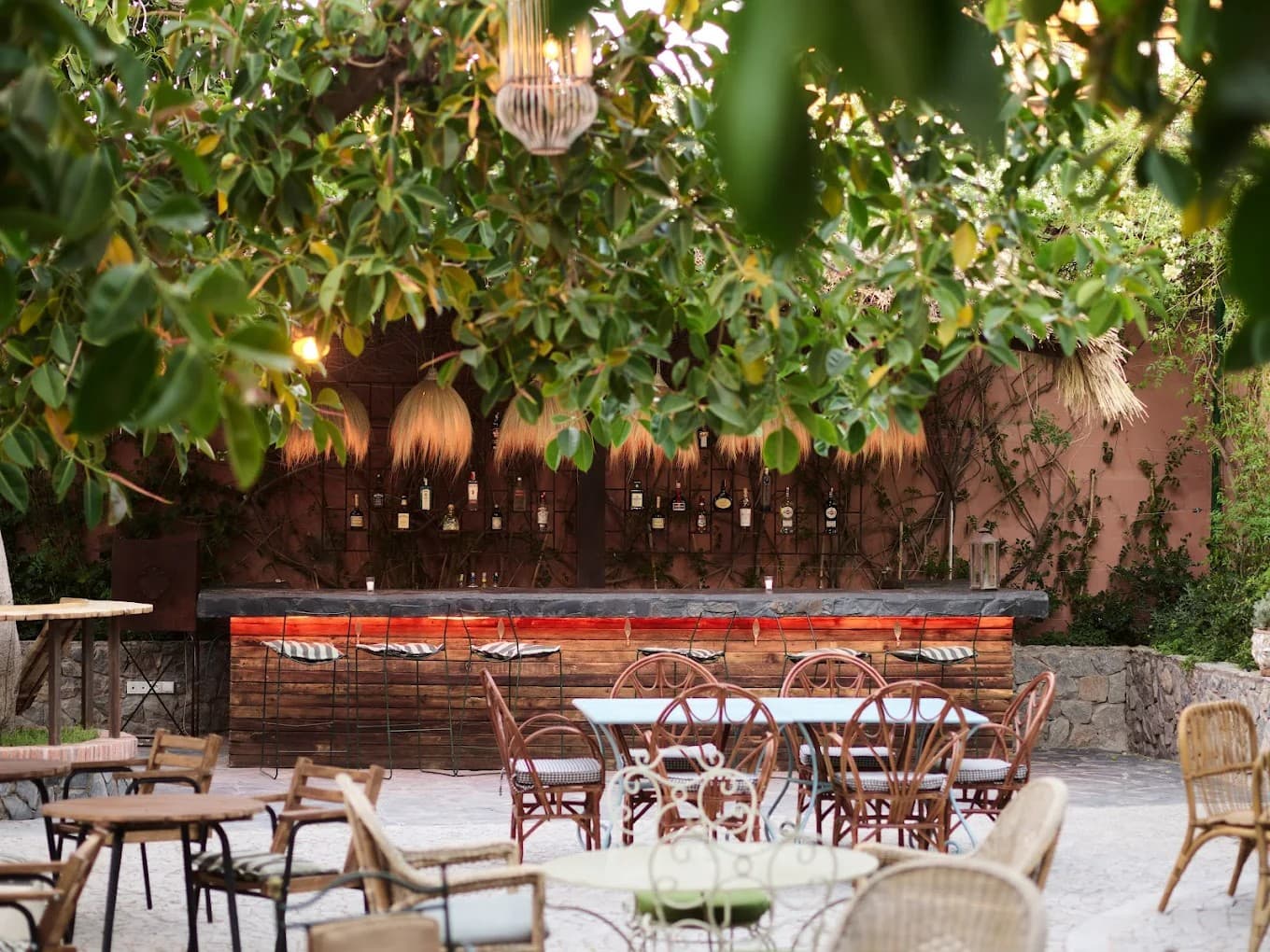
Beldi Country Club sits on fourteen hectares on the Route du Barrage, about ten minutes from the city centre, and it operates on garden time: slowly, without urgency, in a setting that requires no assistance from the kitchen to make an impression. The rose garden, twelve thousand plants at its peak from April to June, and the olive groves and water lily ponds work in any season. Brunch at Beldi moves between the two restaurant spaces on the estate, one Moroccan among the olive trees and one Mediterranean in the greenhouse of the Beldi Orangers, with a selection that changes with what is growing. It is the least formal of the three options in this section and, depending on the season, the most beautiful.
Iconic Moroccan Dining
Three restaurants for a formal Moroccan dinner: a legendary riad table operating continuously since the early 1990s, an Arabo-Andalusian dining room inside La Mamounia, and the fine-dining room at Royal Mansour ranked nineteenth among MENA's 50 Best Restaurants in 2026 and recipient of the Art of Hospitality Award. All three require advance reservation. Dress code applies at the latter two.
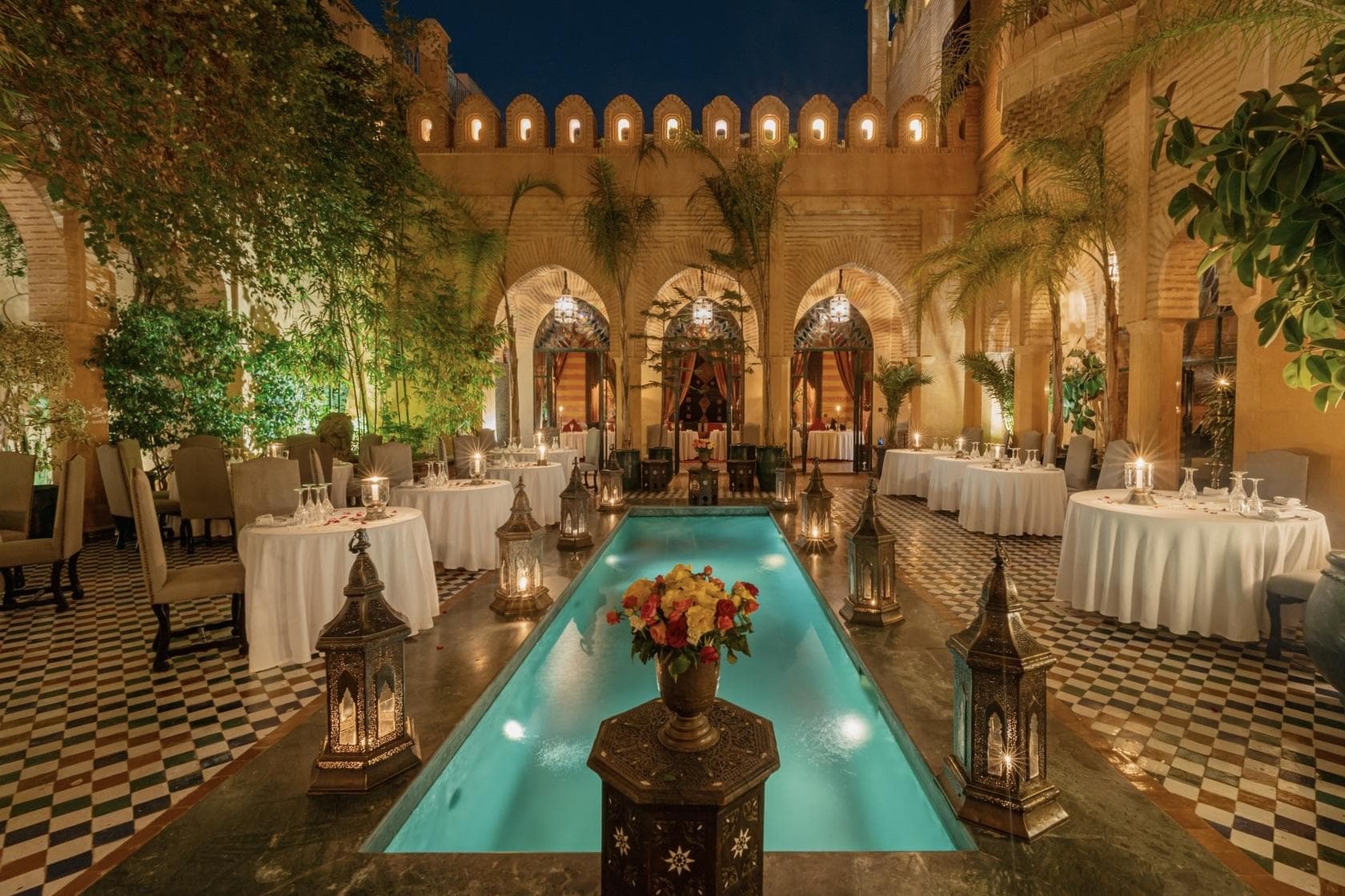
Dar Yacout was created by Mohamed Zkhiri in a centuries-old riad and the interior was designed by Bill Willis, the American architect whose work defined a certain register of Marrakech luxury from the 1970s onward. The formula Zkhiri established has not changed: arrive at the rooftop for a drink and the view over the medina at dusk, descend through rooms of increasing formality, and eat a Moroccan feast that moves through its courses at the pace the house determines. The zellige, the carved plasterwork, the candlelight are all as they were. Dar Yacout is often described as theatrical, which misses the point. It observes a form of hospitality that predates tourism and has simply continued to practice it. That it now does so for an audience of mostly international visitors changes the form less than might be expected.
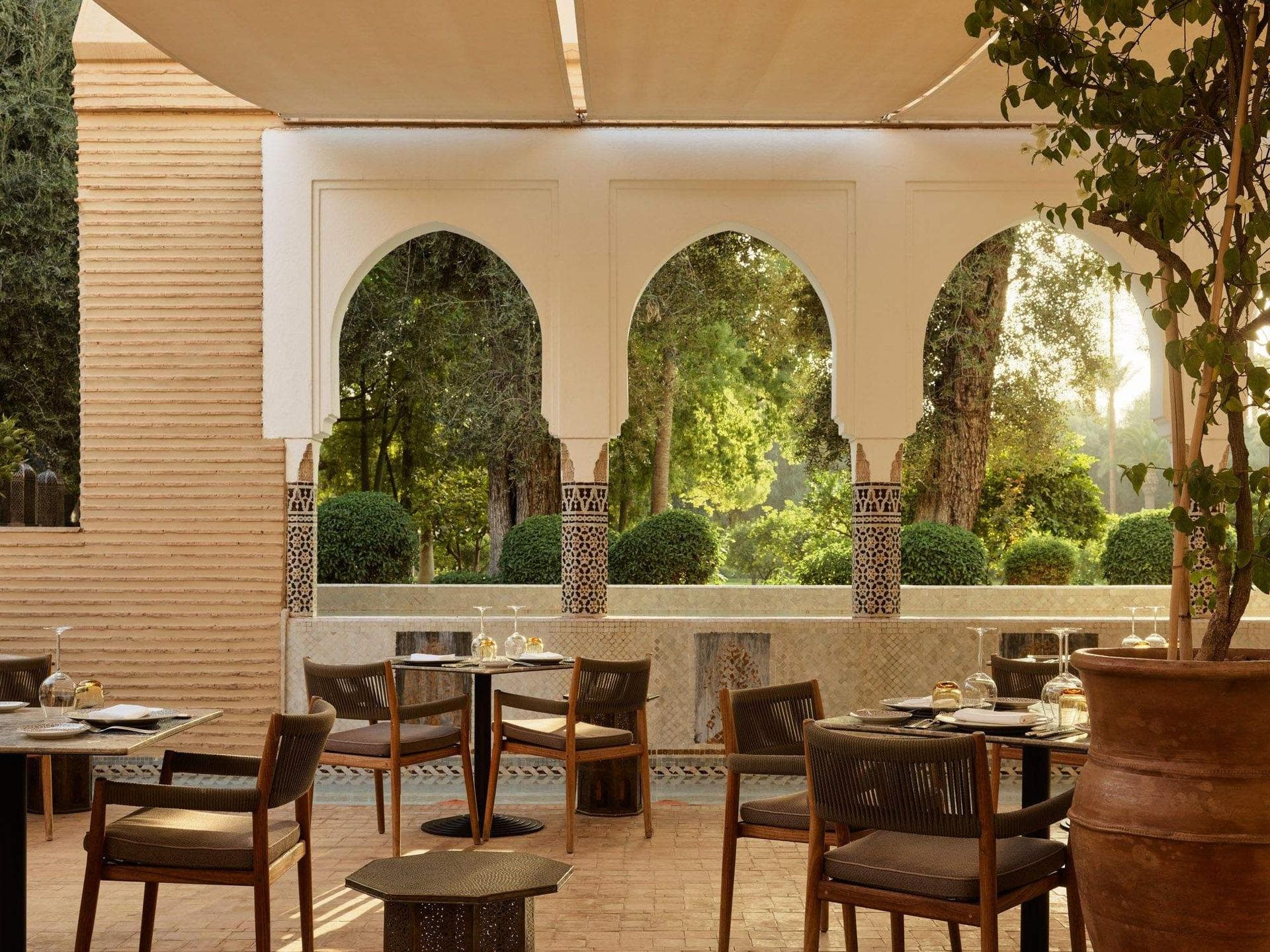
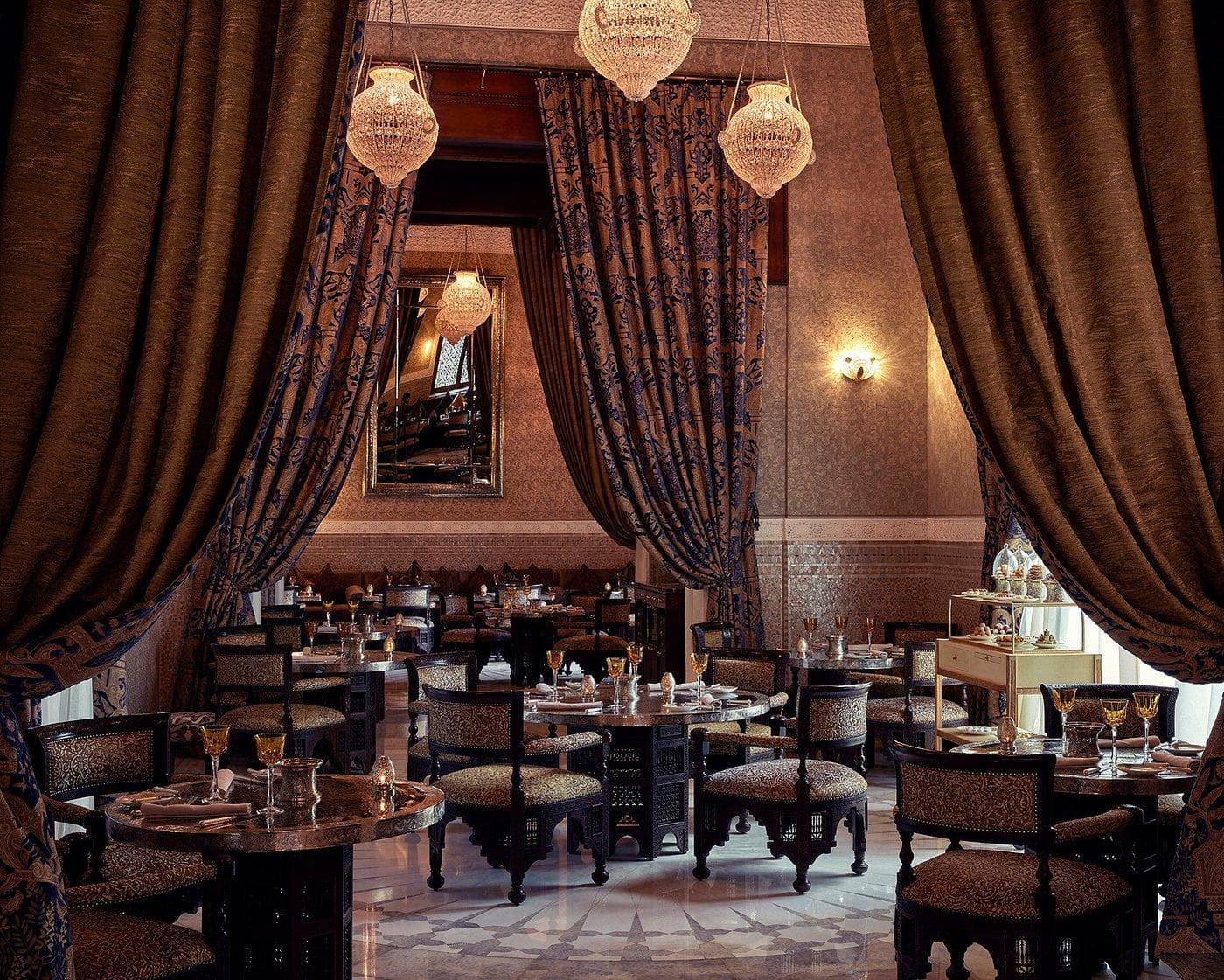
Le Marocain has held its place at La Mamounia for more than thirty years, and the qualities that have sustained it have not required updating to remain relevant: the riad deep in the hotel gardens, the trio of musicians on strings and percussion, the kitchen under Chef Rachid Agouray that takes classic Moroccan cooking as a living tradition. The zellige, the arabesque plasterwork, the proportions of the room are the work of craftspeople for whom this is a functional medium. The menu covers the Moroccan canon: various tagines and tangia, a briouat that functions as both a greeting and a benchmark, pastries at the end from Pierre Hermé's collaboration with the kitchen. Elegant attire is required and the reservation should be made well in advance.
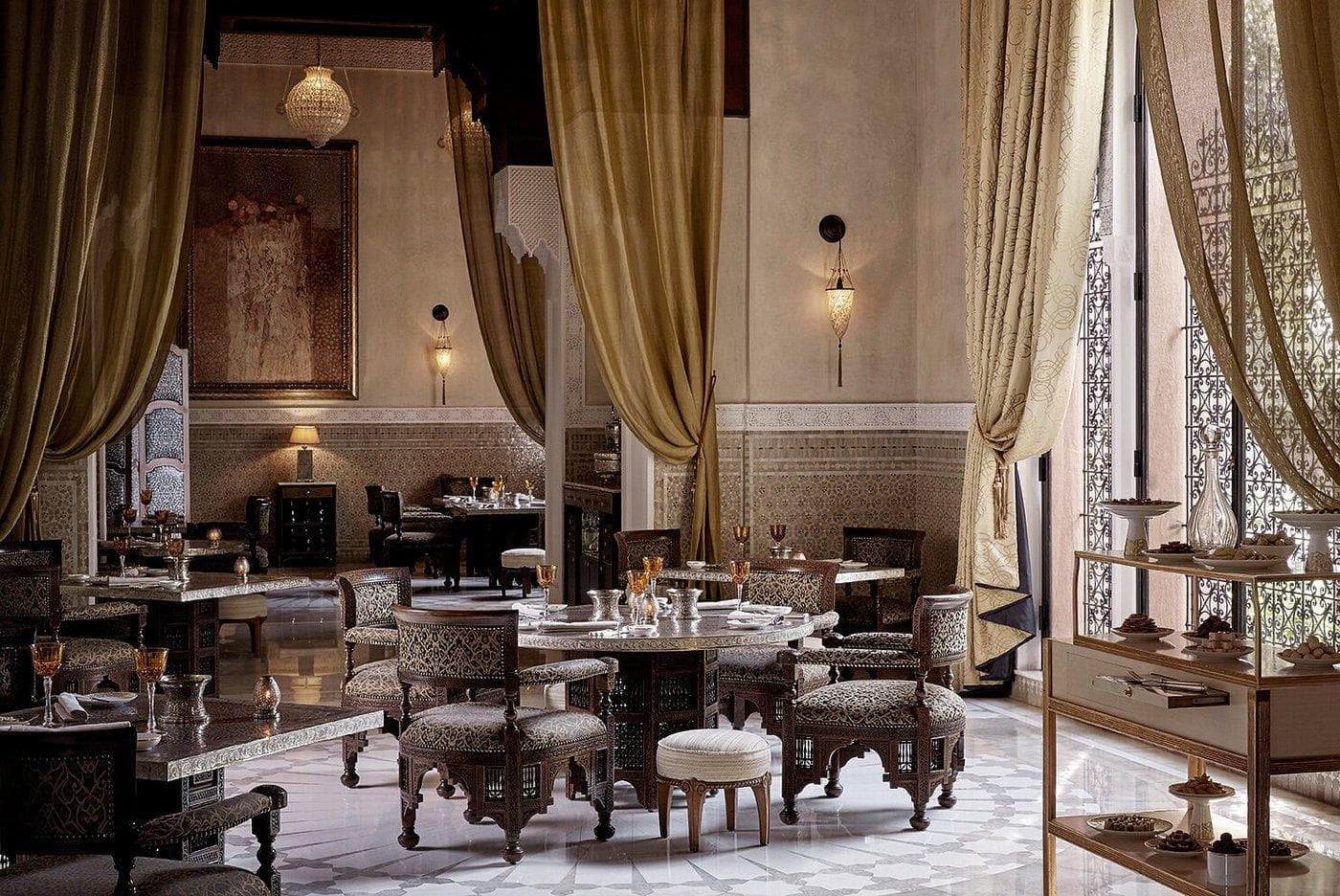
La Grande Table Marocaine is the fine-dining anchor of Royal Mansour, the medina palace commissioned by King Mohammed VI, and since the arrival of French chef Hélène Darroze, working alongside Moroccan executive chef Karim Ben Baba, the restaurant has been reconsidering the Moroccan table from a position of considerable technical and cultural resource. It ranked nineteenth among MENA's 50 Best Restaurants in 2026 and received the Art of Hospitality Award the same year. The menu reads as a dialogue between Darroze's classical training and Ben Baba's deep knowledge of Moroccan tradition: sh'hiwates, pastilla, and couscous recomposed with a care that honours their source without reproducing it mechanically. The setting, within the riad grounds of Royal Mansour, is without comparison in the city.
Hôtel Royal Mansour, Rue Abou Abbas El Sebti, Marrakech 40000, Morocco
Dinner with a Show
Three venues where the evening extends well beyond dinner: Comptoir Darna and Jad Mahal in Hivernage, both built on the principle that a full evening is more valuable than a meal alone; and Bo-Zin on the Ourika road, where the garden setting and live music create something more sustained than either entertainment or cuisine alone could manage. Arrive after nine.
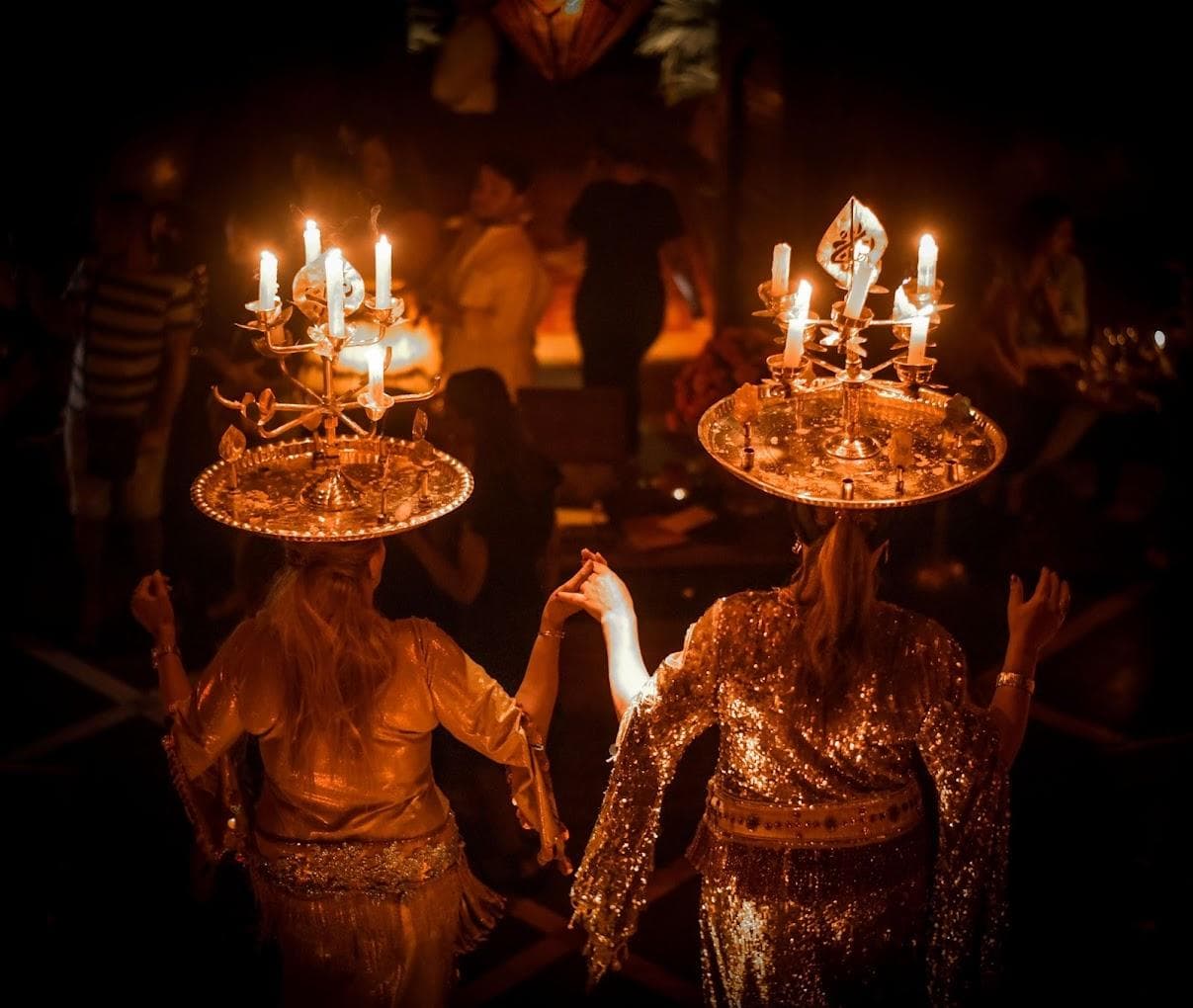
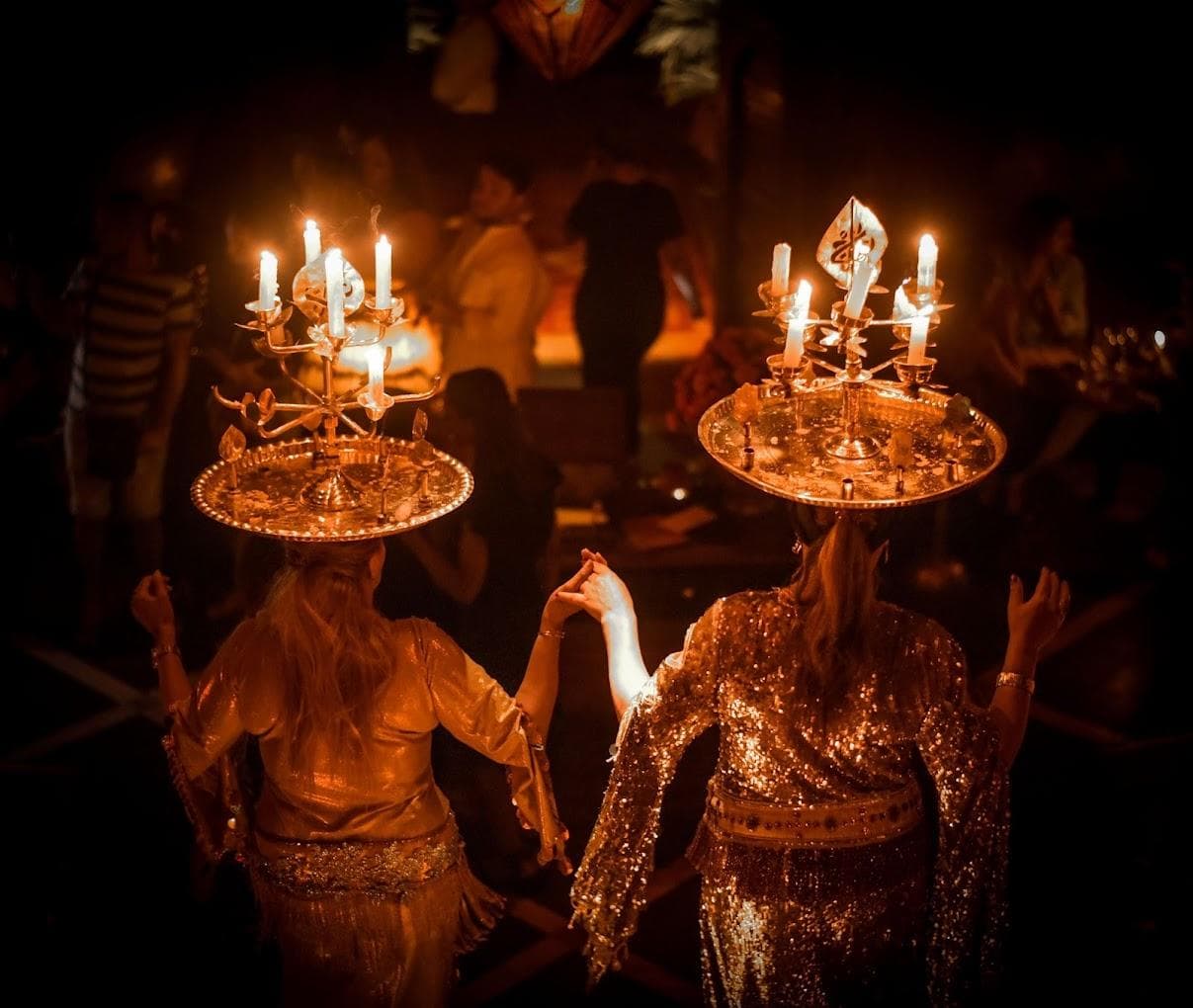
Comptoir Darna opened in 1999 and has since become something close to an institution, not despite its theatricality but because of it. The belly dancers, the musicians, the bar that fills before the kitchen does, the terrace on Avenue Echouhada that operates as a prelude to the interior: all of this is calculated, and the calculation is correct. An evening at Comptoir Darna is not about the food, which is solid and international and not the point. It is about the form of the evening itself. The crowd is international, the music is loud after ten, and the arrangement exists in a register that Marrakech does better than most cities: the theatrical dinner that admits what it is.
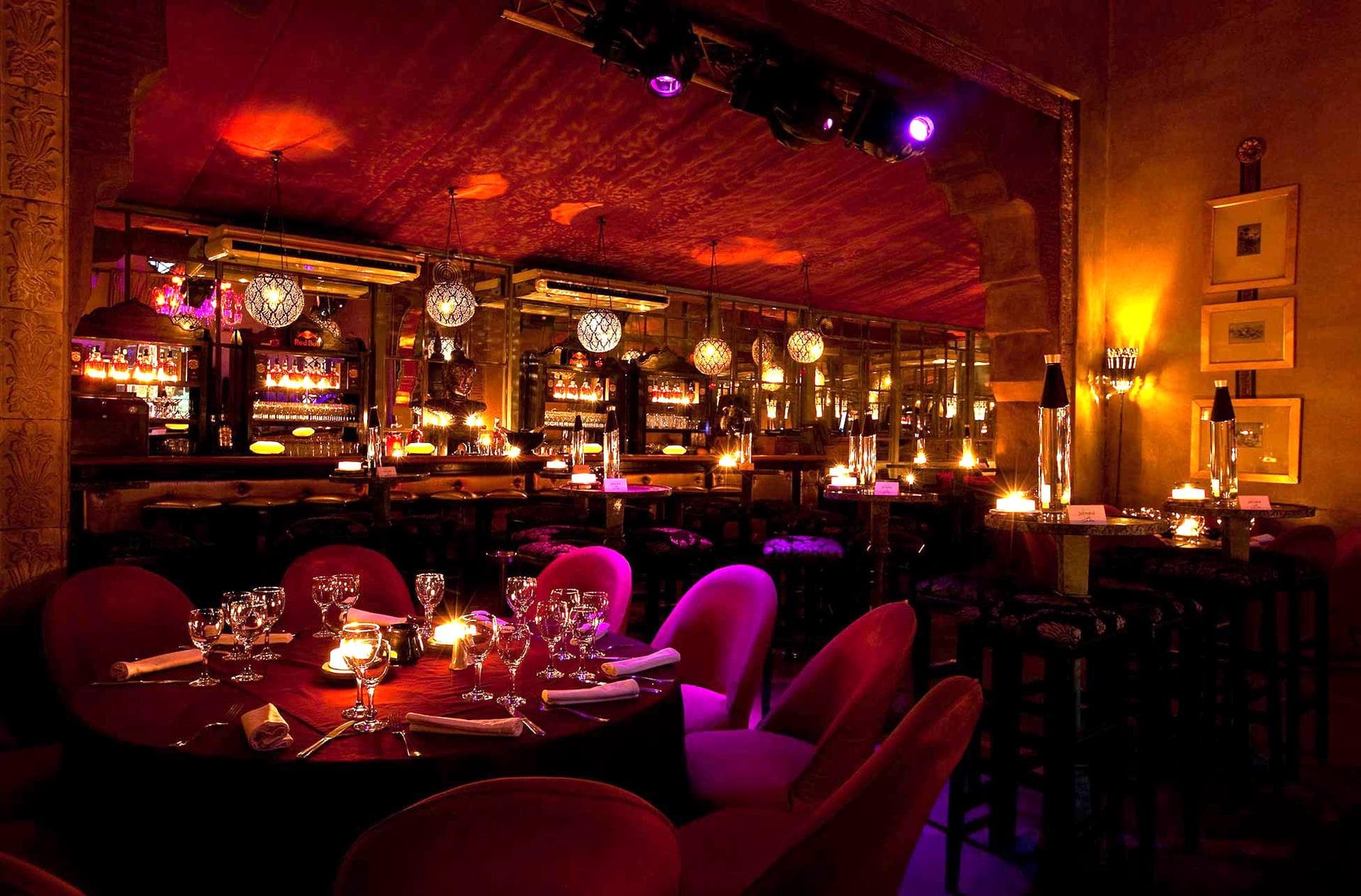
Jad Mahal operates at a similar register to Comptoir: a theatrical dinner that doubles as a venue, with a decor that draws on Rajasthani and Moroccan influences simultaneously, live entertainment calibrated to the energy of the room, and a kitchen that produces Indo-Moroccan fusion with enough confidence to justify the occasion. The crowd is younger than at Comptoir; the volume, past a certain hour, is equivalent. It is the kind of restaurant that requires a particular disposition to enjoy, and those who share it tend to enjoy it considerably.
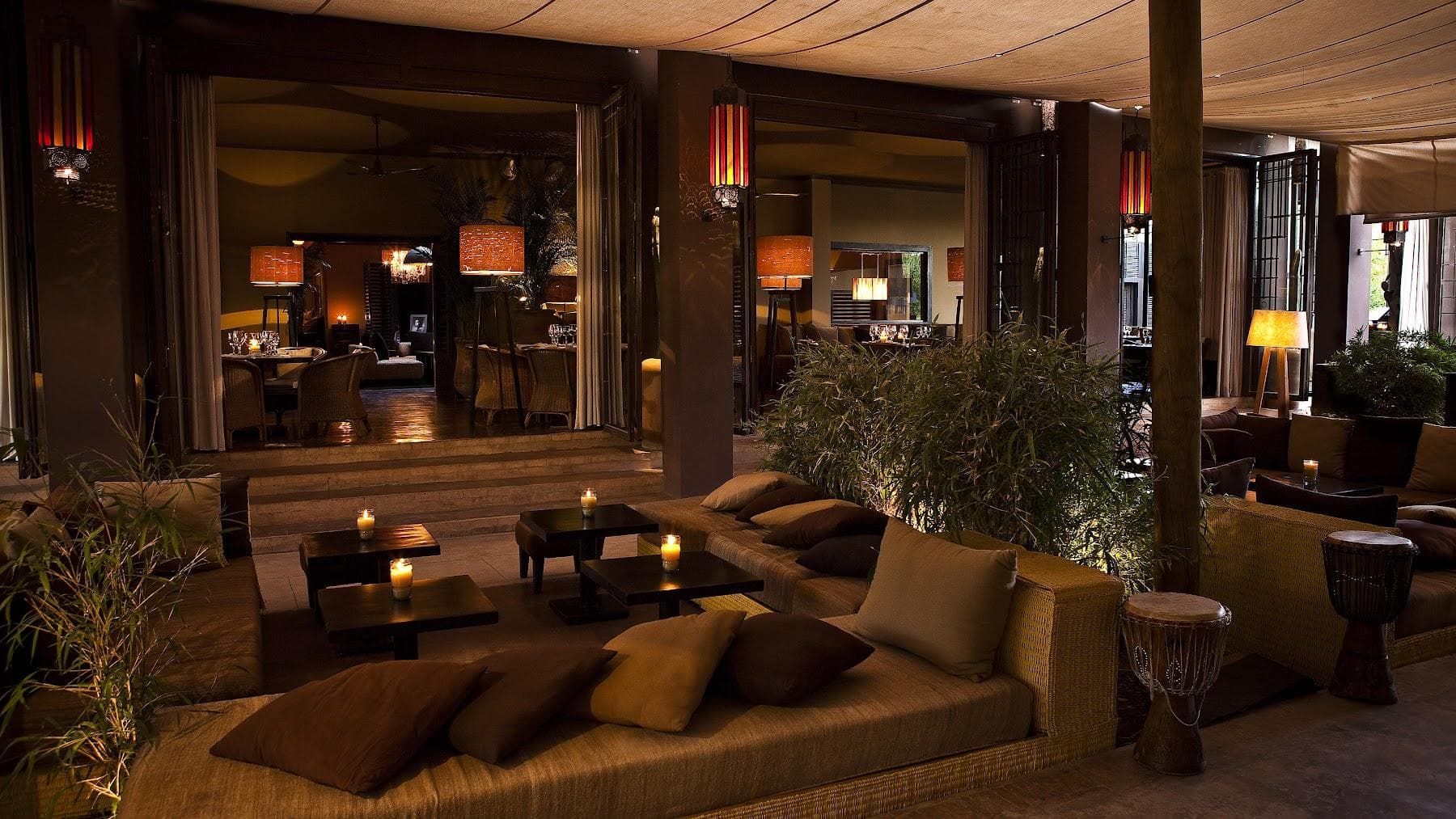
Bo-Zin sits on the Ourika road at the edge of the city, far enough from the medina that the setting feels removed from the logic of the tourist circuit. The garden terrace, with fountains, outdoor lounges, and exotic foliage, is the main event in warm months; in winter the interior manages a similar warmth through materials rather than temperature. The cuisine is Mediterranean-fusion, accomplished and seasonal. The live music, with resident pianists, percussionists, and a DJ that takes over late, turns a dinner into an event without coercion. It is the most relaxed of the three venues in this section and the one that most easily accommodates a table that wants to stay. Best on a weekend evening, when the garden reaches its full momentum and the crowd has the time to stay.
The Cool Dinner Spots
Two recent additions to Marrakech's dinner circuit: a former private residence near the Kasbah, and a designed room on Avenue Mohammed V in Gueliz. Both are serious enough to justify the reservation.
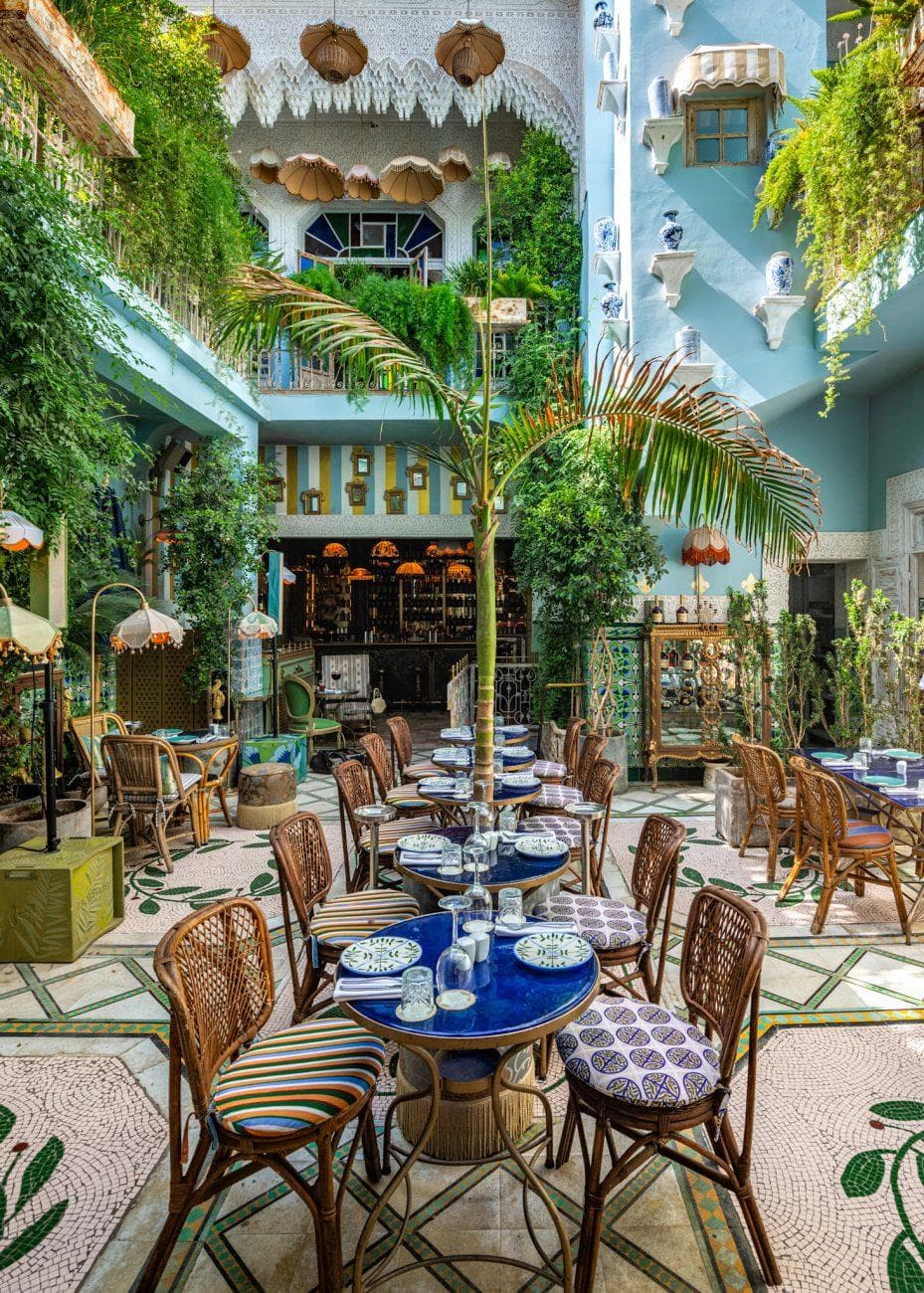
Villa Aaron occupies a former private residence at the edge of the Kasbah neighbourhood, and the conversion has preserved the domestic scale that makes it feel unlike a restaurant in the formal sense. The Amazoz Group, which operates several of the more considered addresses in the city, built a kitchen that treats the Mediterranean-Moroccan exchange as a living proposition rather than a fixed position. The menu changes with the season. The address is not well-signposted, which in this neighbourhood is evidence of confidence rather than an oversight.
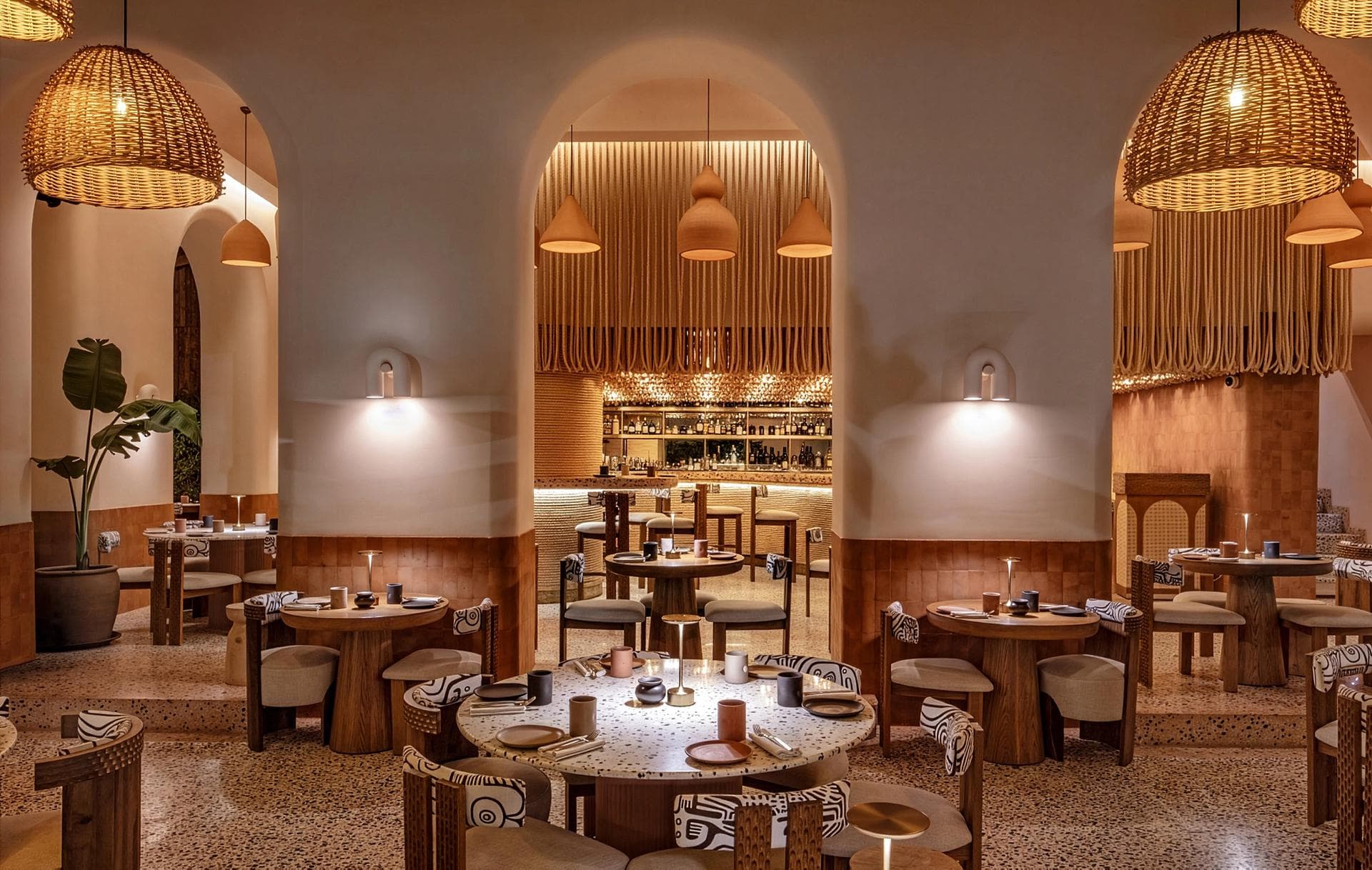
Mizaan opened on Avenue Mohammed V at a moment when Gueliz's dining scene was consolidating around a handful of addresses that understood design and cooking as inseparable concerns. The room, designed by Yacine Sidali of YStudio, is one of the more precisely calibrated interiors in the city's newer restaurant tier: materials that hold up in the evening light, proportions that neither crowd the table nor leave it isolated. The kitchen runs a menu at the intersection of Moroccan, Mediterranean, and Levantine traditions without resolving into any of them entirely. Live music on weekends, a wine list compiled with the same attention given to the room, and a service that understands when to be present and when to step back.
You may also like…