Where to Have Lunch in Gueliz: 5 Restaurants in Marrakech Worth Knowing
18 April 2026
Five restaurants for lunch in Gueliz: from a colonial brasserie and Fassi home cooking to Australian farm-to-table and contemporary Moroccan design.* The lunch scene in Gueliz has shifted. Marrakech's European quarter — the one with wide boulevards and 1920s facades, ten minutes by taxi from the medina — stopped being a fallback option long ago. Today, Gueliz is where a new generation of restaurateurs is redefining what it means to eat well in this city: with rigour, with design intent, with a serious relationship to local produce. Those cooking in Gueliz come from different trajectories. One has revived a 1930s building. Another left fashion to open a restaurant inspired by Melbourne. Another still defends a female culinary tradition that has endured for nearly four decades. What these addresses share is a quality that extends beyond the plate: a vision of how a restaurant should work — the space, the rhythm, the relationship with the person sitting at the table. These five are the lunch restaurants in Gueliz we recommend to anyone looking for something specific: not the longest list, but the most precise.
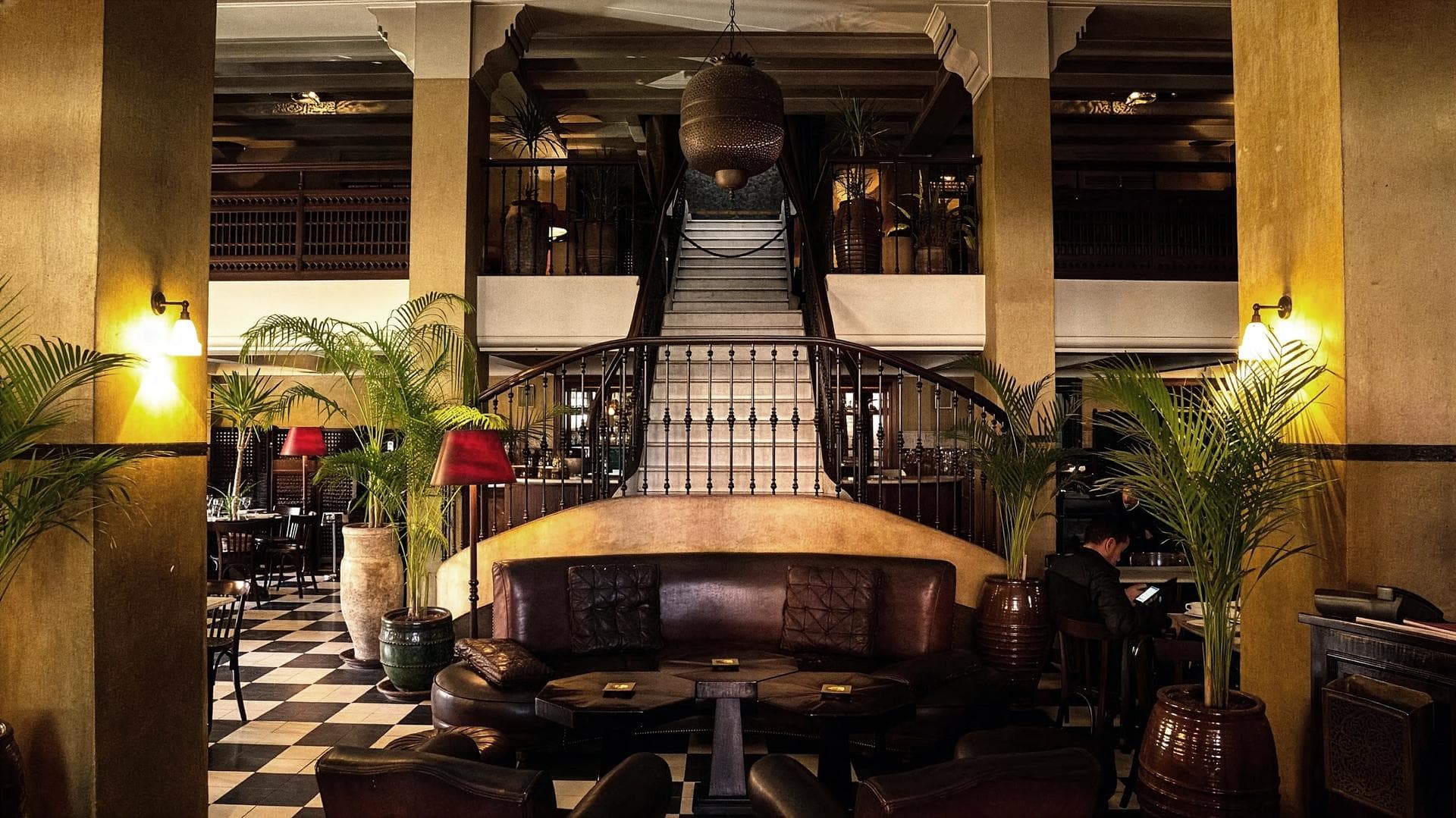
Few buildings in Marrakech carry as much history as the Grand Café de la Poste. Built in the 1920s as a post office and café under the French Protectorate, it was the first structure in modern Gueliz, frequented by Jacques Majorelle and woven into the social life of Pasha El Glaoui, who at one point transformed it into his namesake Café Pacha. After decades of closure, in 2005 the group behind Bô-Zin and La Cantine du Faubourg restored it, preserving the colonial framework and restoring the tone of a brasserie from another era. The interior, with its dark wood, time-patinated mirrors, and slow-turning ceiling fans, has the weight of a place that no longer needs to prove anything. Chef Philippe Duranton's kitchen follows the grammar of the French brasserie with openings towards Morocco. A typical lunch might begin with spider-crab tian from Oualidia and avocado, continue with monkfish skewers in curry or a kefta tagine with eggs and cinnamon semolina, and close with the Grand Marnier soufflé, hot, risen, with that orange note that lingers on the palate. The endive salad with roquefort and walnuts is the kind of dish that reveals a cook's hand through simplicity. The wine list, deep and carefully assembled, is among the most serious in the city. The right moment is a midweek lunch. The terrace beneath the palms, at that hour, is quiet and unhurried. An early evening aperitivo programme runs before dinner for those who want a reason to stay.
Angle Boulevard El Mansour Eddahbi et Avenue Imam، Marrakech 40000, Morocco
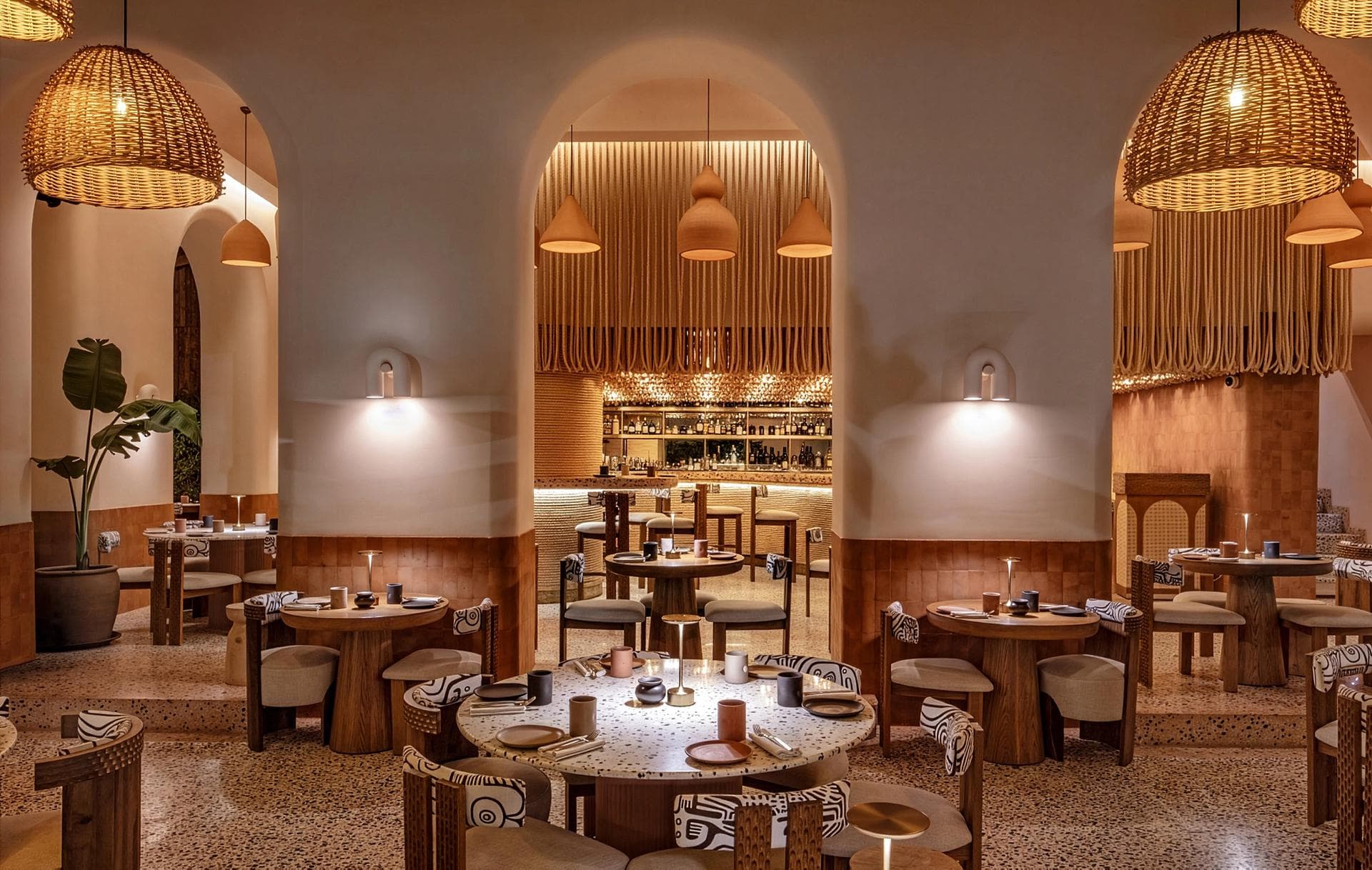
"Mizaan" in Darija means balance. The restaurant, opened in 2024, is the second project from Simo and Omar after L'Mida in the medina, and represents a deliberate change of register. Where L'Mida was a rooftop with a view, Mizaan is a sculpted interior: bejmat tiles, clay, hand-worked plaster, ville-nouvelle granito underfoot. Yacine Sidali's studio, formerly of Studio KO, designed a space where every material has a reason. The bar ceiling, entirely clad in rope, references the Seven Saints of Marrakech, an allusion that anyone who knows the city recognises without explanation. Abdel Alaoui and JM Torres have built a menu that moves between Morocco and the Eastern Mediterranean with a precise feel for texture. The Mizaan Roll, brioche bread with crab, prawns, red-onion pickles, truffle-oil mayonnaise and sumac chips, has quickly earned the word-of-mouth of Gueliz. The bisera frites, fried broad-bean sticks with smoked feta cream, play on acidity and crunch. Pizza on traditional tafernout bread with burrata holds two traditions in a single bite. The grilled octopus with artichokes has a controlled, clean cook. The terrace at lunchtime offers the quieter register of the two; the room comes into its own later in the day.
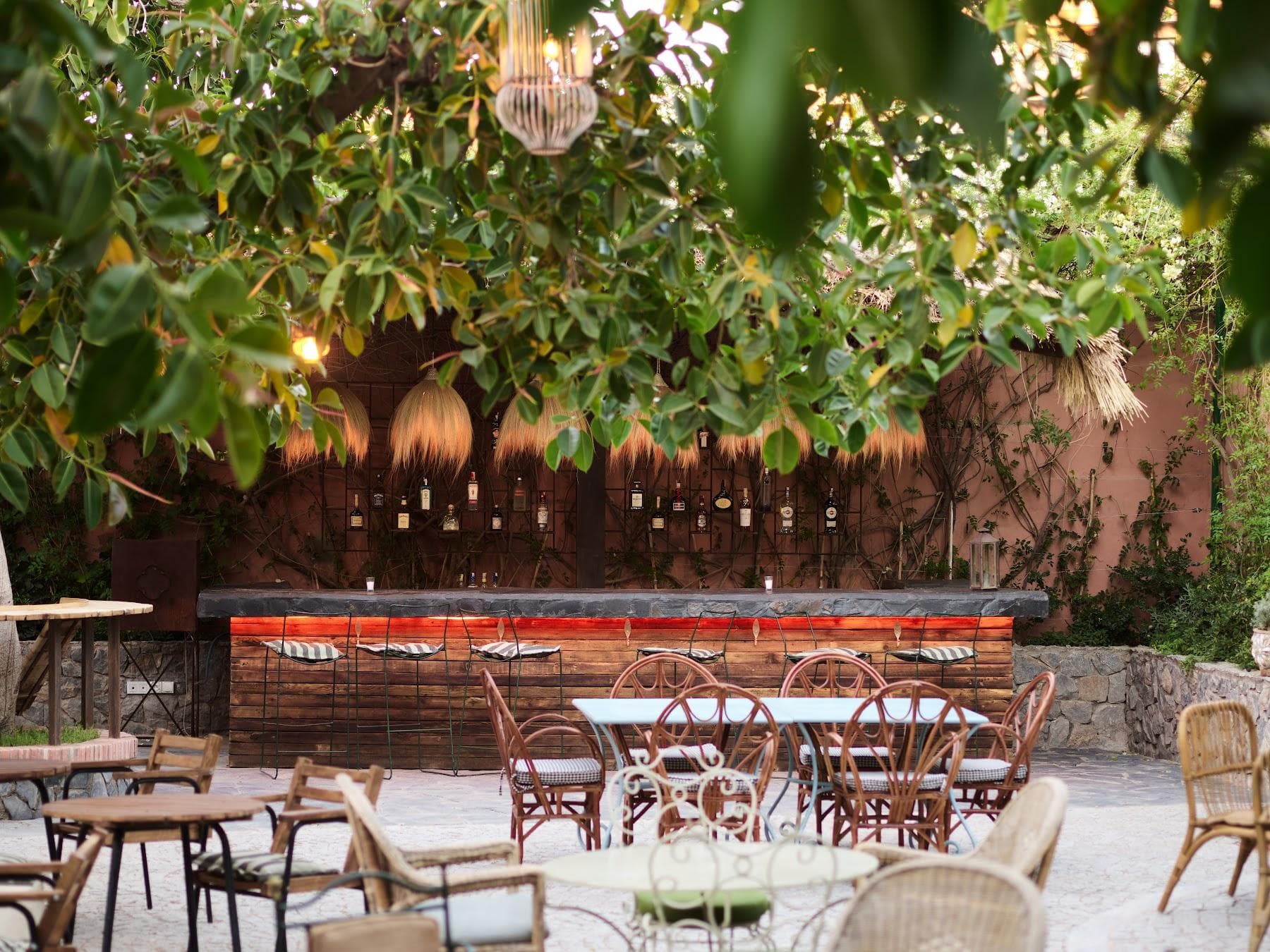
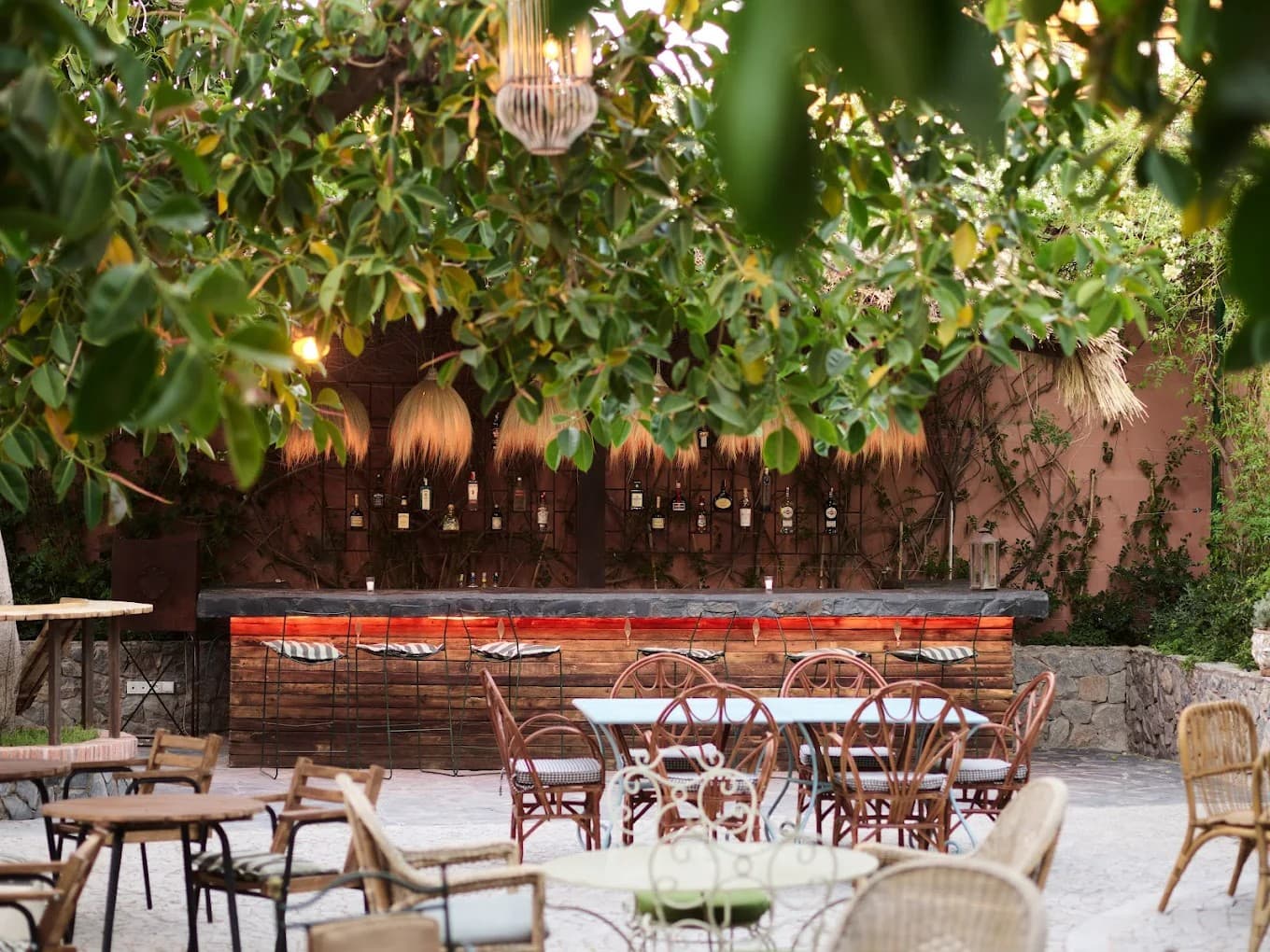
Behind an unmarked door on Boulevard El Mansour Eddahbi, past a passage draped in climbing jasmine, lies one of the more considered restaurant projects to open in Gueliz in recent years. Pétanque Social Club, PSC to regulars, grew out of the recovery of a 1930s boules club that had fallen into disuse after the war. Kamal Laftimi, the restaurateur who already reshaped the city's map with Nomad, Le Jardin and Café des Épices, came across the property and spent several years restoring it with designers Diego Alonso and Alexeja Pozzoni, using recycled materials and local craftspeople. The space unfolds through rooms and gardens. A restored, playable pétanque court. A dining room with shutters repurposed as table tops and 1970s club chairs salvaged from a La Mamounia auction. A library stocked by the Mondo Galeria gallery. A garden of olive trees, candles, magnolia. Each environment carries its own register of sound and light. The cumulative effect is that of a place which welcomes without imposing: a social club before it is a restaurant. The kitchen works on sharing and freshness: avocado tartare, crisp salads, pizza, the PSC Burger, squid risotto. The Sahara Spritz, a riff on the classic with saffron, is the drink that built the bar's identity. Late afternoon, when the garden fills and the DJ begins the set, is the moment PSC delivers its strongest version, but the lunch table, in the quieter garden, is reason enough to go.
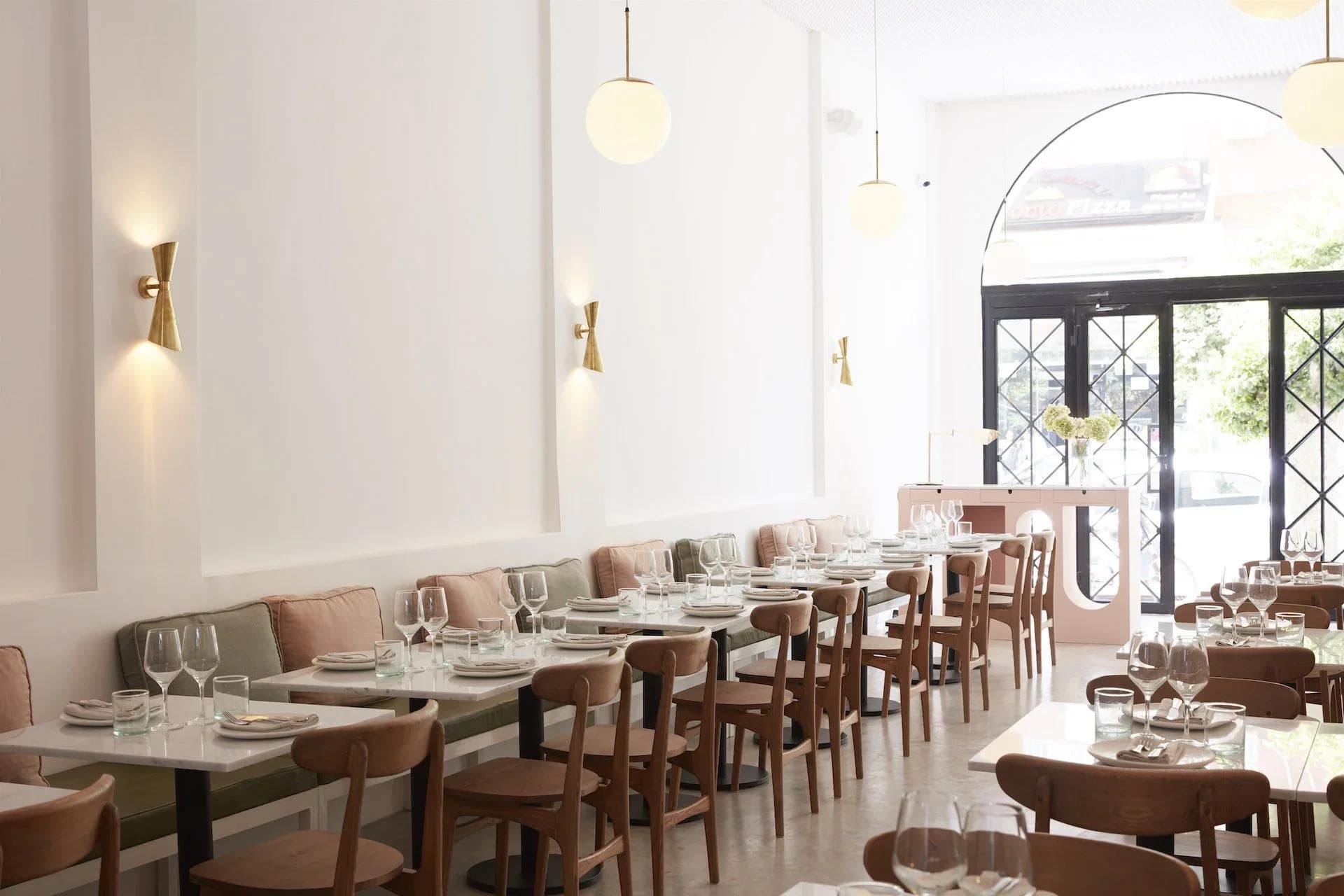
The name is Australia's international dialling code. Cassandra Karinsky, who designed kaftans in Marrakech before changing course, opened +61 alongside Sebastian de Gzell, co-founder of Nomad, and chef Andrew Cibej, who arrived from Australia with a clear idea: cook with local ingredients according to a logic that puts produce at the centre, eliminates the superfluous and does not renounce generosity. The restaurant sits on the 50 Best Discovery list and stands as a reference for anyone seeking quality international cooking in Marrakech. The space tells the same story as the menu. An open volume flooded with light, handmade ceramics, pale wood, an open kitchen. No tablecloths, no ceremony: ordering is for the table. Bread, pasta, cheese and yoghurt are produced every day in the in-house workshop. Suppliers are bio-organic farmers from the region. Chargrilled octopus with chimichurri, roasted cauliflower with almonds and minty chickpeas, black squid-ink linguine, a generously portioned chicken schnitzel: each dish has a clean structure and a flavour that does not try to impress. The pomegranate spritz accompanies lunch as a constant. The lunch format, Monday to Saturday from noon to 4pm, is the one that best expresses the character of the place. Natural light, at that hour, transforms the room. Booking is recommended at weekends.
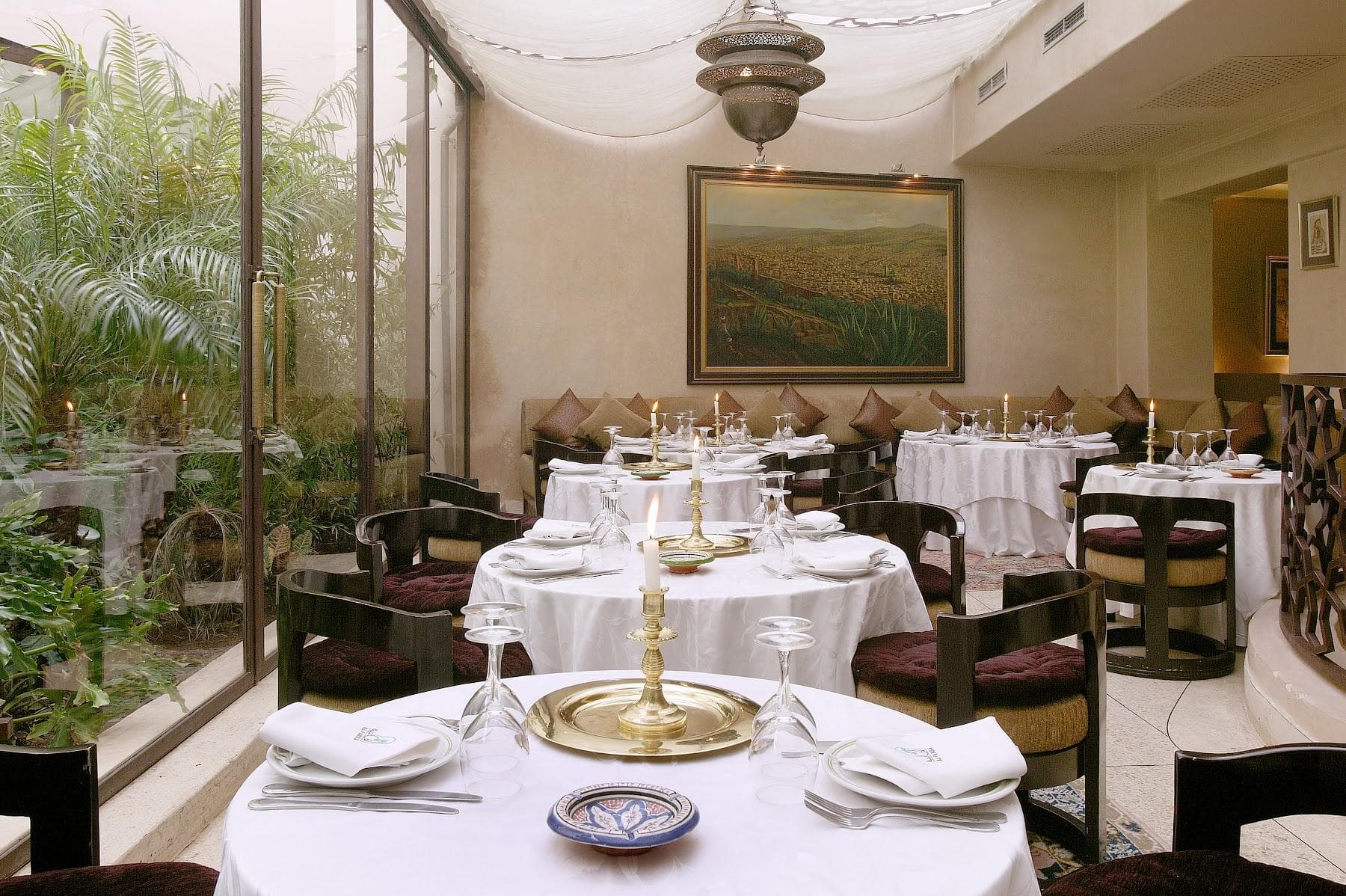
Al Fassia has existed since 1987. The name, "the women of Fez," declares both the origin and the principle. The Chab family founded the restaurant on a model that was unprecedented in Morocco at the time: a kitchen brigade and front-of-house composed entirely of women, a gesture that was at once cultural and entrepreneurial. Nearly four decades later, sisters Saïda and Myra Chab run the operation with the same discipline: Saïda manages the restaurants, Myra the operations. Al Fassia remains one of the rare traditional Moroccan restaurants in Gueliz where marrakchis themselves choose to eat, a signal that carries more weight than any review. The cooking is Fassi in structure and execution. It opens with a spread of salads, around ten small bowls of vegetables, each marinated, dressed and spiced differently from the next, which alone justify the visit. Then come the main dishes. The pigeon pastilla, with thin pastry, moist meat and a dusting of sugar and cinnamon, is a benchmark in the city. The mechoui, a lamb shoulder slow-cooked with almonds and shredded tableside, requires an order placed at least 24 hours ahead and is meant to be shared. The tagines work the balance of sweet, acid and spice with the assurance of someone who has repeated these gestures every day for decades. The setting is contained: banquettes, cushions, white tablecloths, lighting that does not distract. The service, all-female, closes the meal with a gesture that belongs more to domesticity than to hospitality: orange-blossom water poured over the hands. Friday couscous is a standing appointment among regulars. Al Fassia closes for an annual break in high summer; check ahead if visiting in July or August. Booking is always necessary, particularly for dinner and at weekends.
You may also like…