Best Friday Couscous in Marrakech: Five Tables for the Week's Most Important Meal
14 April 2026
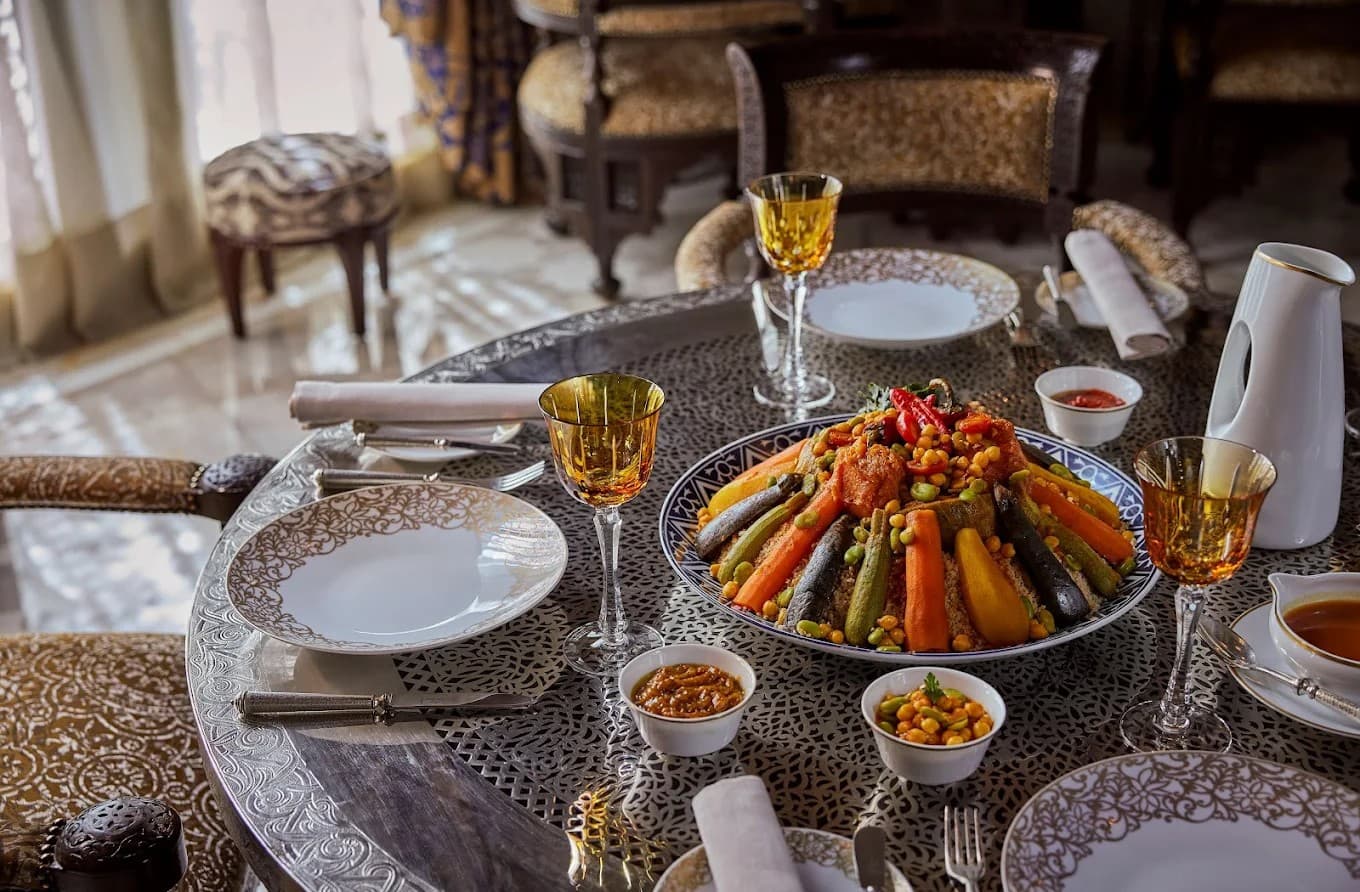
From a Michelin-adjacent dining room at the Royal Mansour to a shared bowl with no individual plates in the medina, Friday couscous in Marrakech covers the full register of the tradition it belongs to.
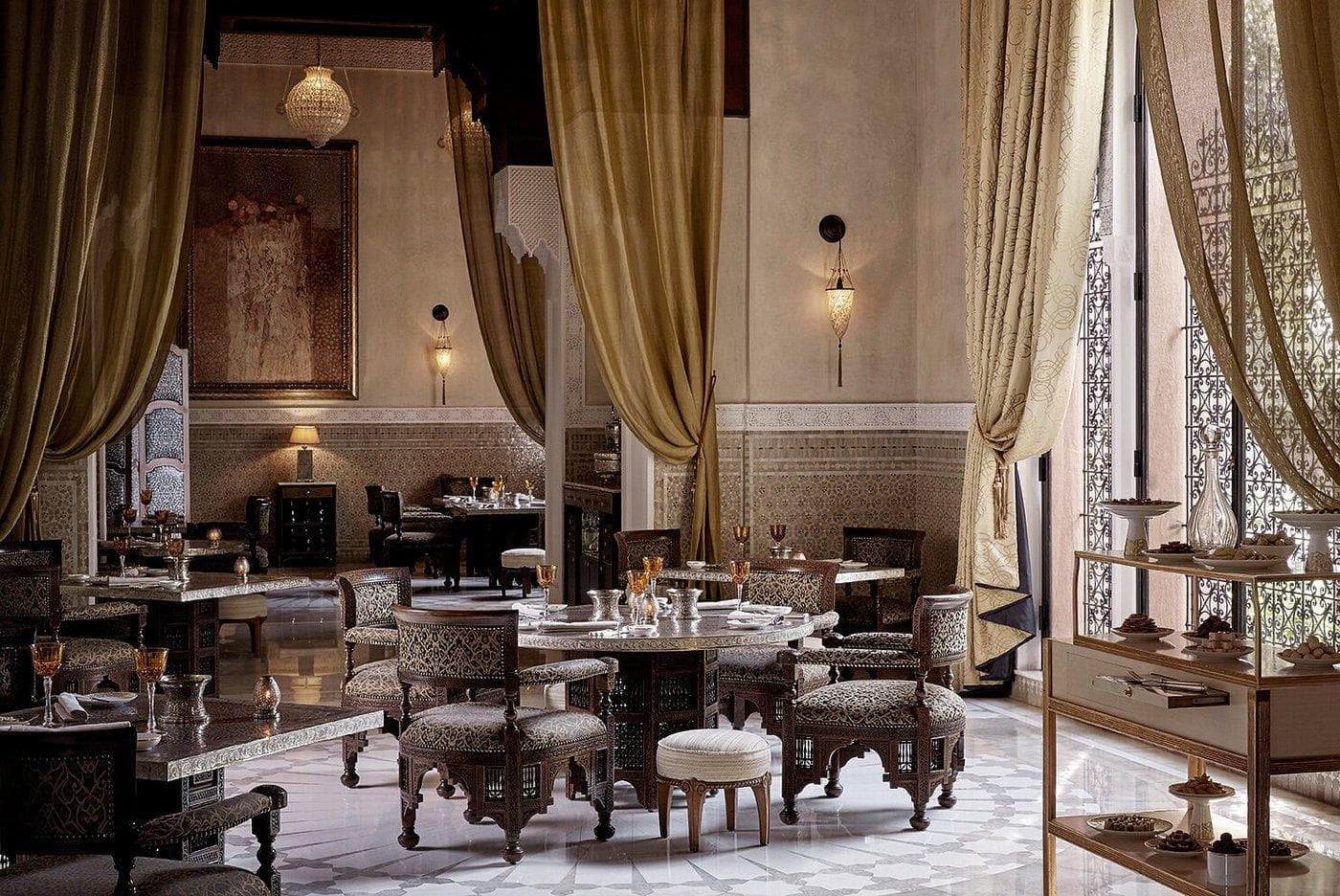
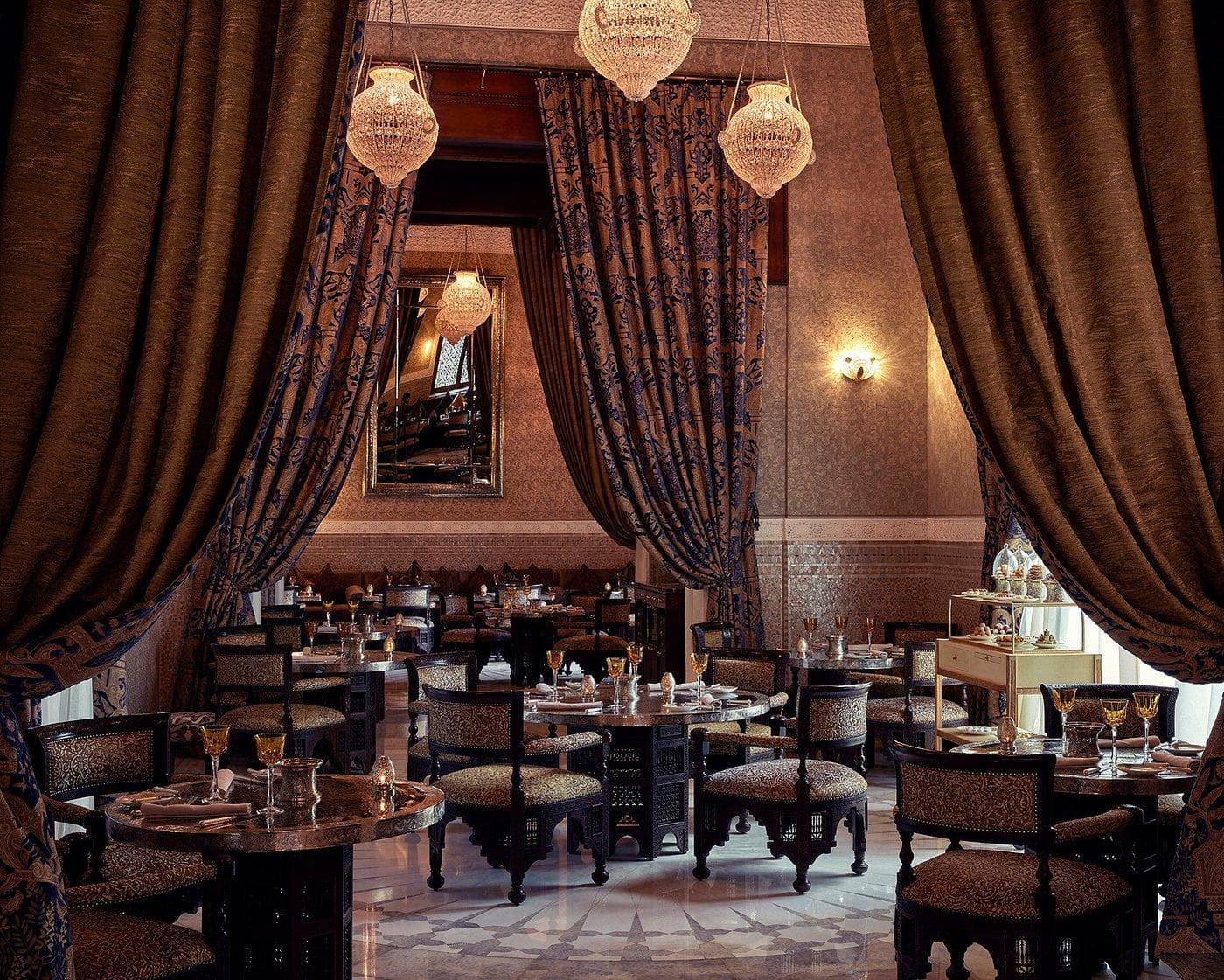
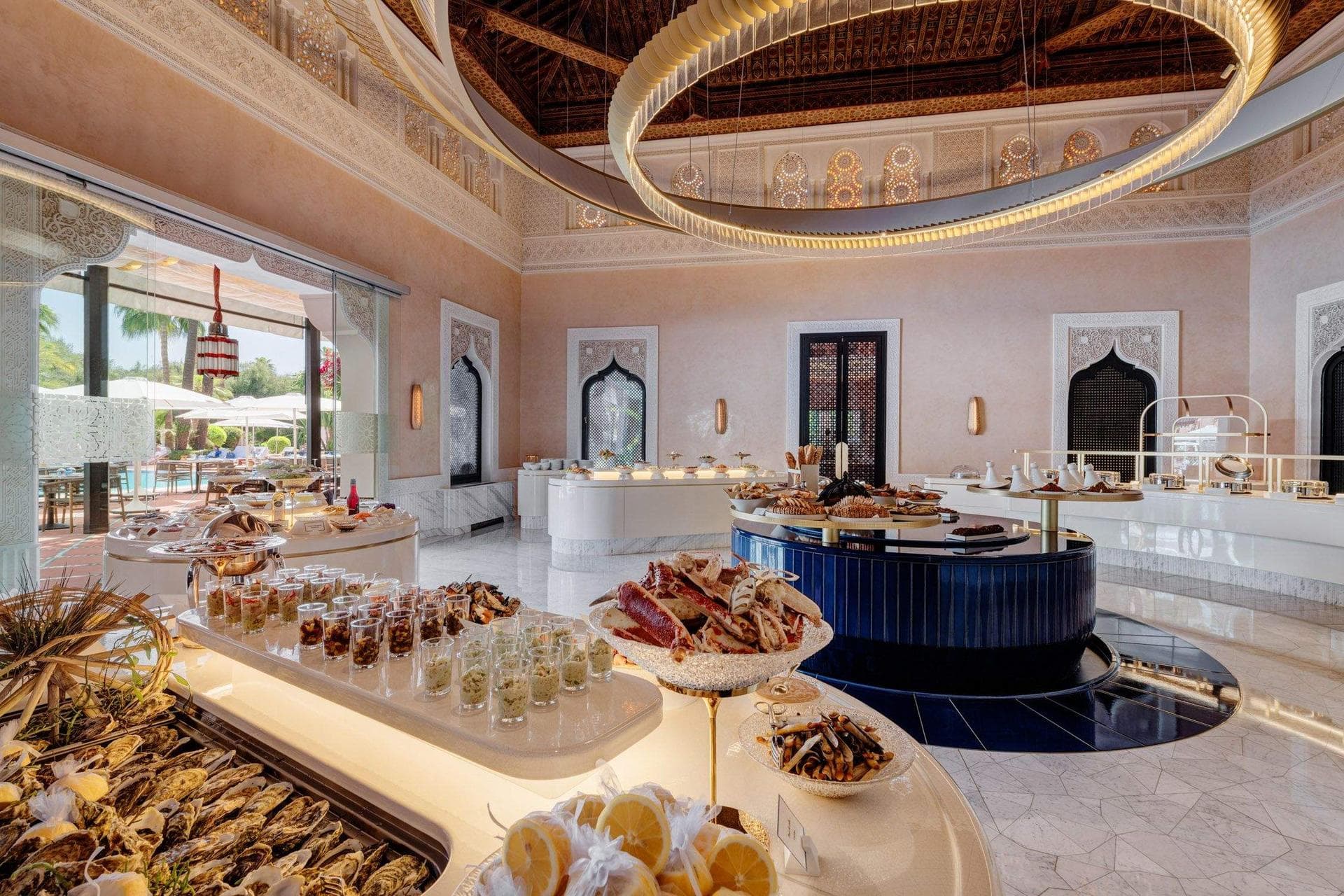
La Grande Table Marocaine serves its Friday Couscous every week from noon to 2:30 PM at 450 MAD per person, which represents, in the register of the Royal Mansour, among the most accessible entries into one of the most formally composed dining rooms in Marrakech. The kitchen operates under the joint direction of Michelin-starred Chef Helene Darroze and Chef Karim Ben Baba, whose shared project at La Grande Table Marocaine, ranked 22nd in MENA's 50 Best Restaurants in 2025, is the contemporary refinement of ancestral Moroccan recipes without the erasure of their taste or cultural memory. The Friday menu begins with a selection of Moroccan salads before arriving at the couscous itself, presented in three versions: vegetarian, with chicken, or with lamb neck, each built on a seven-vegetable base steamed and spiced to the kitchen's standard. The meal closes with a milk pastilla infused with orange blossom water and almonds, alongside the traditional orange and cinnamon salad. Chef Ben Baba has published the recipe for the seven-vegetable couscous on the Royal Mansour's own platform, a gesture that reflects the kitchen's understanding of the dish as cultural heritage rather than proprietary content. The Friday Couscous is the most direct point of contact between the Royal Mansour's kitchen and the broader tradition it works within: the moment when the room's formality and Moroccan domestic culture arrive at the same table and make a common argument.
Hôtel Royal Mansour, Rue Abou Abbas El Sebti, Marrakech 40000, Morocco
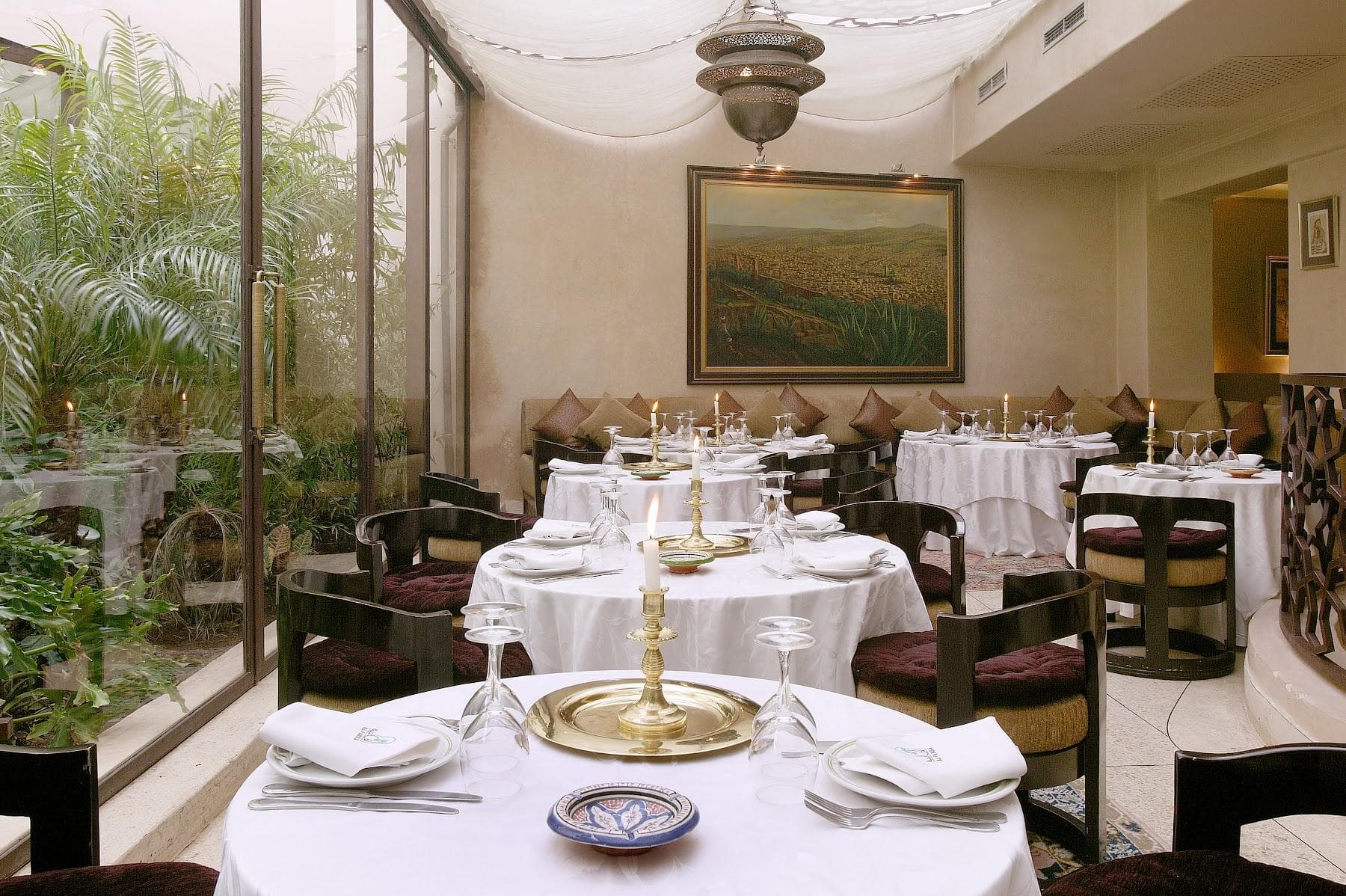
Al Fassia has been among Marrakech's reference addresses for Moroccan cuisine since 1985, when sisters Myra and Saida Chab opened the restaurant drawing on the culinary tradition of Fez. The name means the women of Fez. The founding commitment, shaped in part by the sisters' late mother Fatima Chab, was to a restaurant staffed entirely by women and trained in both cooking and front-of-house service, which was, in 1985, a first in Morocco. Four decades later, Al Fassia has functioned as both restaurant and training institution, preparing generations of women for careers in the Moroccan hospitality industry. Its presence on the 50 Best Discovery list confirms what Marrakchis have understood for a long time. The couscous is steamed to the texture the tradition requires, then paired with seasonal vegetables in combinations that follow the Fassi domestic repertoire without adaptation to international expectation. The menu extends to pastillas, tagines, and a celebrated slow-cooked lamb shoulder, but on Friday the couscous anchors the table. Al Fassia's Gueliz address carries the same culinary standard and founding commitment it has maintained for four decades. For a Friday couscous that comes with institutional memory and consistent practice, Al Fassia holds the argument as clearly as any restaurant in the city.
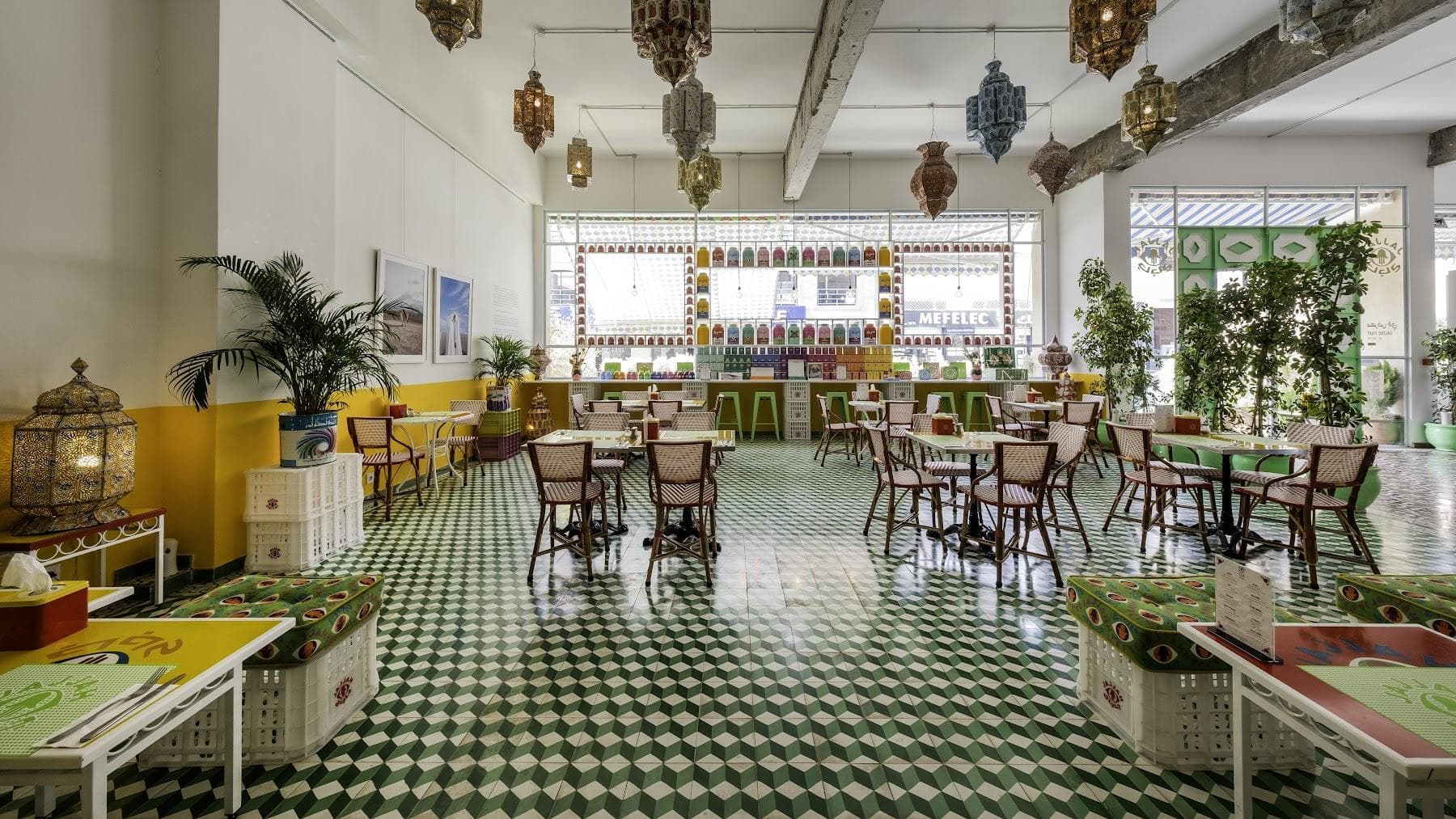
Hassan Hajjaj's concept space in Sidi Ghanem operates, every Friday from noon, as one of the most genuinely local couscous destinations in the city. The couscous of the day is prepared fresh, the kitchen is open to the dining room so the process is visible, and the price, 6.5 euros per person, places the Friday couscous at Jajjah in a different register than any other address on this list. It is, in the most direct sense, the tradition at something close to the price the tradition historically carried: a dish made to be shared, served to a room that comes specifically to share it. The room fills every Friday with Marrakchis who use the space as a weekly gathering point, which is the closest approximation of the domestic couscous ritual that a public venue can produce. The all-female culinary team prepares the day's version, the decor, Hajjaj's tin-can frames, bold patterns, and custom-printed objects, retreats behind the social logic of the meal, and the room becomes what Friday lunch in Marrakech is supposed to be: a large bowl, people arriving in no particular hurry. Reservations are strongly recommended.
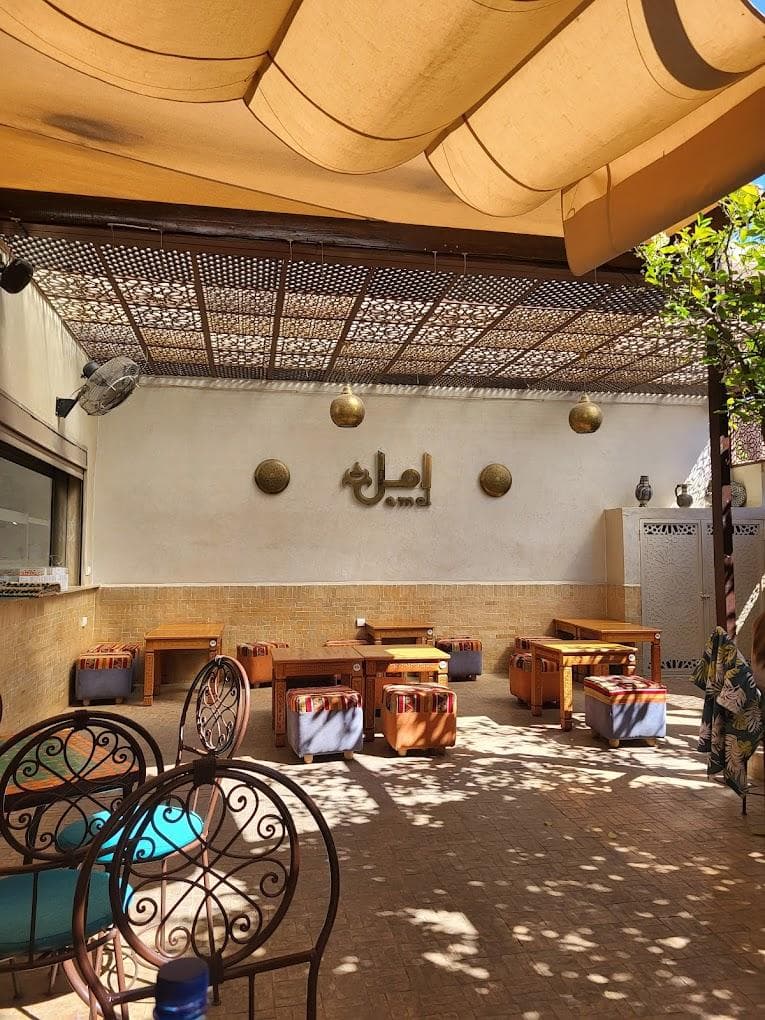
Nora Belahcen Fitzgerald founded Amal in 2012 after meeting a single mother begging in the city six years earlier. The organization trains underprivileged women, including many single mothers among Morocco's most economically vulnerable groups, in culinary arts over four-to-six-month programs. Since opening, more than 300 women have completed the training, with 86% entering employment in the restaurant industry upon graduation. The restaurant in Gueliz, open for lunch six days a week from noon to 3:30 PM, is the public expression of that mission: a kitchen where the cooks are practicing their profession, sometimes for the first time, under supervision that takes the result seriously. On Friday, Amal serves couscous and only couscous. The regulars know it, and the lunch count on Friday runs two to three times the daily average. The crowd spans Marrakchis observing the weekly tradition and visitors who arrive because purpose and quality occupy the same address. The couscous is prepared by trainees following the standard recipe without the shortcuts that a commercial kitchen might introduce, which gives it a directness that more established restaurants sometimes lose. Eating at Amal on Friday is participating in a tradition on two levels simultaneously: the culinary tradition of the dish and the social tradition of women training other women to carry a skill forward.
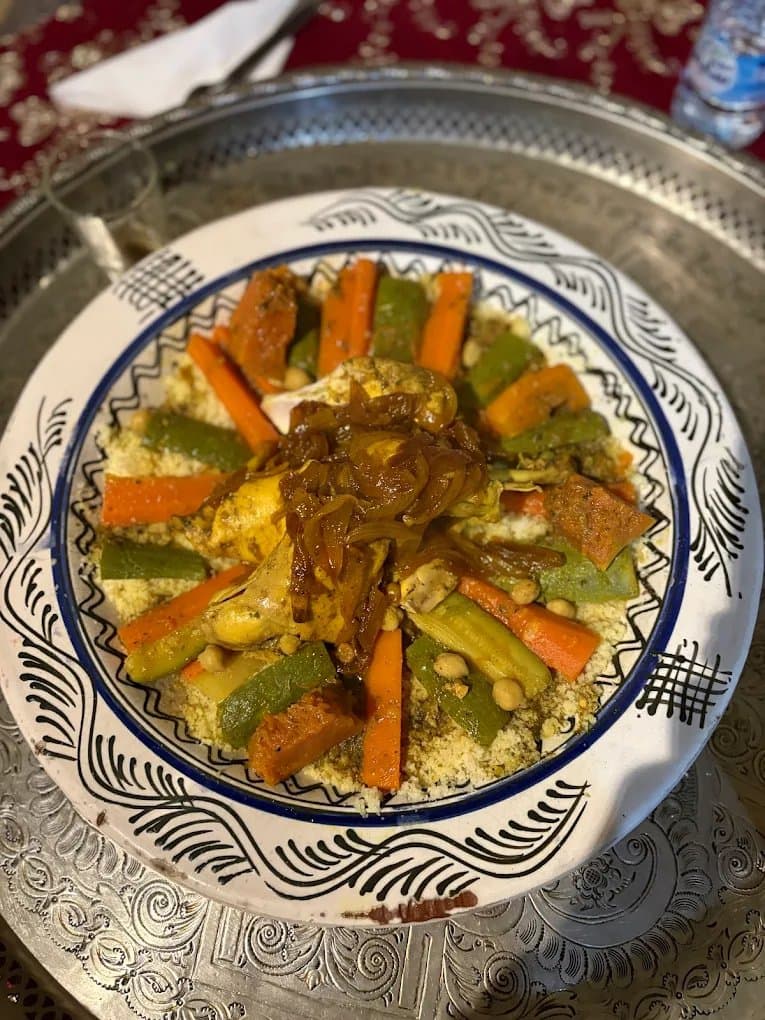
Restaurant Naima is a small, family-run address operated by two Moroccan women from a small room in the medina that feels more like a private home than a restaurant. The menu does not exist in the usual sense: two options only, vegetable couscous or chicken couscous, available at lunch. The couscous is prepared by hand in the traditional method, steamed slowly over the broth that will flavor it, and carried to the table in one large shared bowl from which everyone eats together. No individual plates. No menu to deliberate over. The fixed price per person, approximately 10 euros, includes mint tea, water, and pastries, and the room's approach to hospitality is built into that simplicity. What the absence of a menu and individual plates produces is not deprivation but focus. Naima offers the version of Friday couscous closest to the domestic tradition from which this whole article departs: a single dish, a shared bowl, the particular intimacy of a communal table where the meal is also the social occasion, and where the conversation that happens around it is as much a part of the experience as the food itself. Those who return for it year after year describe it as among the most authentic versions in the city, and the consistency reported over years by those who return for it suggests a kitchen that has reached its form and sees no reason to move away from it. For the couscous understood as social ritual above culinary event, Naima is the most direct and honest address on this list.
Rue Azbezt, Marrakesh 40000, Marocco
You may also like…