Where to Stay in Marrakech: Riads, Grand Hotels, and the Estates Beyond the Walls
A field guide to Marrakech's accommodation landscape, and how to choose the experience that actually matches who you are as a traveller
10 April 2026
The question sounds simple. It almost never is. Where to stay in Marrakech is less a logistical choice than a philosophical one. It determines not just the quality of your sleep but the entire register of your stay. The city has one of the most layered hospitality landscapes in the world, and the options cannot be meaningfully compared without first understanding what each one is actually offering. A riad in the Medina and a resort in the Palmeraie are not two versions of the same thing. They are two fundamentally different propositions about what a trip to Marrakech should feel like. Here is how to read them.
The Riad: Living Inside the City
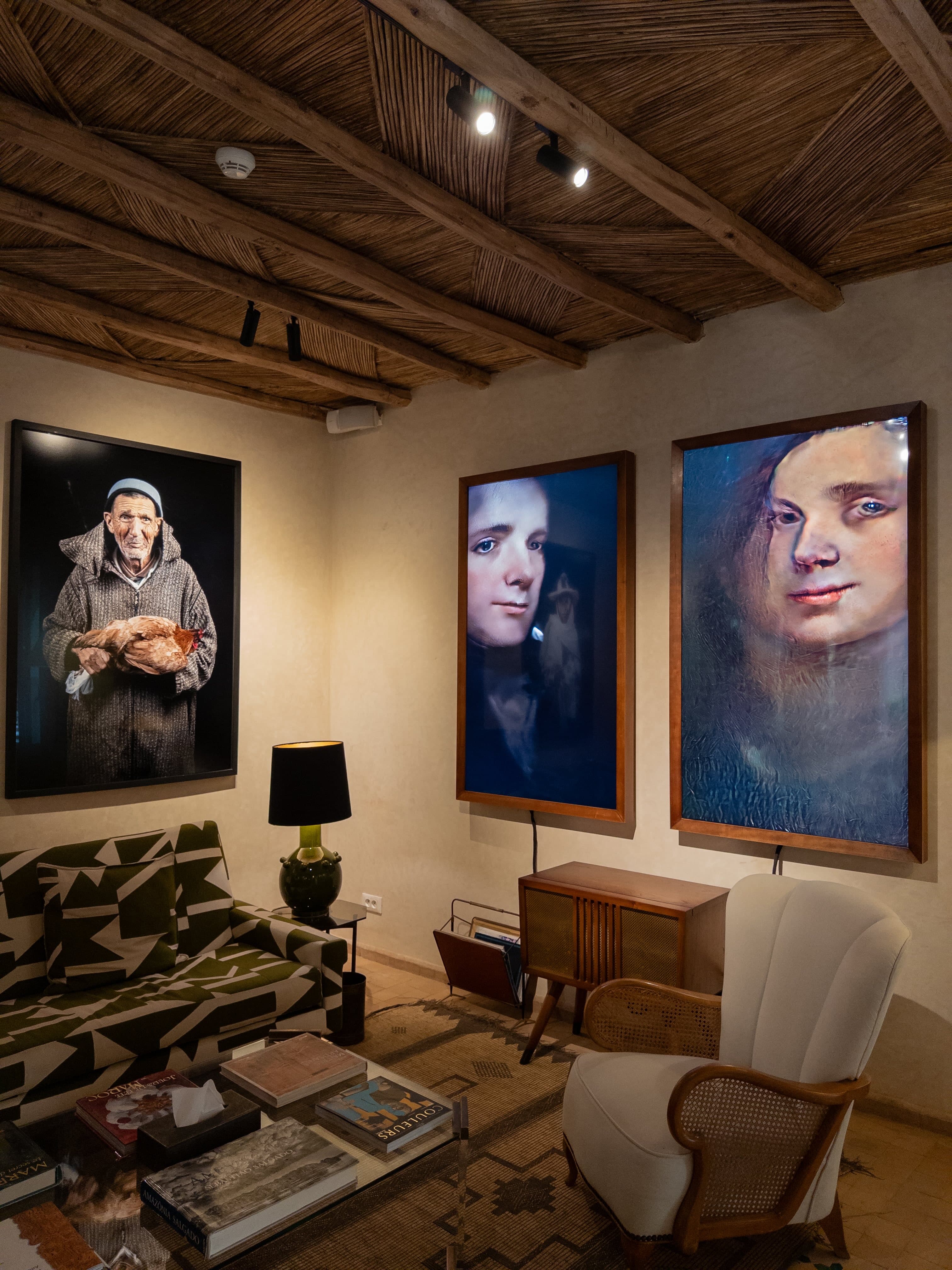
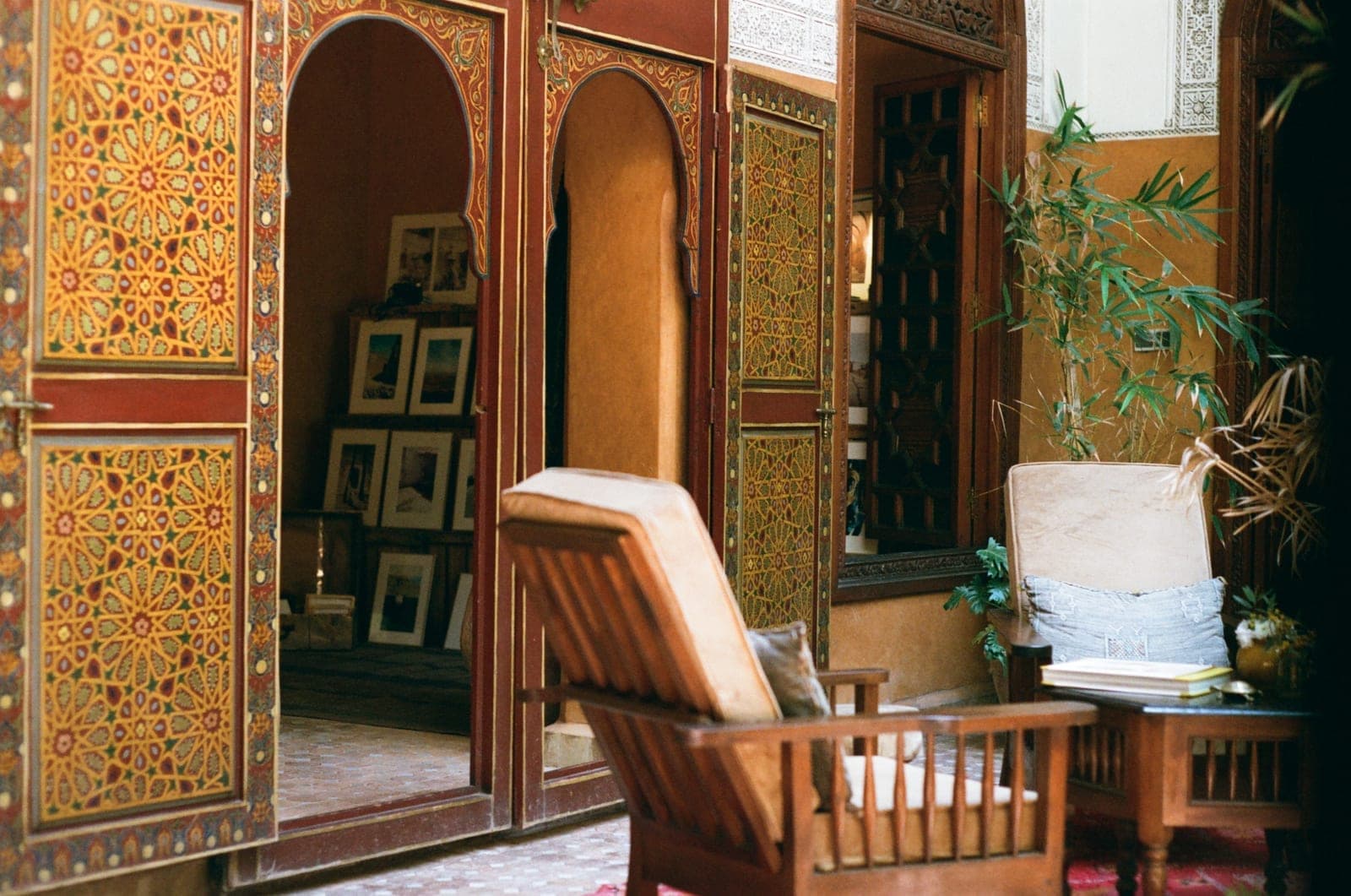
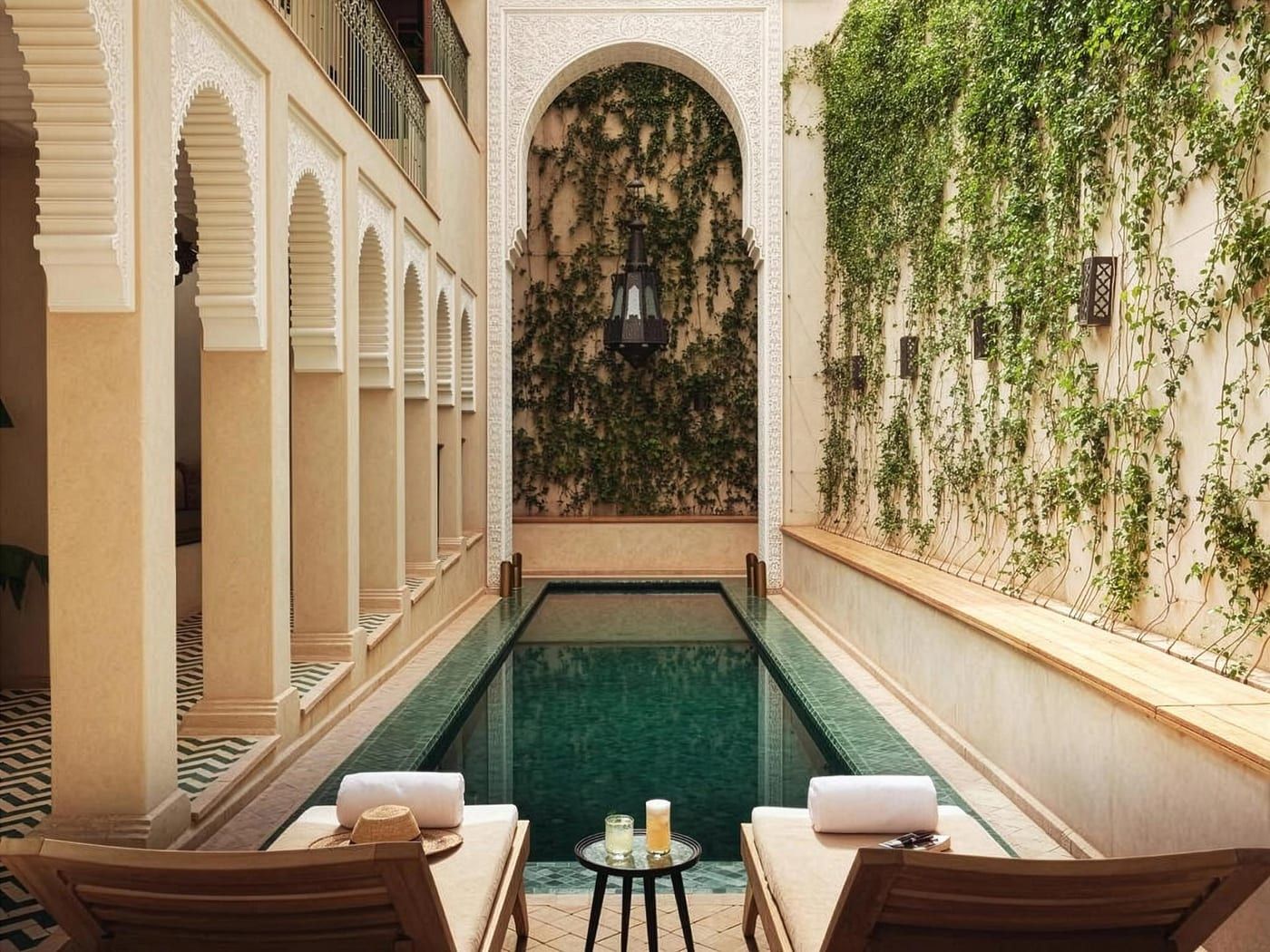
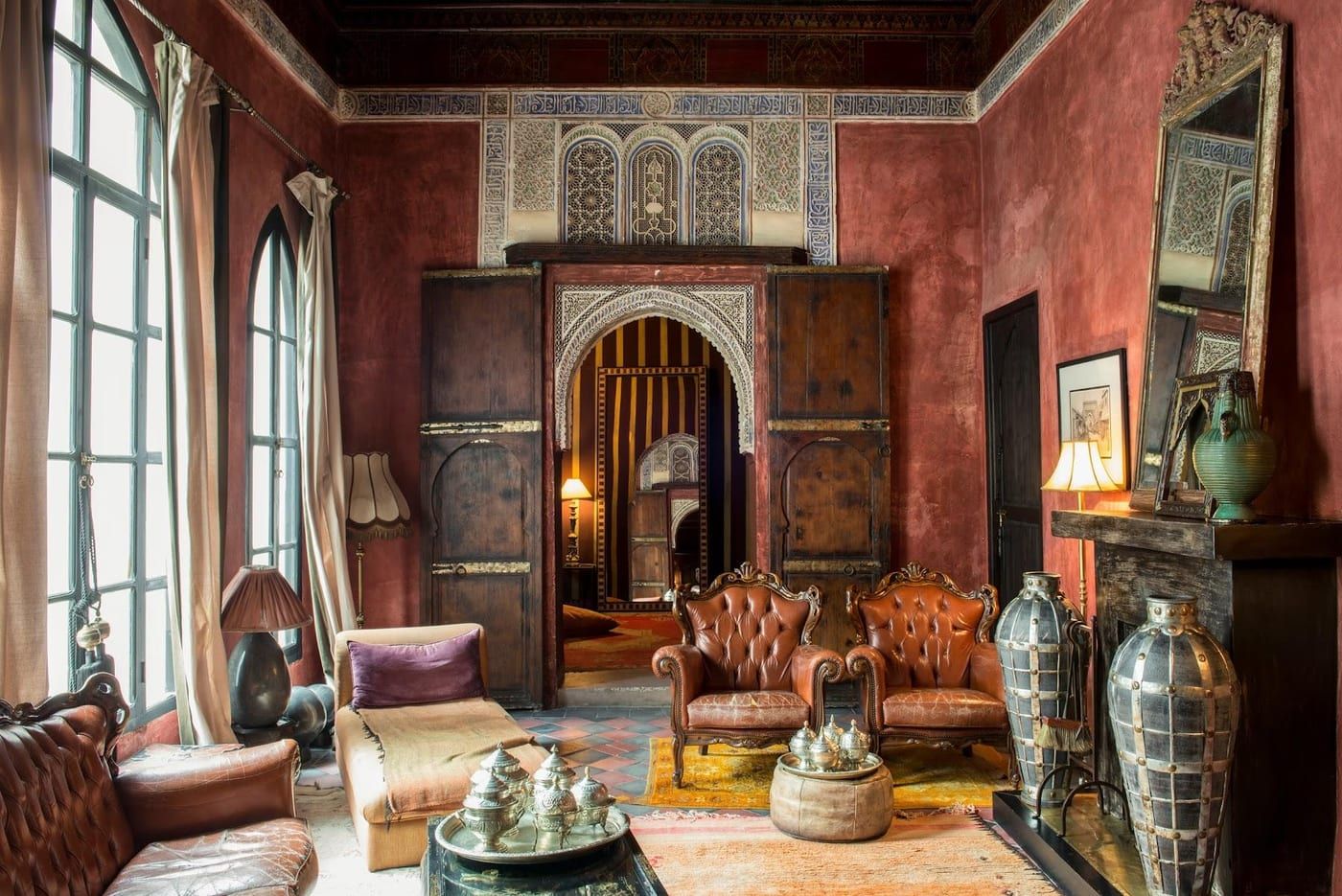
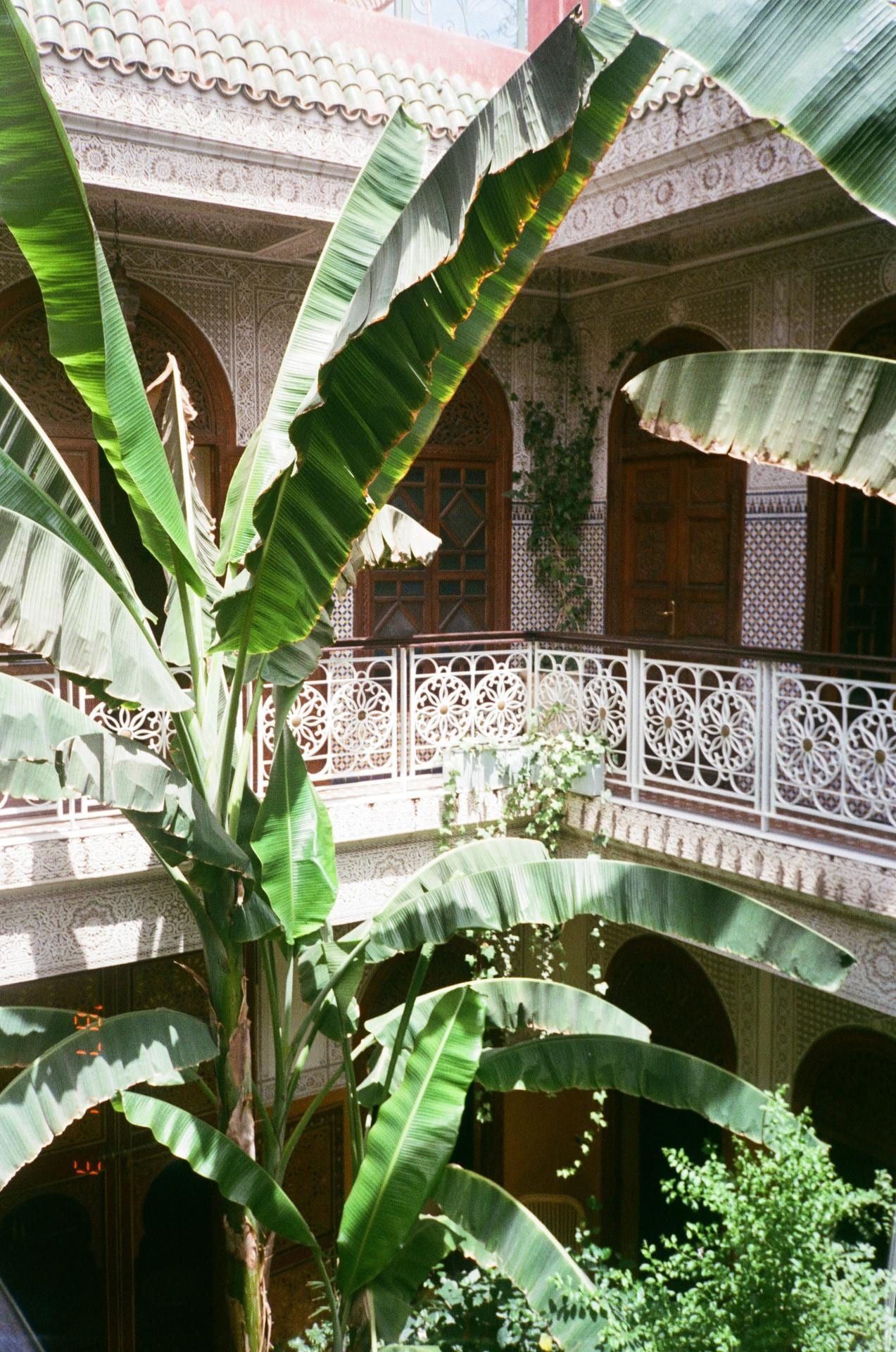
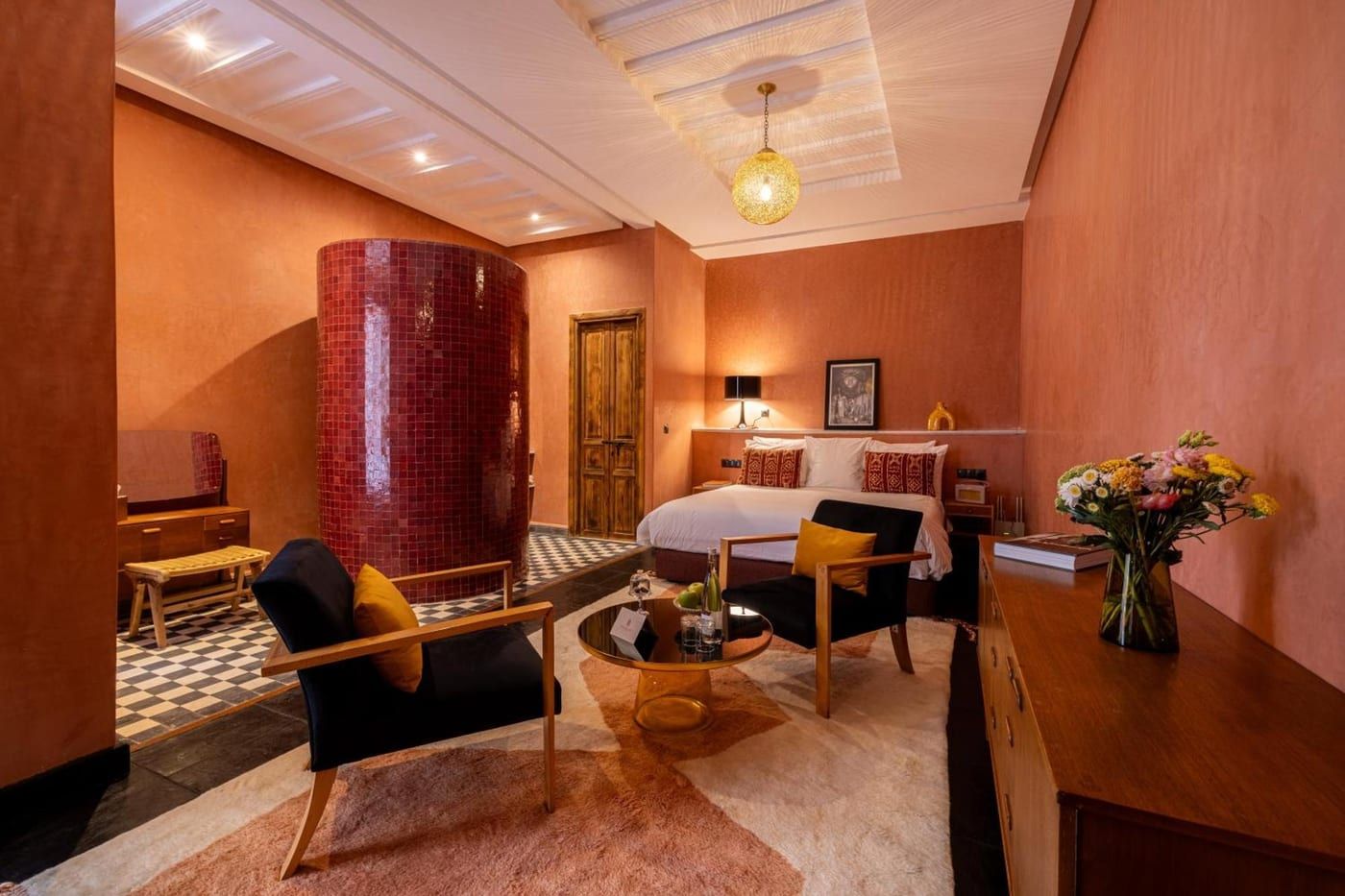
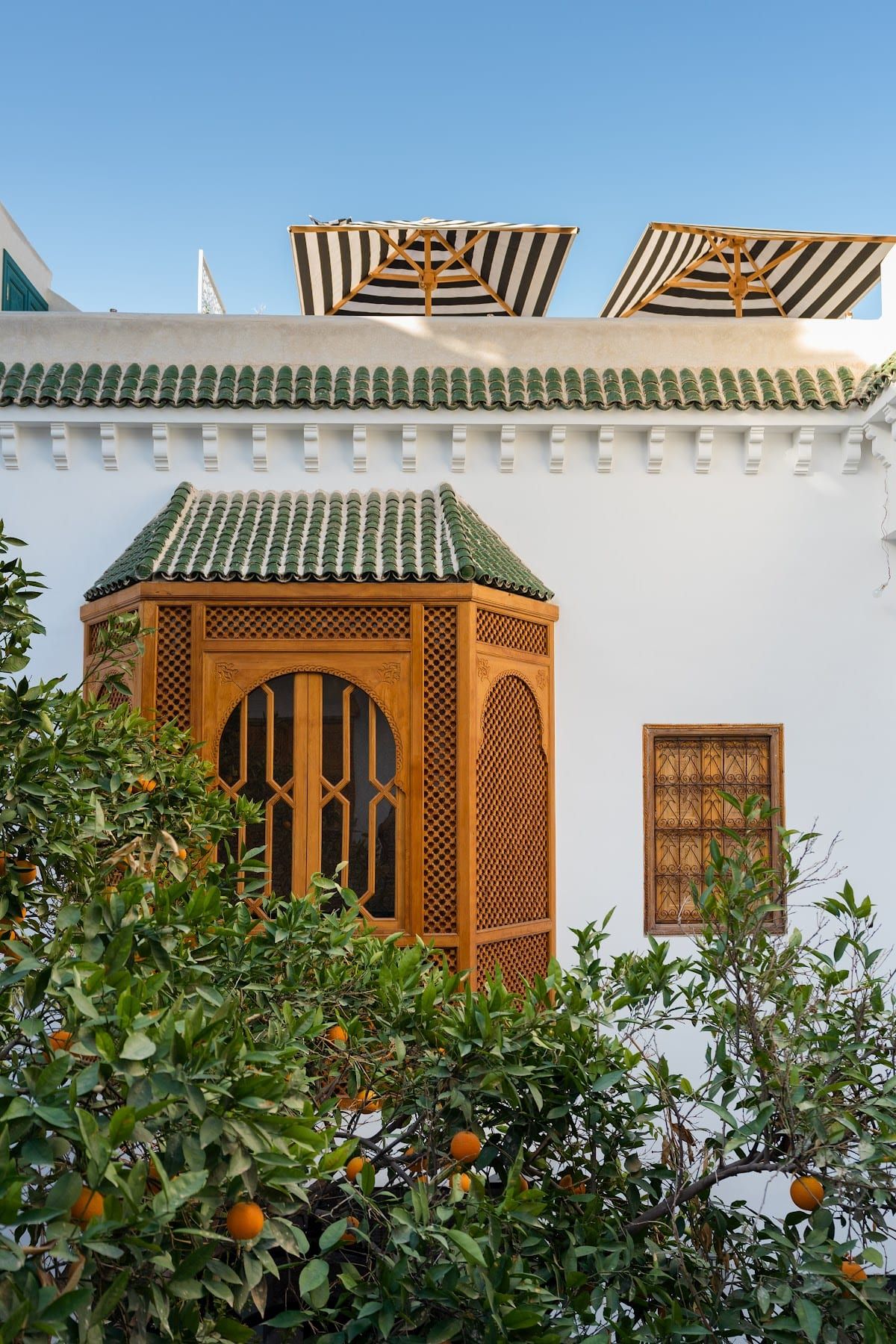
A riad is not a hotel that happens to look Moroccan. It is an architectural typology, a courtyard house turned inward, where the life of the building organises itself around a central open space rather than projecting outward onto the street. The facade tells you almost nothing. What happens behind it is everything. Staying in a riad means waking up to the sound of the Medina: the call to prayer, the first carts, the swallows crossing the courtyard. It means navigating alleys that have no business being navigated, finding your way back by feel more than by map. It is the most immersive version of Marrakech available, and for a certain kind of traveller (curious, unhurried, genuinely interested in the city rather than in a curated version of it) there is nothing better. The range within the category is considerable. El Fenn operates at the intersection of hospitality and contemporary art, its rooms and terraces layered with collected objects and shifting light. Riad Jardin Secret sits around one of the city's few remaining private gardens, offering a quieter, more contained beauty. The Mellah, named for the historic Jewish quarter it occupies, brings a design sensibility that is more controlled and editorial. Izza, Riad Botanica, Riad Brummell, Dar Darma: each has a distinct character, a specific atmosphere, a different idea of what intimacy should feel like. The traveller the riad suits: someone who wants to be in Marrakech, not adjacent to it. Someone who does not need a pool to decompress. Someone for whom the texture of a city is as important as its comforts.
The Grand Hotel: The Palace Logic
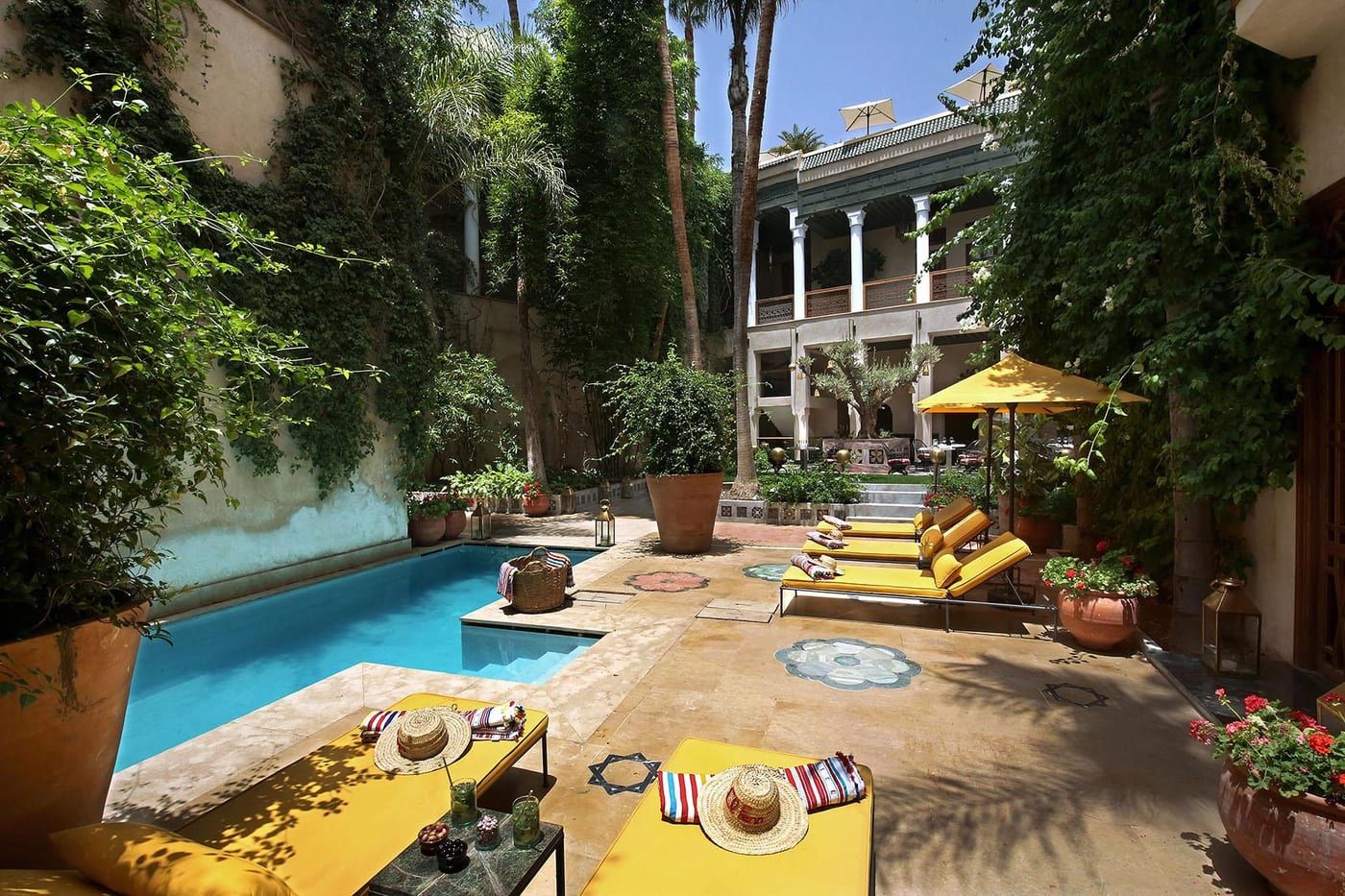
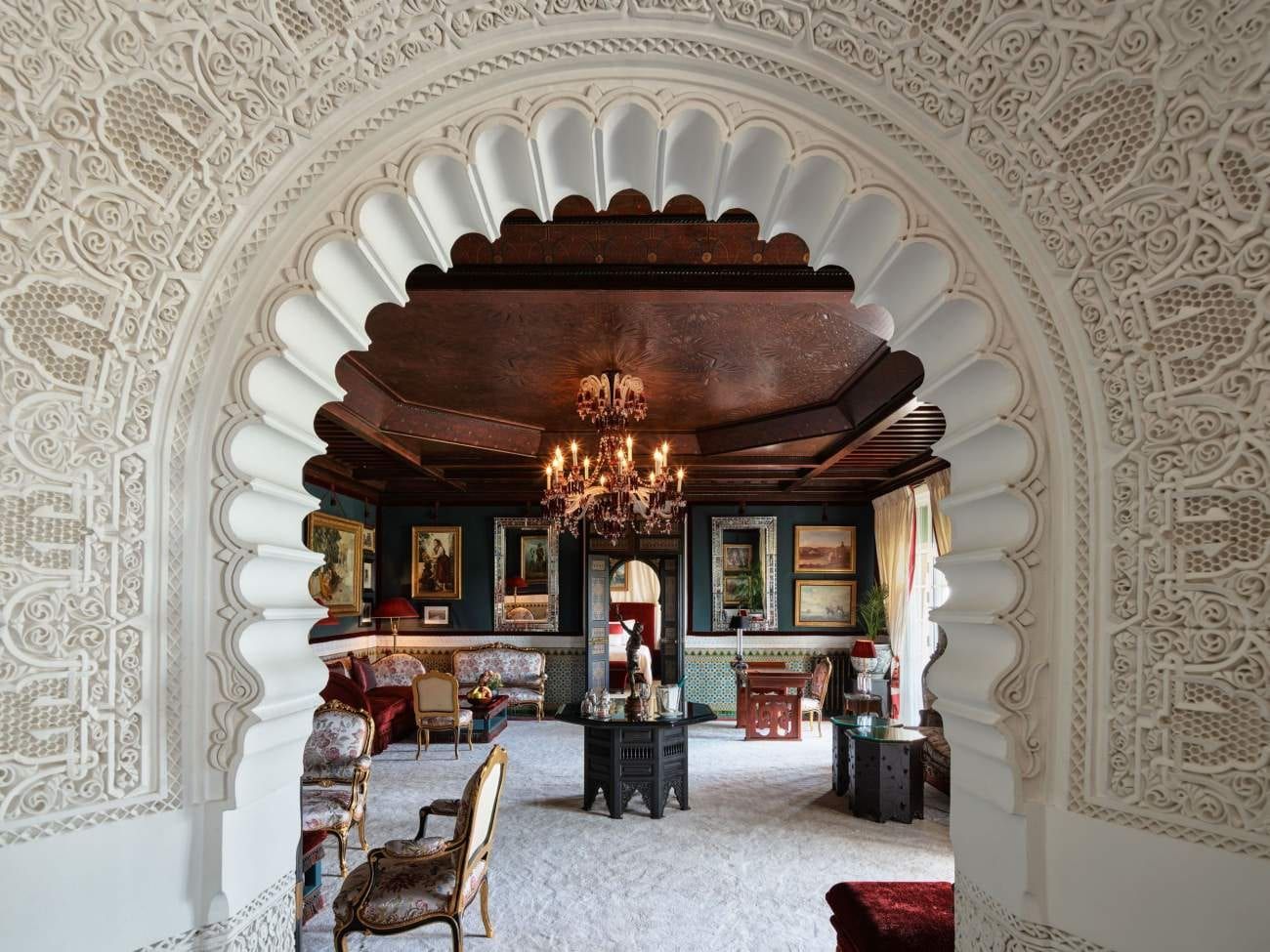
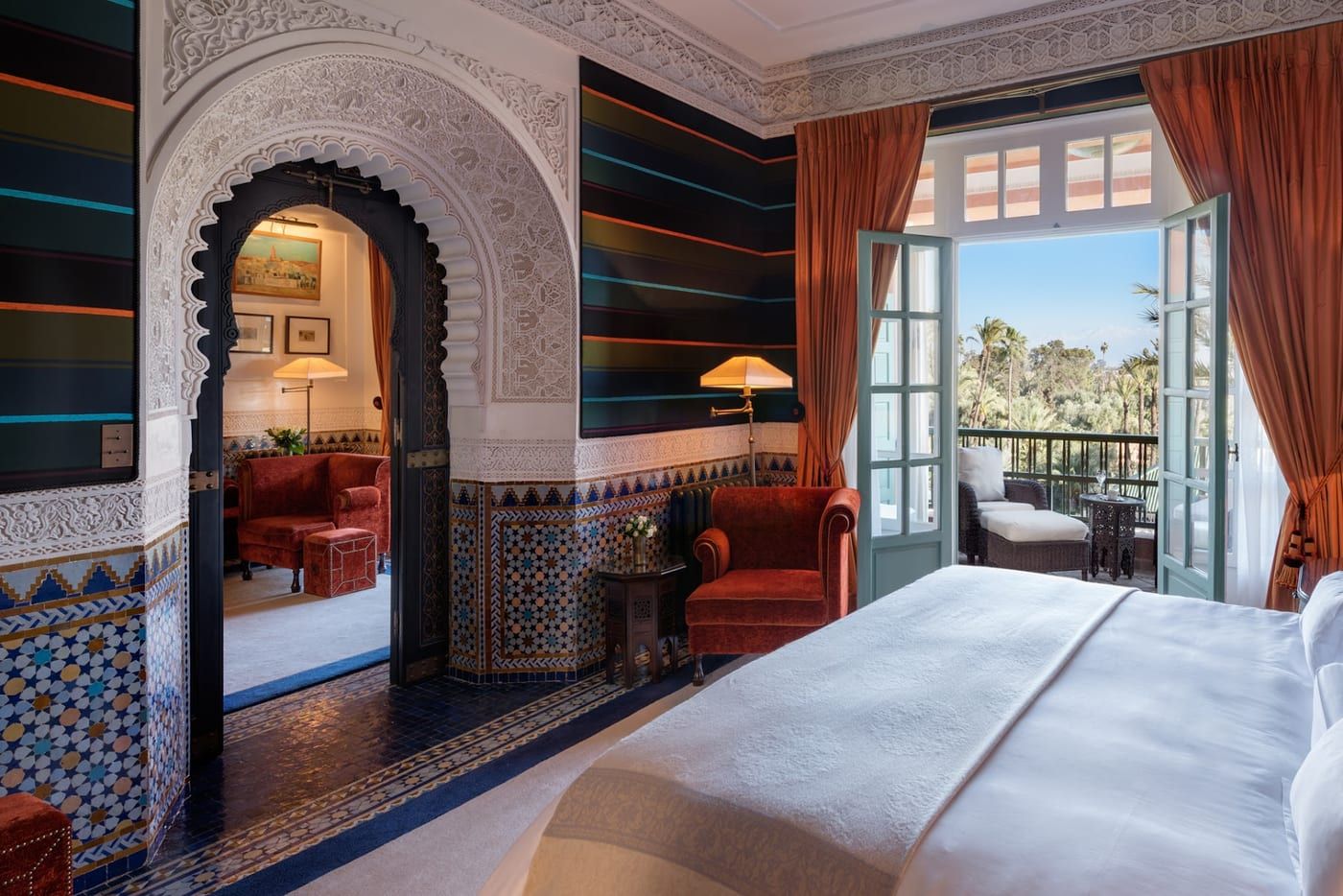
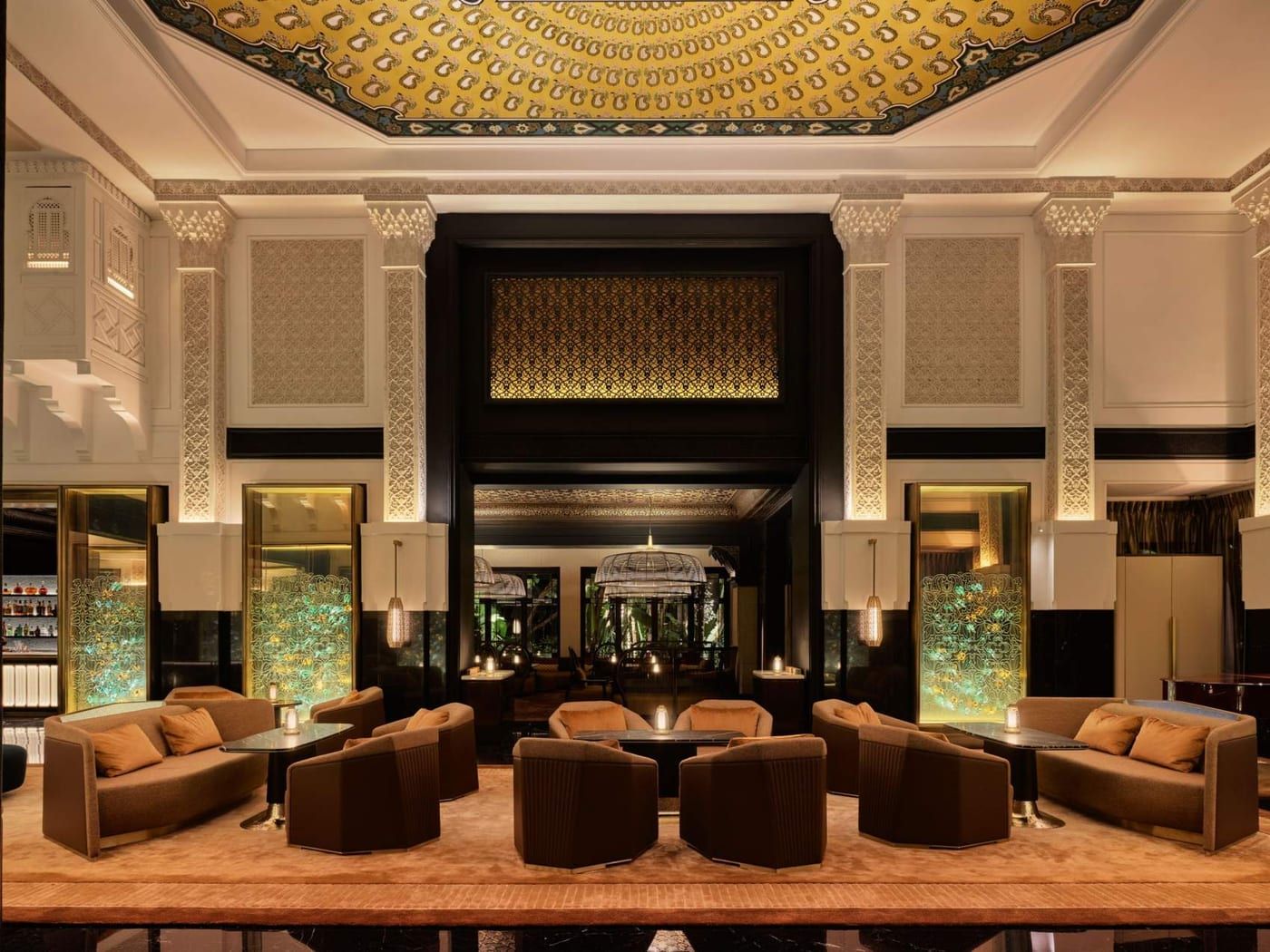
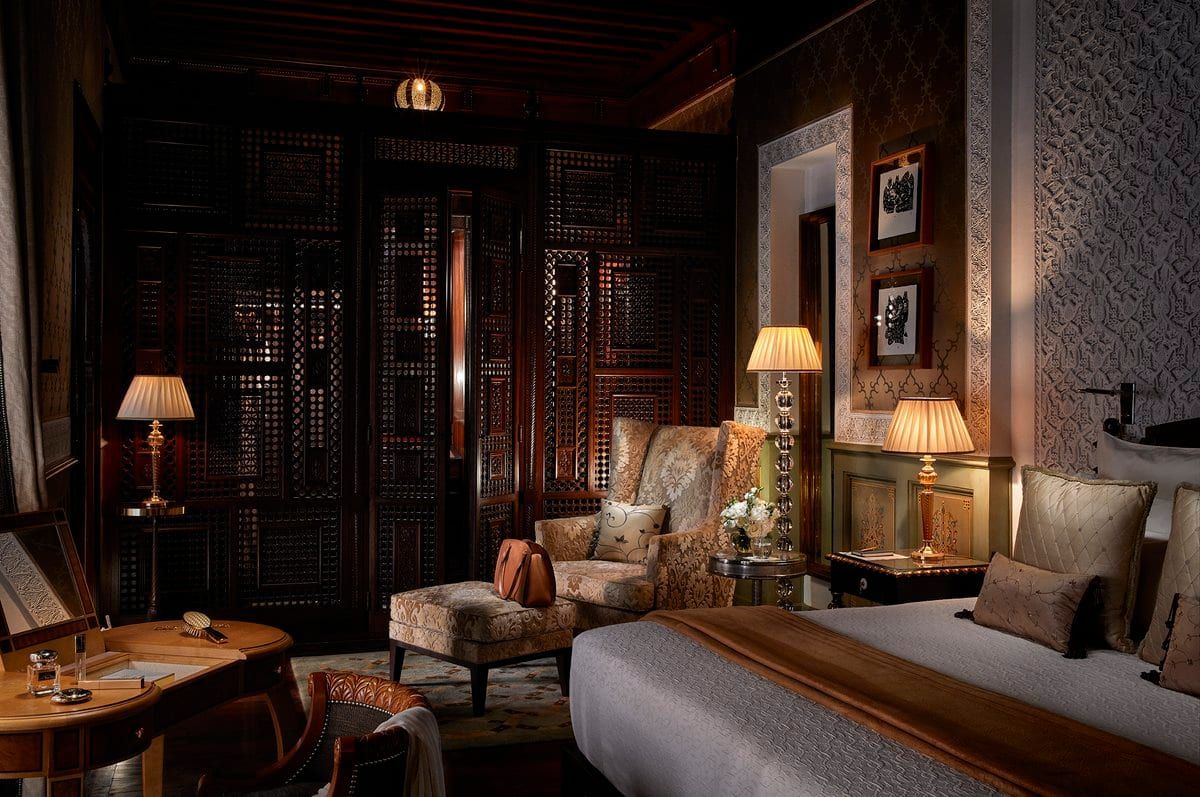
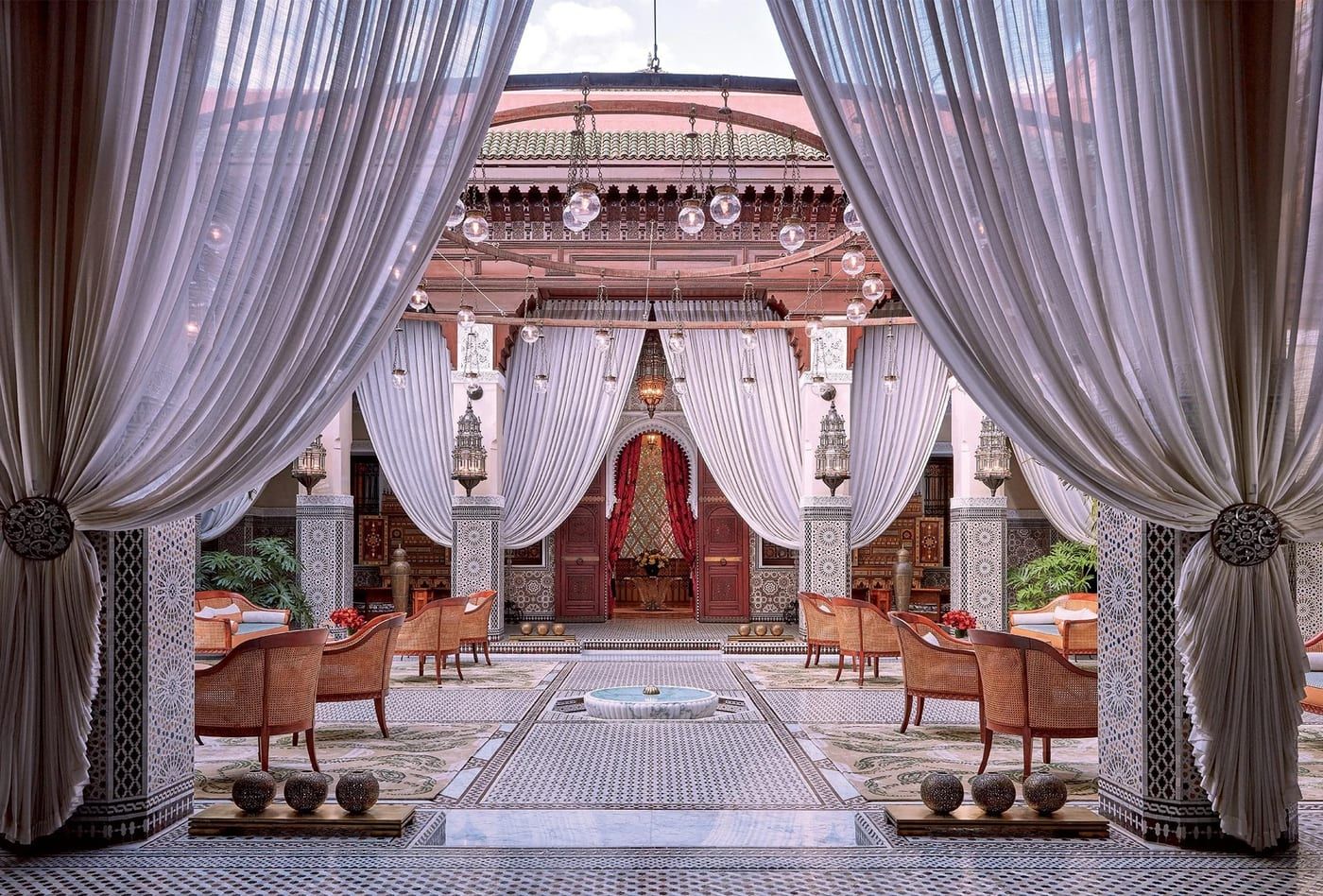
La Mamounia. Royal Mansour. These are not hotels in the ordinary sense. They are stage sets for a particular kind of luxury, one that values grandeur, service density, and the reassurance of scale. You arrive through gates. Staff appear before you have finished a thought. The pool is large. The gardens are manicured. The architecture is assertive. La Mamounia is arguably the most storied hotel in Africa, a 1920s palace that has hosted everyone from Winston Churchill to a century's worth of European aristocracy, recently restored with an ambition that preserved its personality while updating its infrastructure. Royal Mansour is a different proposition entirely: built by royal decree as a medina within a medina, its private riads connected by underground passages, its service model requiring one staff member per guest. Both offer a version of Marrakech that is complete in itself, contained, protected, deeply theatrical. This is precisely the appeal, and also the limitation. The grand hotel brackets the city. You can choose how much of Marrakech you actually encounter, and many guests choose very little. The traveller who thrives here is often one for whom the hotel is itself the destination: the pool, the spa, the dining, the ritual of extraordinary service. It is a valid position. It is not the position of someone who wants to understand the city.
The Resort Beyond the Walls: Space as the Point
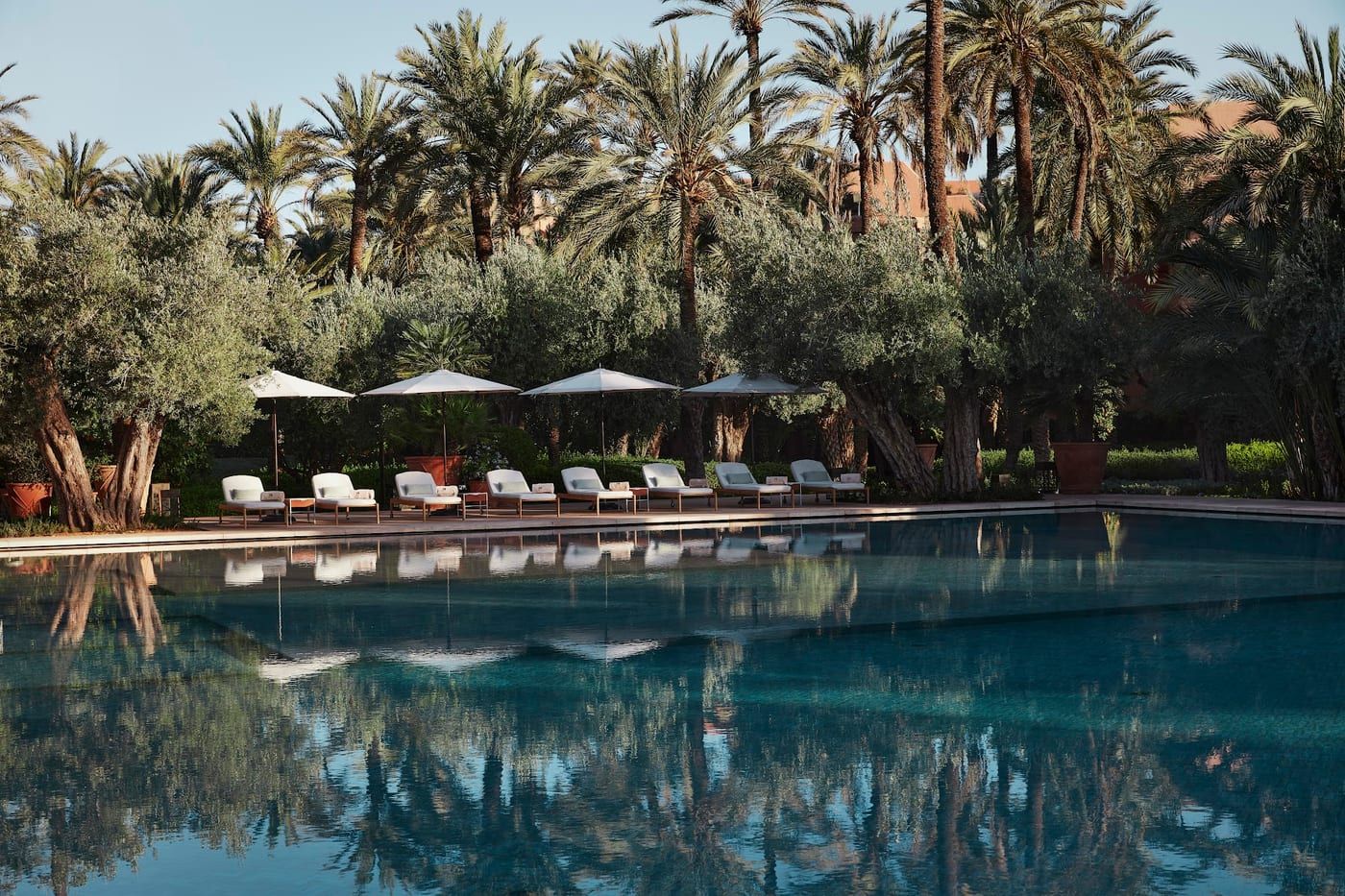
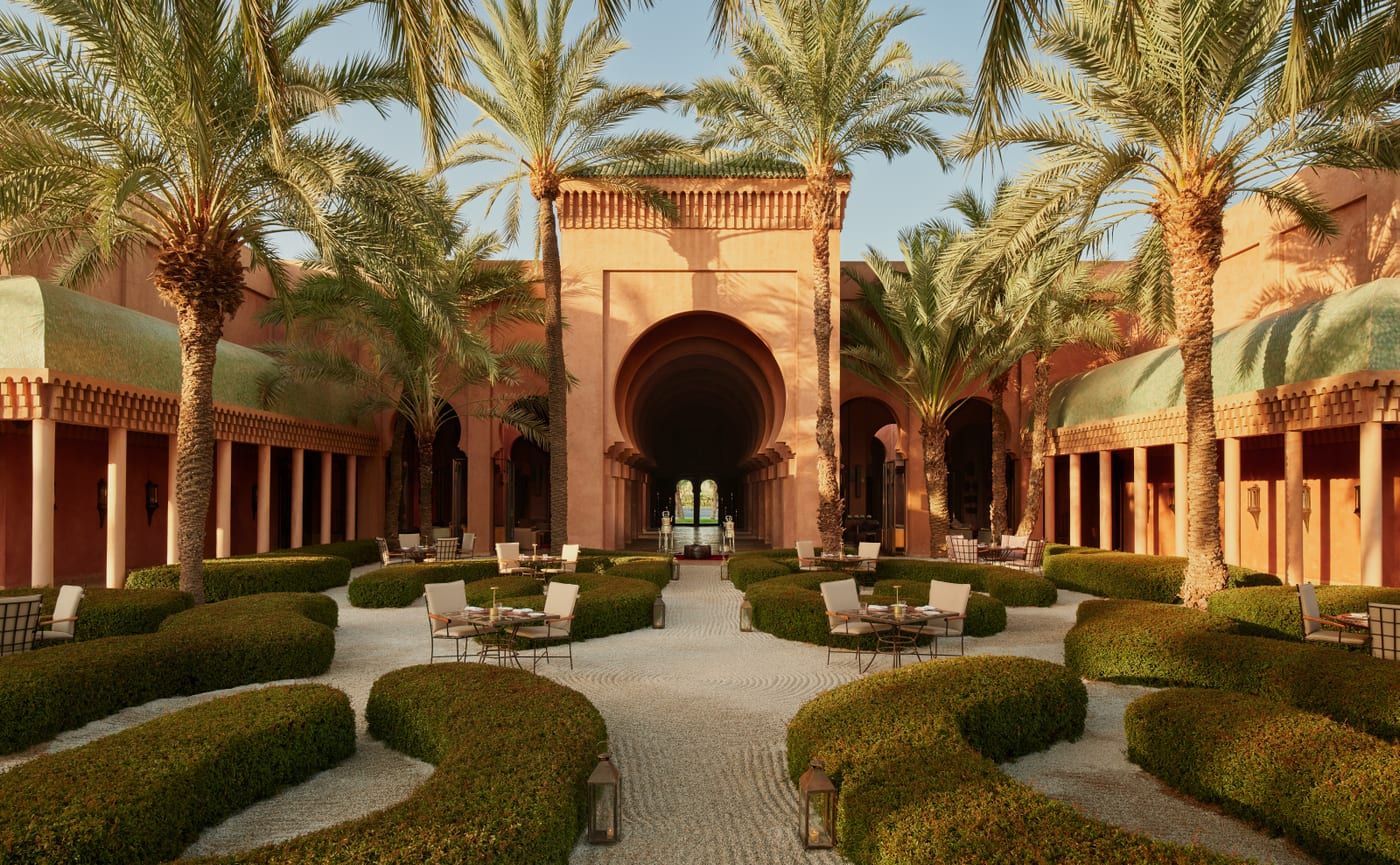
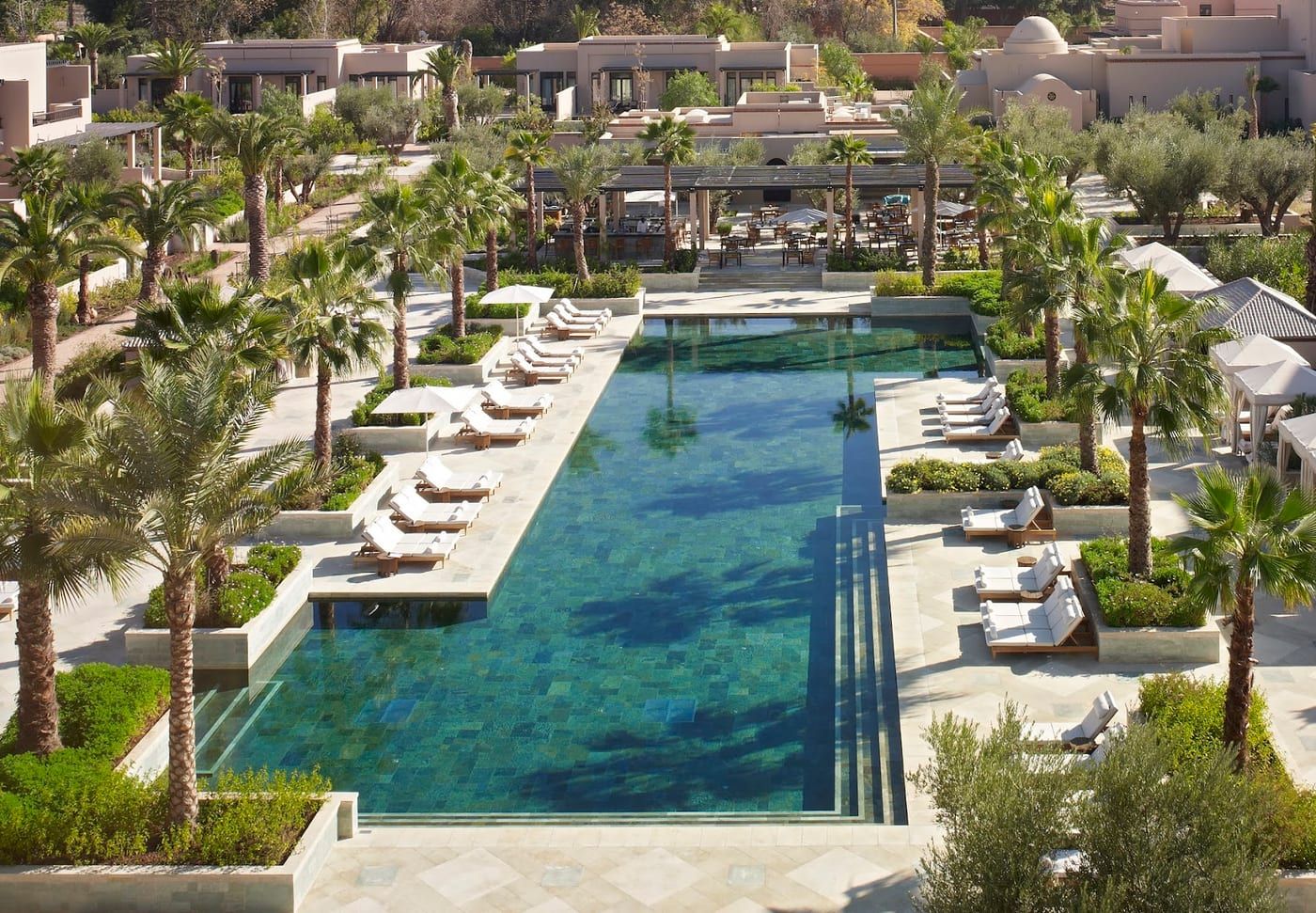
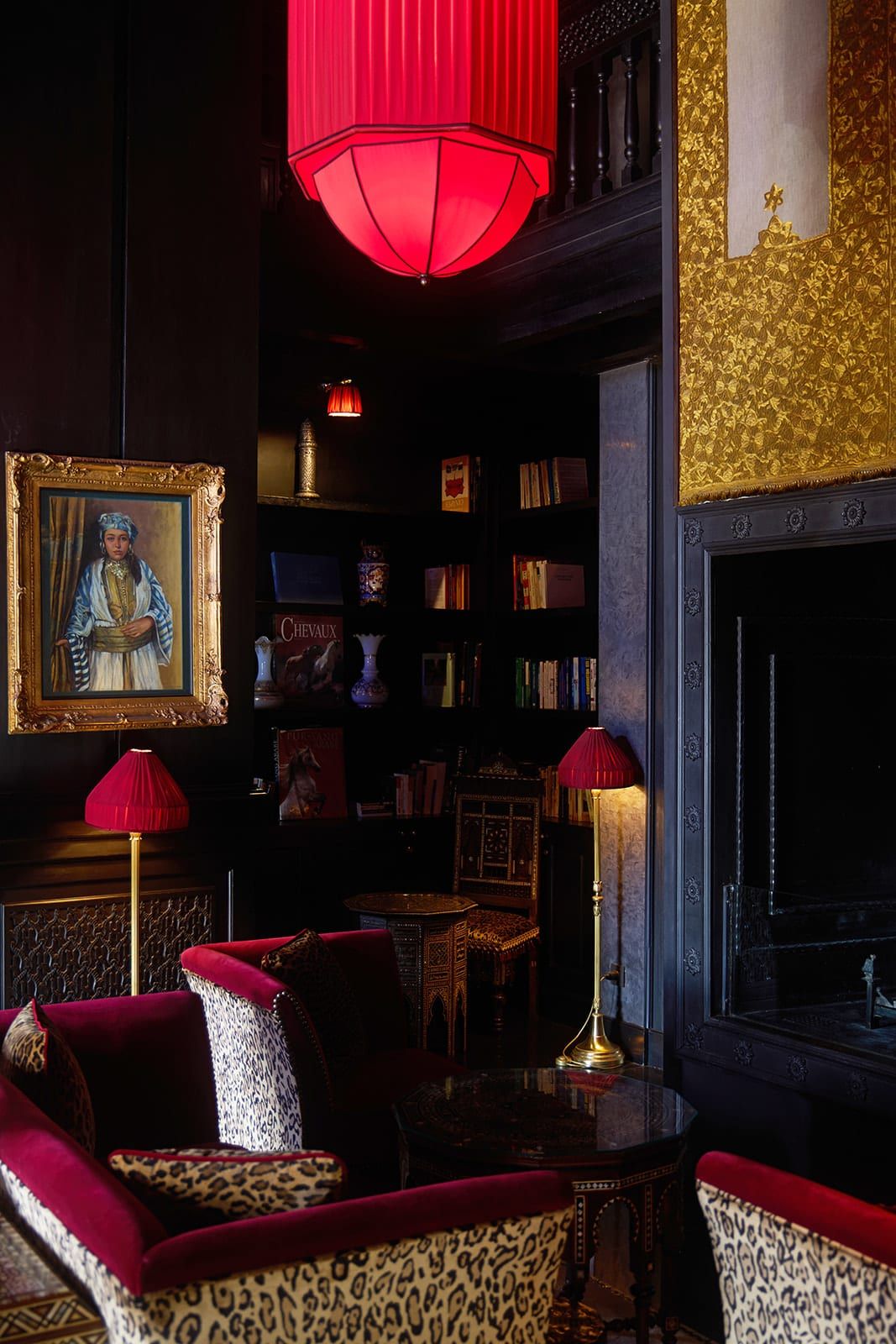
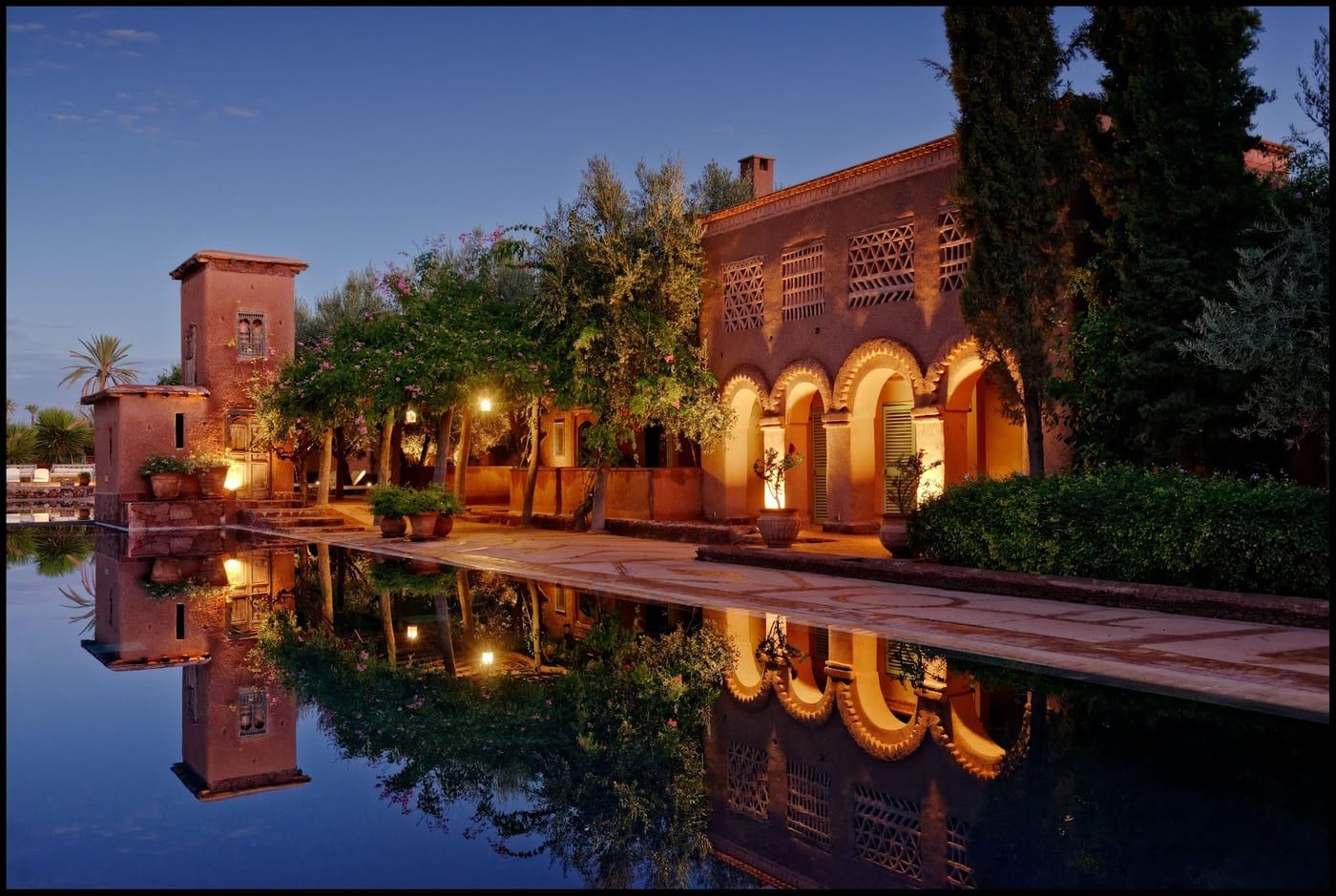
Move beyond the Medina, into the Palmeraie or further toward the airport road and the Atlas foothills, and the logic shifts again. Here, the offer is essentially spatial. Land that the city cannot contain, gardens that require acreage, a relationship with silence and light that is simply not available inside the walls. The Oberoi Marrakech, the Mandarin Oriental, Selman, Four Seasons, Beldi Country Club, Amanjena: each approaches this proposition differently. Selman is built around its horses, its Andalusian architecture and Arabian stables creating a mood that is simultaneously sporty and rarefied. The Oberoi occupies a Moorish palace set in olive groves and rose gardens, its interior scale closer to a private estate than a hotel. The Beldi Country Club, one of the most distinctive addresses in the area, began as an arts project before becoming a hotel, and it still carries that sensibility: organic gardens, Moroccan craftwork, a certain productive disorganisation that feels entirely intentional. Amanjena holds a different place in the landscape: the first Aman property on the African continent, its rose-pink pavilions and reflecting basin composing a space that has very little interest in the contemporary luxury conversation. It simply is what it is, and has been since 2000. The resort outside the city works best for travellers who want Marrakech as a backdrop rather than an experience, for honeymoons, for family stays requiring a pool the children can actually use, for anyone who needs to decompress between days of activity rather than within them.
The Boutique Estate: The Rarest Register
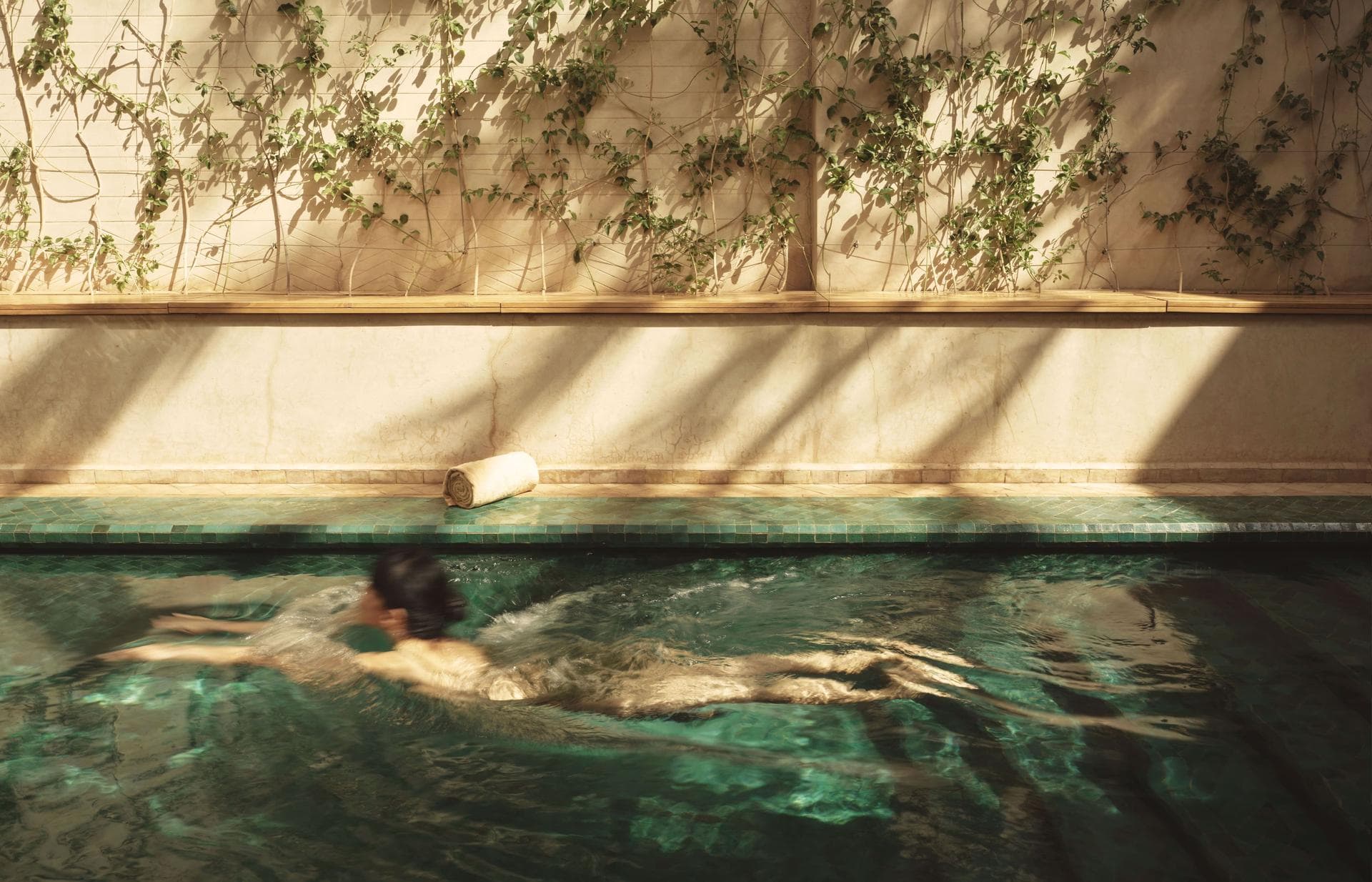
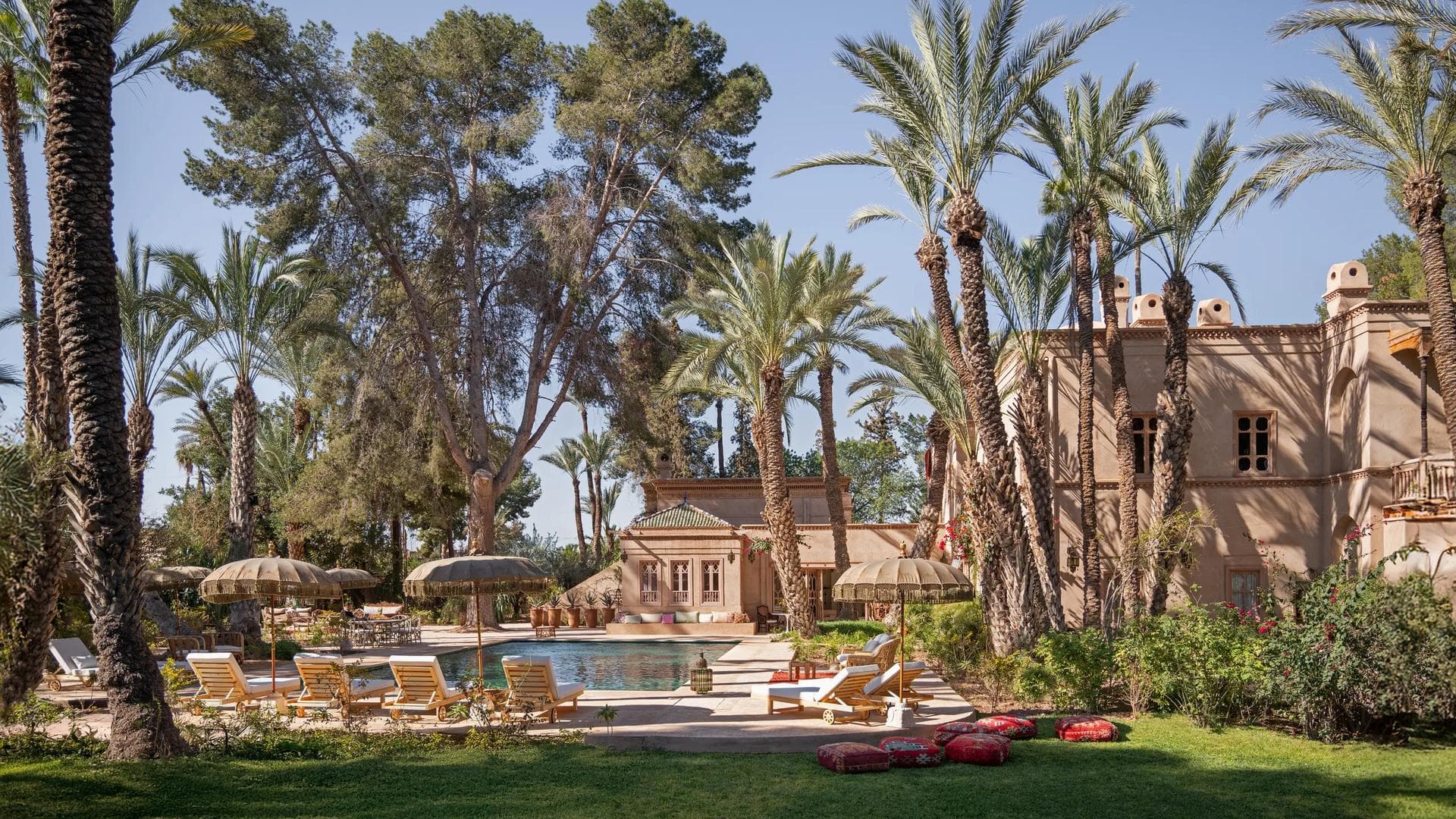
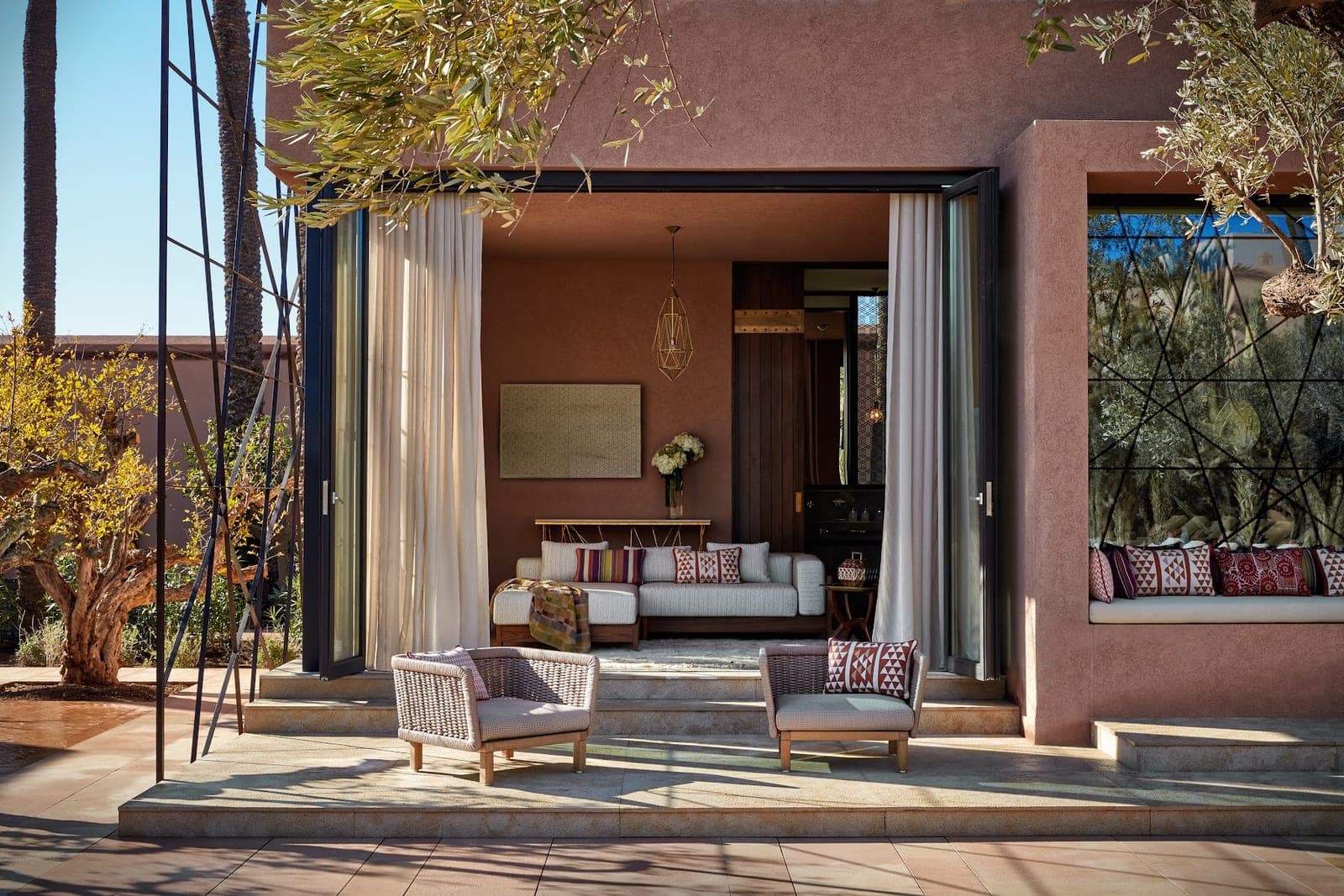
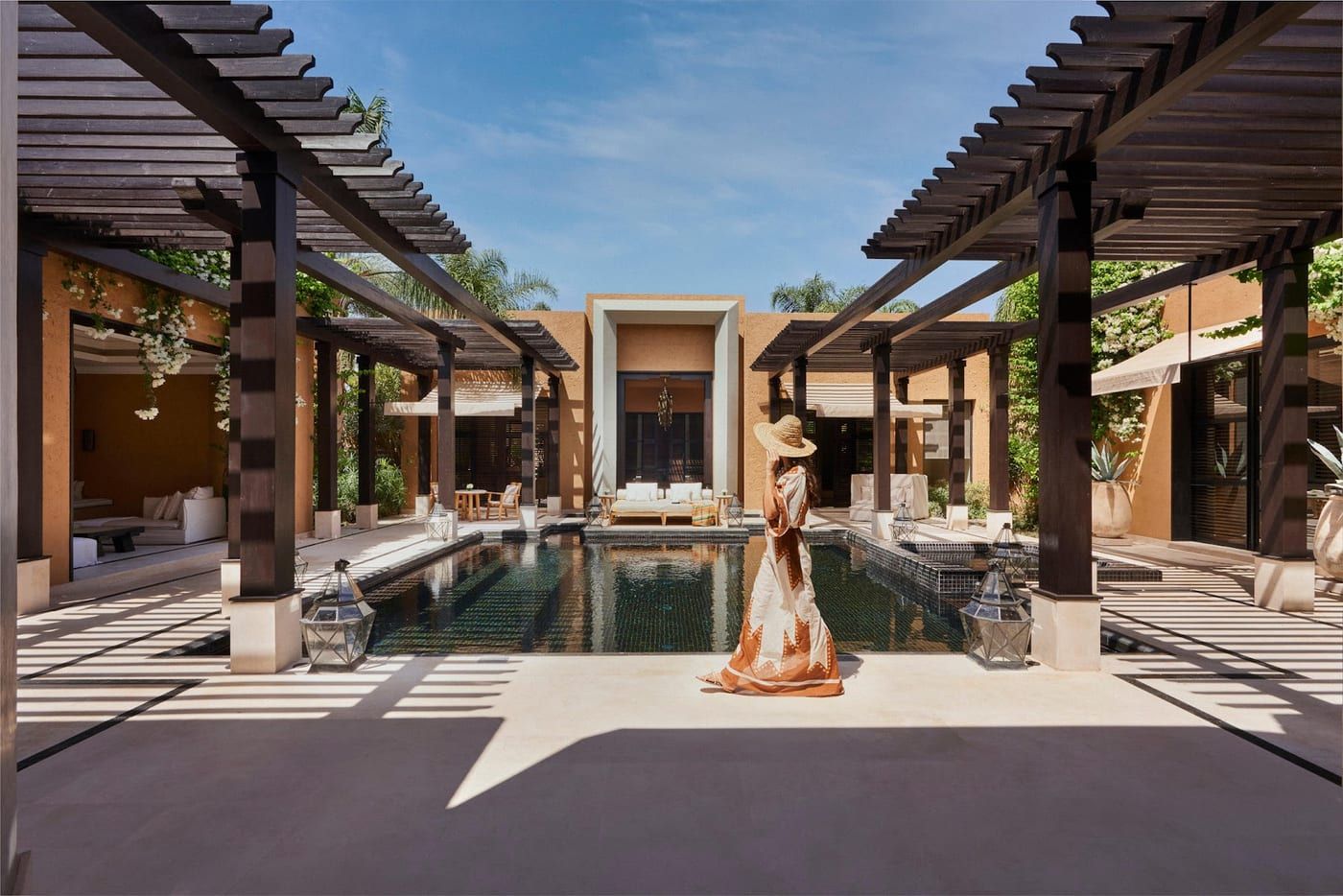
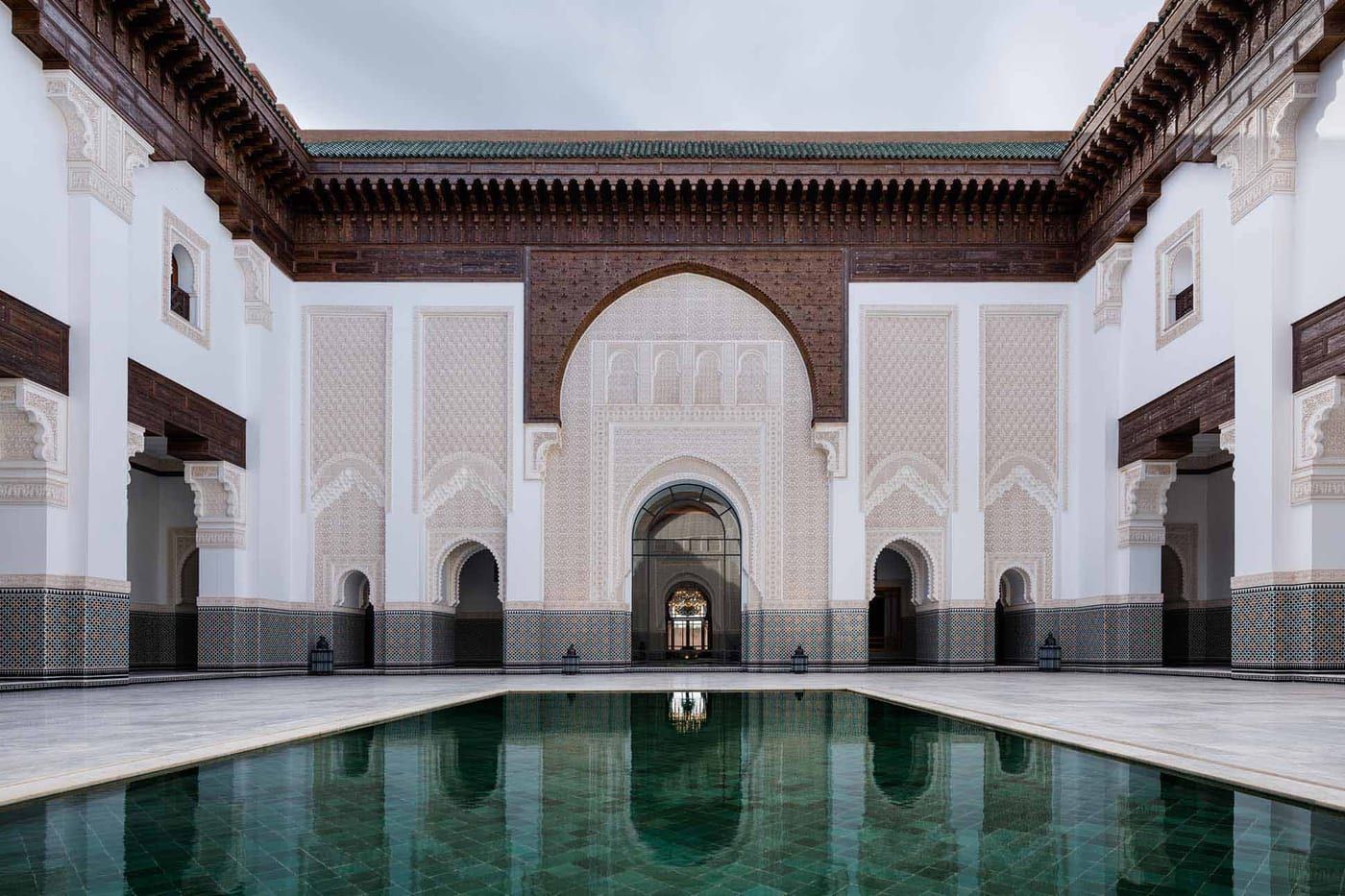
Somewhere between riad and resort sits a category that is harder to name but easier to recognise. These are private estates, often in the Palmeraie or on its edges, that operate as hotels but feel nothing like them. The scale is intimate. The gardens are working, not decorative. The architecture is personal rather than institutional. Jnane Tamsna is perhaps the archetype: six villas across a botanical garden planted by its owner, the ethnobotanist Gary Martin, each a different house rather than a set of rooms. Guests share the garden and the pools, but the experience of the property feels private in a way that resists easy description. Jnane Rumi, smaller and more recently restored, operates on similar principles, a place designed around slowness and botanical beauty rather than around the logic of the hospitality industry. Farasha, near Agafay, sits on the edge of the plateau with a rural simplicity that reads as deliberately unperformed. These properties suit travellers who have stayed in enough hotels to know that hotel-ness is not what they are looking for. The value being sold is not service or scale but a specific quality of life, the feeling of being a guest in an exceptionally considered private home.
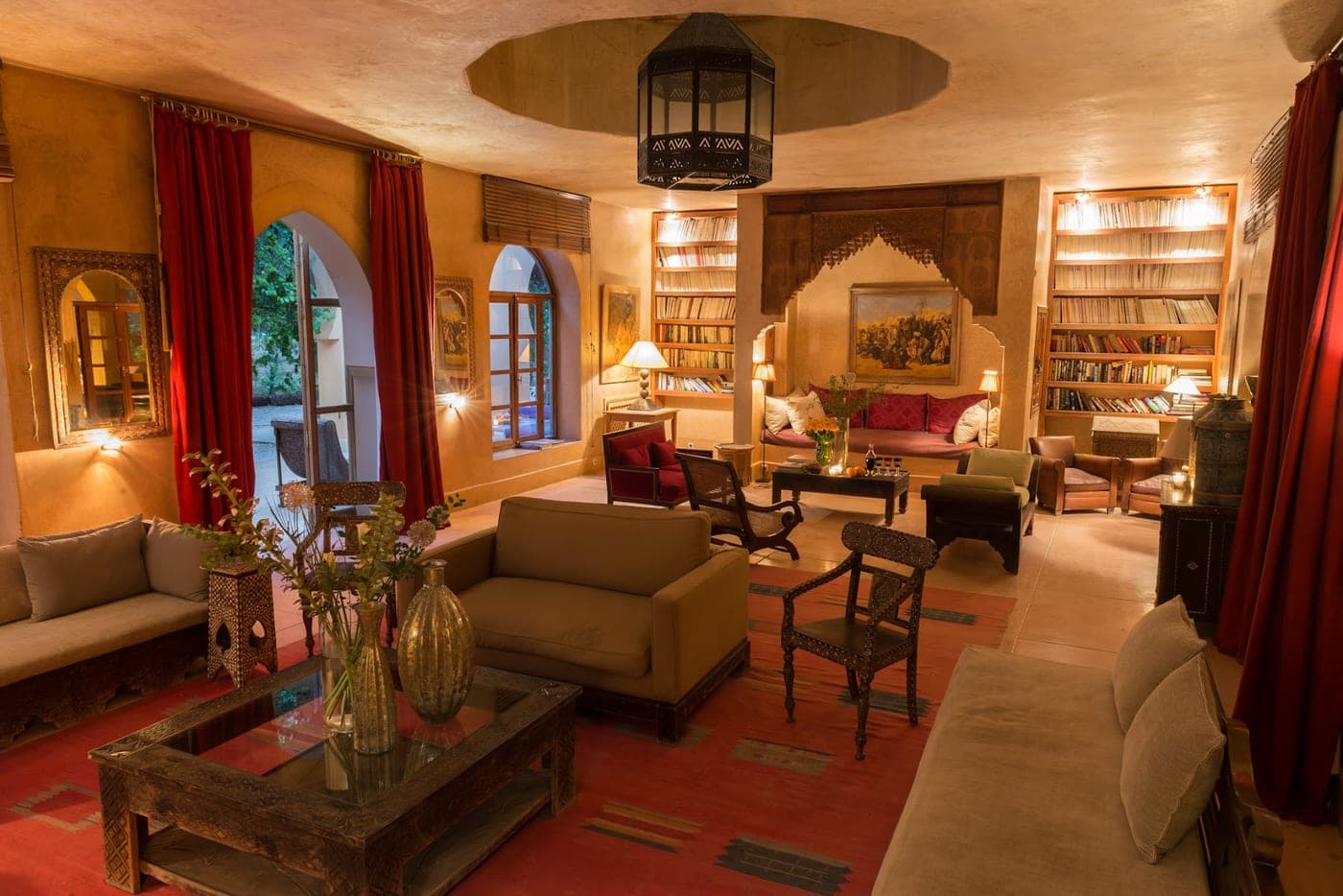
The Private Villa: Total Control
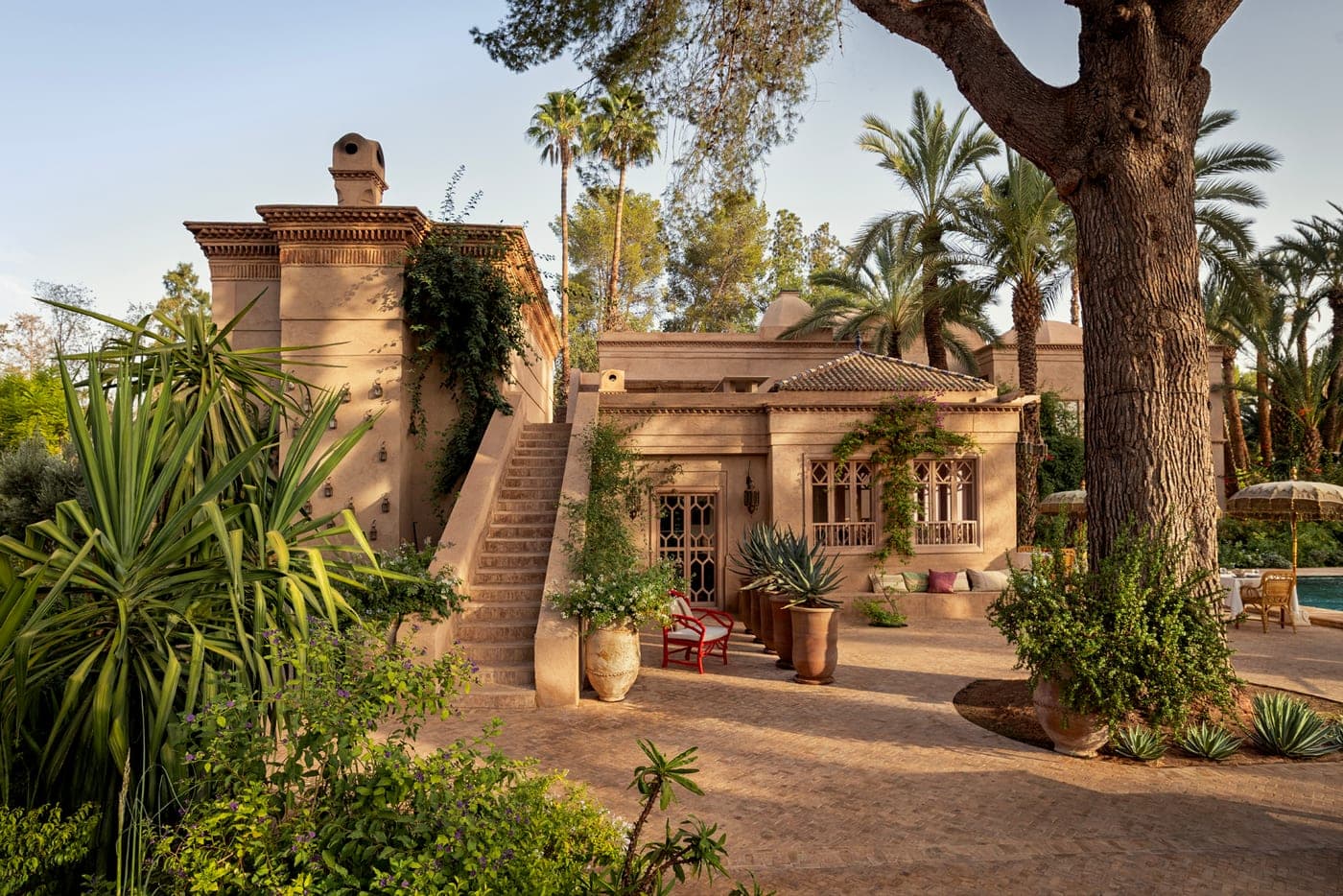
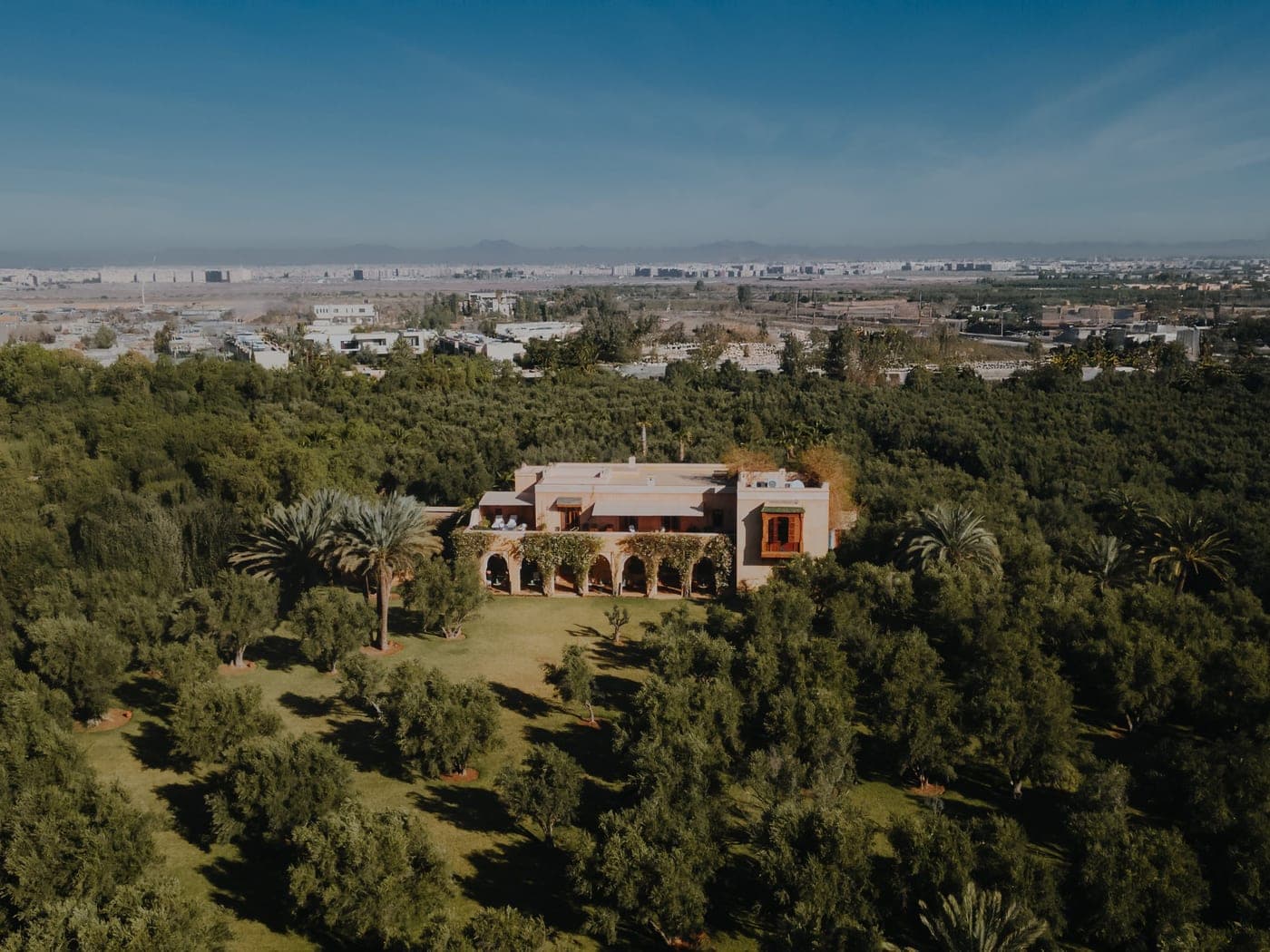
The villa rental occupies its own space entirely. From smaller private villas to larger managed estates scattered across the Palmeraie and the Agafay, the proposition is straightforward: exclusive use of the property, staff calibrated to your schedule, the absence of other guests as the product itself. This is not for everyone. It requires a group large enough to warrant the cost, a trip organised well in advance, and a tolerance for the logistical complexity of essentially running a small private residence. What it offers in return is a version of Marrakech that is genuinely impossible to access any other way, the experience of having a house in the city, however briefly.
The accommodation choice in Marrakech is ultimately a question about what kind of relationship you want with the place. Whether you want to be folded into its fabric, protected from it, surrounded by its landscape, or suspended in something altogether more private. None of these positions is wrong. All of them are available. The only mistake is choosing without knowing what you are actually choosing.
You may also like…