26 Places to Visit in Marrakech: Monuments, Museums, Gardens and Souks Worth Your Time
Timence Guide Editors · 20 June 2026
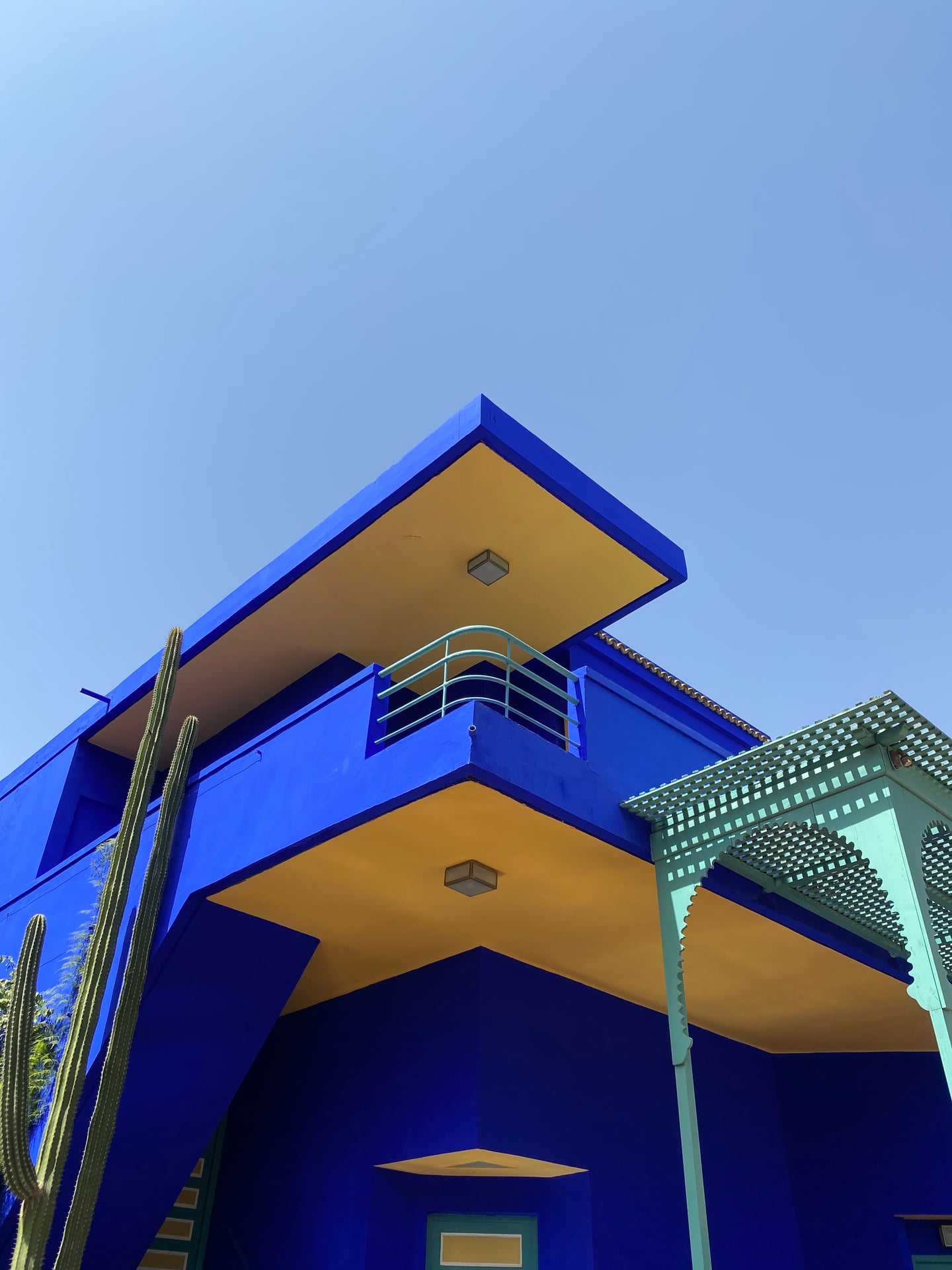
Most of Marrakech unfolds inside the Medina, where the Almohad and Saadian dynasties raised its minarets, madrasas, and tombs. Beyond the walls, the painters and couturiers who later adopted the city, Jacques Majorelle and Yves Saint Laurent among them, left landmarks of their own. On a first visit, stay in the old town; on a return, go and find the rest.
Monuments and Landmarks
Nine sights that anchor the city, from the open square at its centre to the palace ruins inside the walls. Most sit within the Medina and reward early or late hours; the Palmeraie and the sculpture park at Ramakech lie beyond the walls, north of the city.
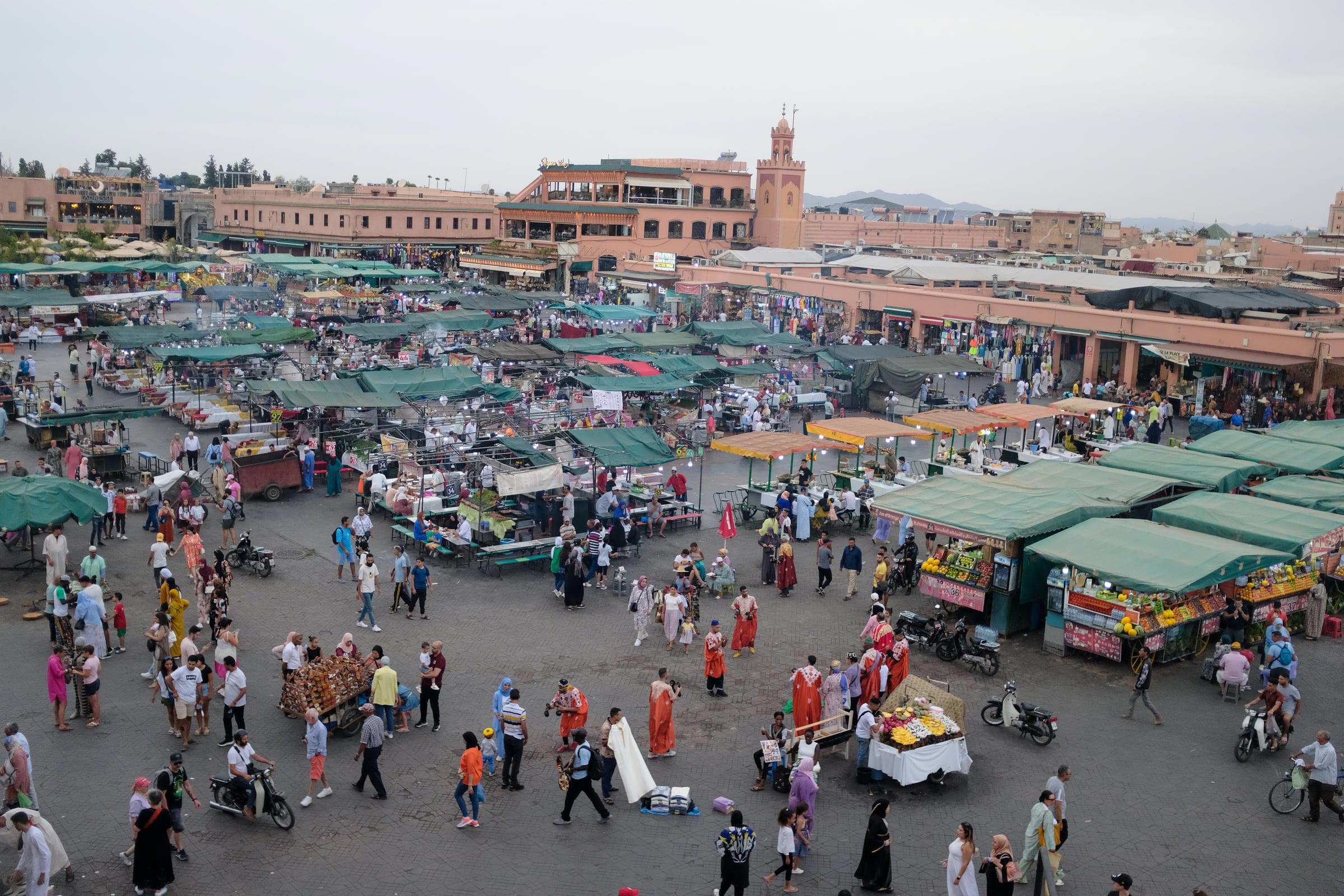
The organising centre of Marrakech, a vast open square at the edge of the Medina that has worked as market, theatre, and public stage for centuries. UNESCO recognised its living traditions as Intangible Cultural Heritage in 2001: the storytellers, the Gnawa musicians, the herbalists, the snake handlers, the henna artists who have held this ground across generations. The square changes completely through the day. Mid-morning it is relatively quiet, with fruit carts at the southern end. By early evening the food stalls fill the centre, trailing grill smoke above a crowd several thousand strong. It is most itself in the transitional hour between late afternoon and dusk, when the daytime performers work the diminishing light and the stalls have just lit their fires. Return at different times: no two hours look the same. Entrance: free, open access. Hours: open at all times, liveliest from late afternoon into the night.
Jemaa el-Fnaa Marrakech 40000
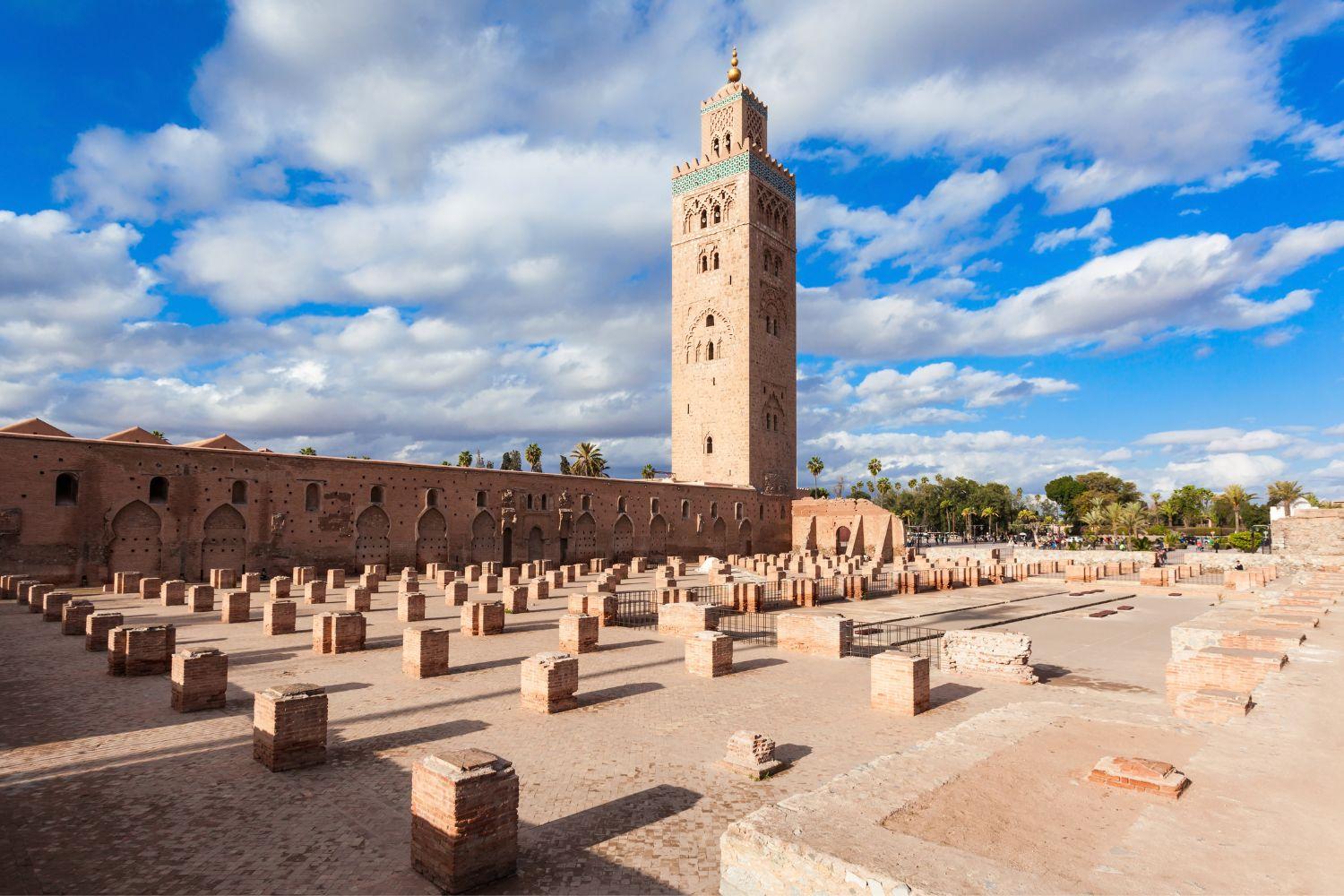
The twelfth-century Almohad minaret that defines the skyline as no other structure does. Seventy-seven metres of stone, visible from nearly every point in the city, it served as the template for the Giralda in Seville and the Hassan Tower in Rabat. Each of its four faces carries a different pattern of interlaced geometric stonework. Non-Muslim visitors cannot enter, but the rose gardens and orange trees that circle the building are fully open. Early morning, when the low light catches the minaret and the gardens still smell of overnight water, is the best time to be here. The open ground the Almohad planners left around it is what lets the proportions read as they were designed to. Entrance: free (gardens and exterior; the mosque is closed to non-Muslims). Hours: gardens open daily.
Koutoubia Mosque Marrakesh 40000
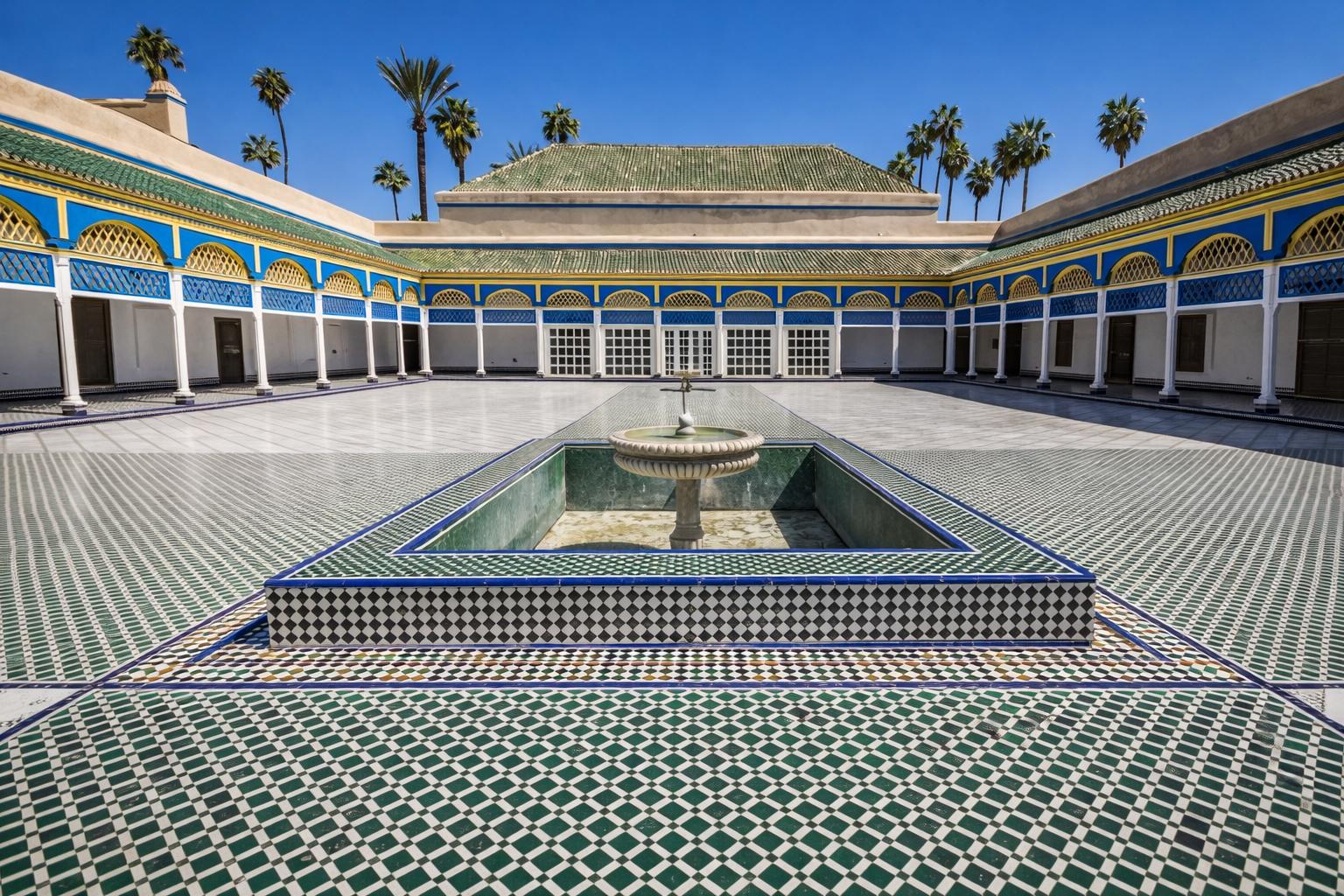
A late nineteenth-century palatial compound in the southern Medina whose scale only becomes clear as you move through its sequence of courts and corridors. Built for a grand vizier and his household, it is one of the most complete examples of Moroccan palatial architecture from the period: around 150 rooms across roughly eight hectares, with carved stucco, painted cedar ceilings, and zellige floors that shift in intricacy from one chamber to the next. The central courtyard is set with marble and orange trees, and jasmine perfumes the air in the warmer months. Light enters through carved screens and coloured glass, landing on floors of a precision that takes time to absorb. Come in the morning, before the tour groups accumulate and while the cool of the thick walls is most felt. Entrance: 100 Dh (residents 30 Dh), free for Moroccans on Fridays. Hours: 9:00 to 17:00.
Marrakesh 40000
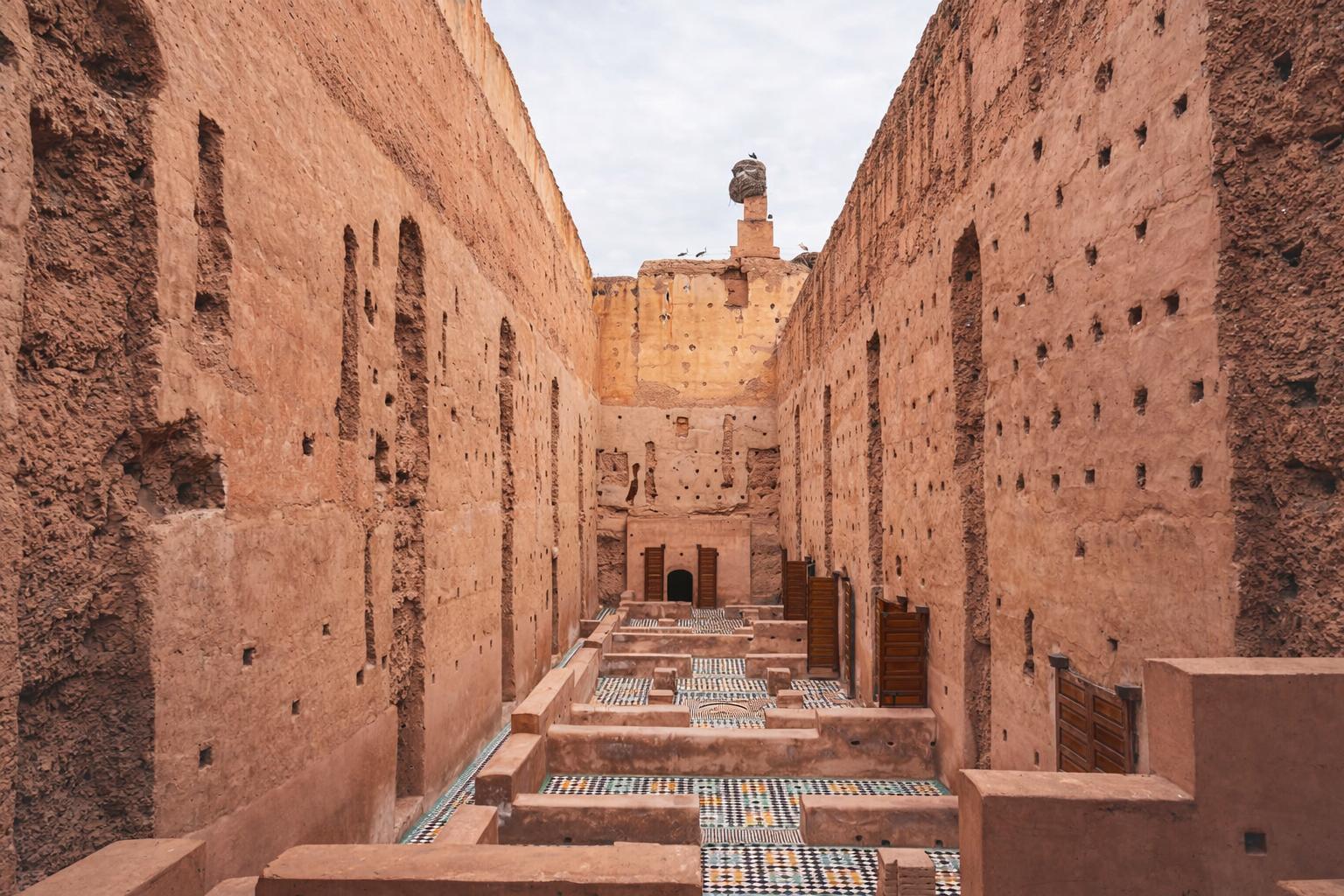
By the accounts that survive, one of the most extraordinary buildings of its age. Built in the late sixteenth century by a Saadian sultan, its courtyard once held Italian marble, gilded ceilings, and five reflecting basins. The name translates as the incomparable. What remains is the armature: massive pisé walls reaching fifteen metres, a sunken courtyard replanted with orange trees, underground passages, and the storks that have nested on the parapets for as long as anyone remembers. The scale of what was lost is part of the experience. Walking the main court, with the Atlas visible above the walls to the south, there is something clarifying about ruins this substantial. Late afternoon is when El Badi shows best, when the walls turn amber and the storks settle. Entrance: 100 Dh (residents 30 Dh), free for Moroccans on Fridays. Hours: 9:00 to 17:00.
Ksibat Nhass, Marrakech 40000
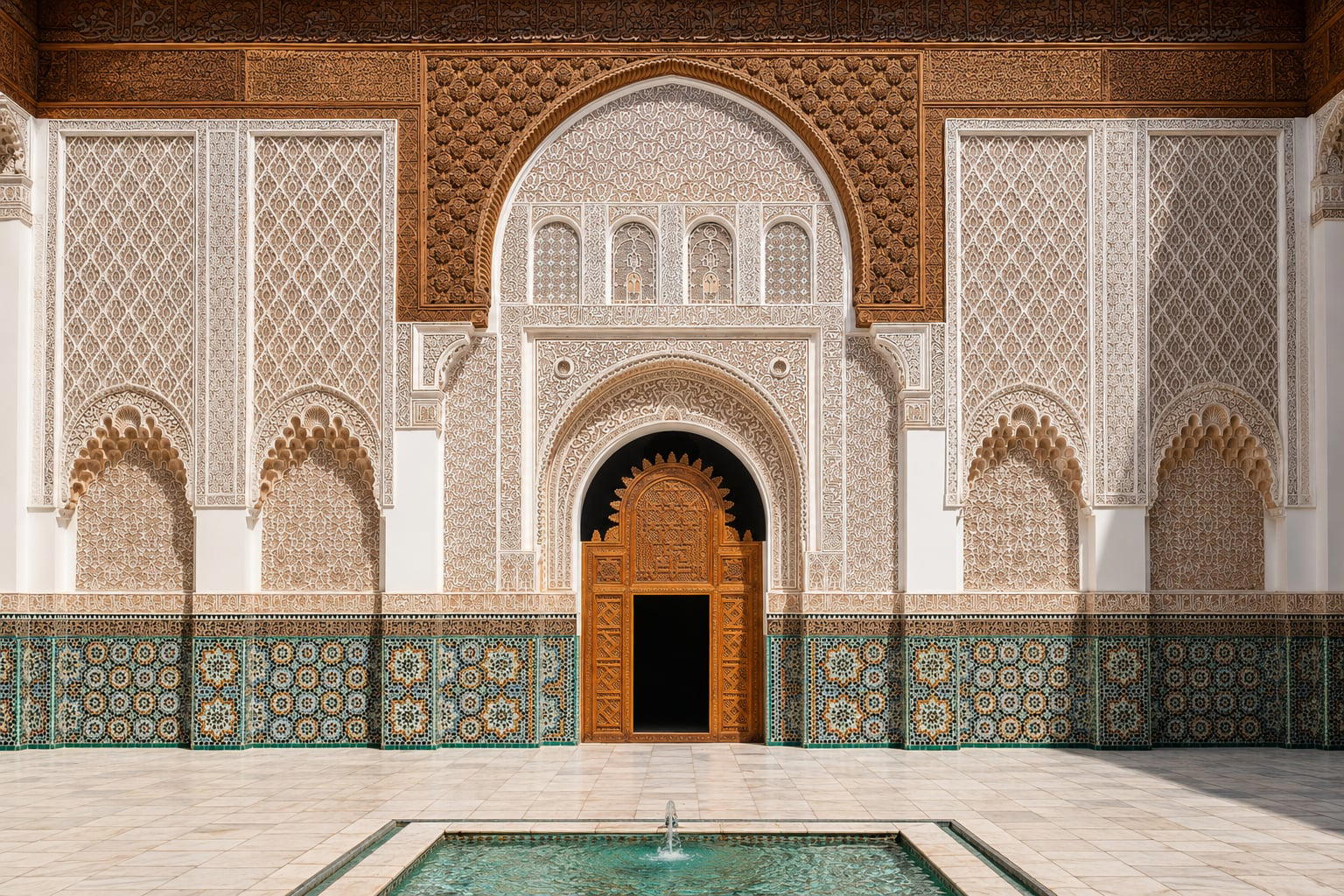
One of the finest examples of Moroccan-Andalusian craftsmanship surviving in the country. Founded in the fourteenth century and rebuilt by the Saadians in the sixteenth, this former Quranic school once housed several hundred students around a central court of luminous marble, its rectangular pool doubling the carved stonework overhead. The detail is relentless in the best sense: zellige at the base, carved stucco panels rising to wooden mashrabiyya, cedar friezes inscribed with calligraphy, terracotta above. The student cells on the upper galleries are spare by comparison, as if the architecture meant to remind its inhabitants that learning required both beauty and discipline. Come early, before the light goes flat, when the shadows in the carved surfaces are deepest. Entrance: 50 Dh (Moroccans 20 Dh, under 12 10 Dh). Hours: 9:00 to 19:00 daily, 9:00 to 16:30 during Ramadan.
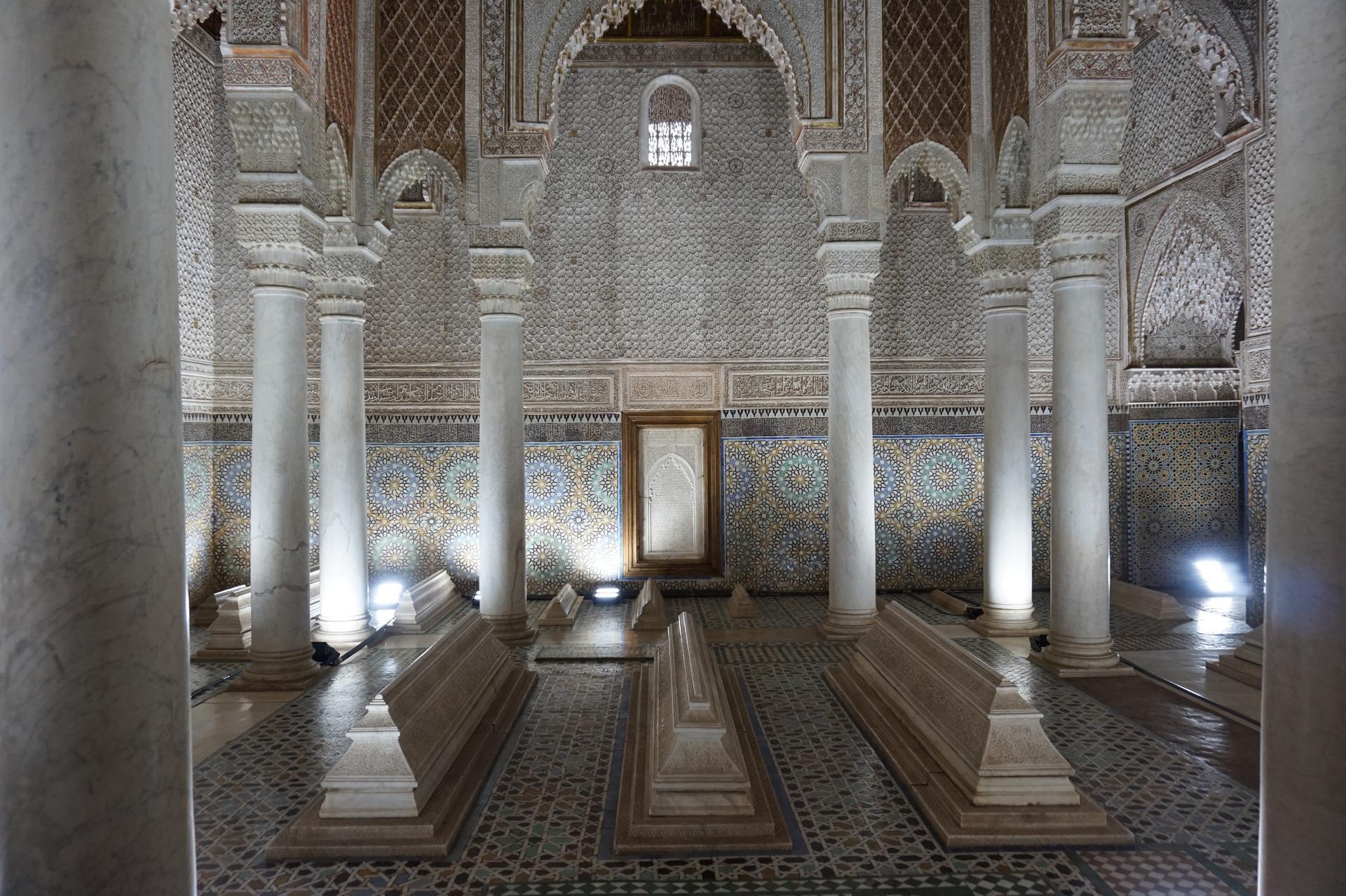
Sealed by the Alaouite dynasty in the seventeenth century and unknown to the outside world until French aerial photography revealed them in 1917. They were not destroyed, only walled off, a decision that preserved one of the finest concentrations of Saadian detail anywhere in Morocco. Three chambers hold roughly sixty members of the royal family. The central chamber concentrates the most elaborate craft: a carved cedar ceiling in concentric registers, stalactite plasterwork, walls of carved marble and zellige. The filtered, dim light is the right condition for seeing carved surfaces at this density. The tombs draw crowds in the late morning, so the experience is better earlier, with fewer people in the room. Entrance: 100 Dh (residents 30 Dh), free for Moroccans on Fridays. Hours: 9:00 to 17:00.
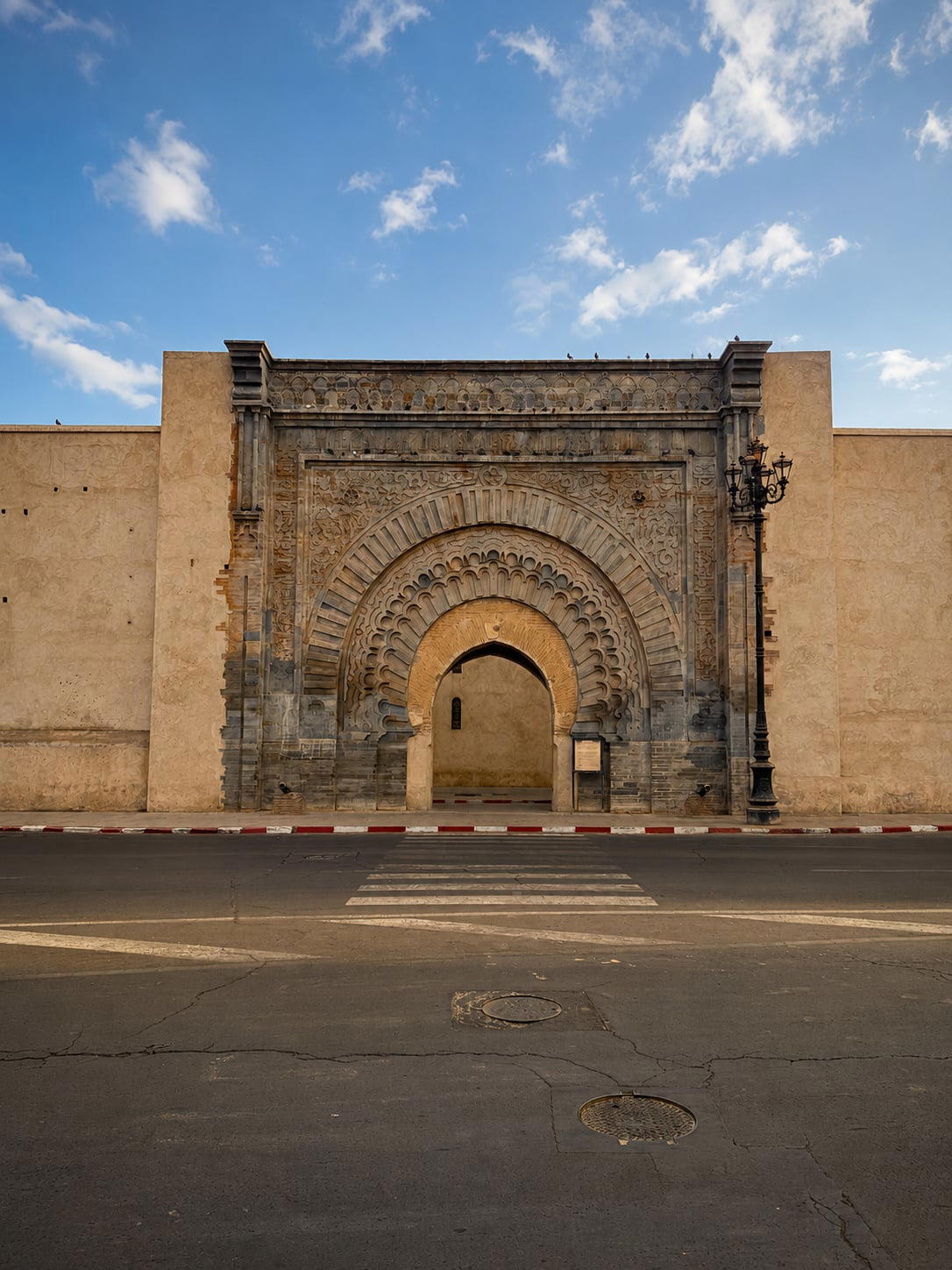
The most ornate of the gates that pierce the Almohad walls, a twelfth-century passage of carved stone set into the southern ramparts at the edge of the kasbah quarter. Its facade is a surface of interlaced geometric carving in local stone, organised in concentric registers that narrow toward the horseshoe arch, with a calligraphic frieze of Quranic text running across the upper edge. The gate was the ceremonial entrance to the royal enclosure, and its elaborateness was deliberate: a marker of the boundary between public city and royal precinct, and a demonstration of the dynasty's ambitions in stone. The surrounding city has grown around it, obscuring it from a distance and revealing its quality fully only on foot. Less visited than the nearby Saadian Tombs, it is often encountered without a crowd, with the Kasbah mosque minaret visible above the rooflines to the north. Entrance: free, open access. Hours: a public gate, accessible at all times.
Rue Oqba Ben Nafaa, Marrakech 40000, Marocco
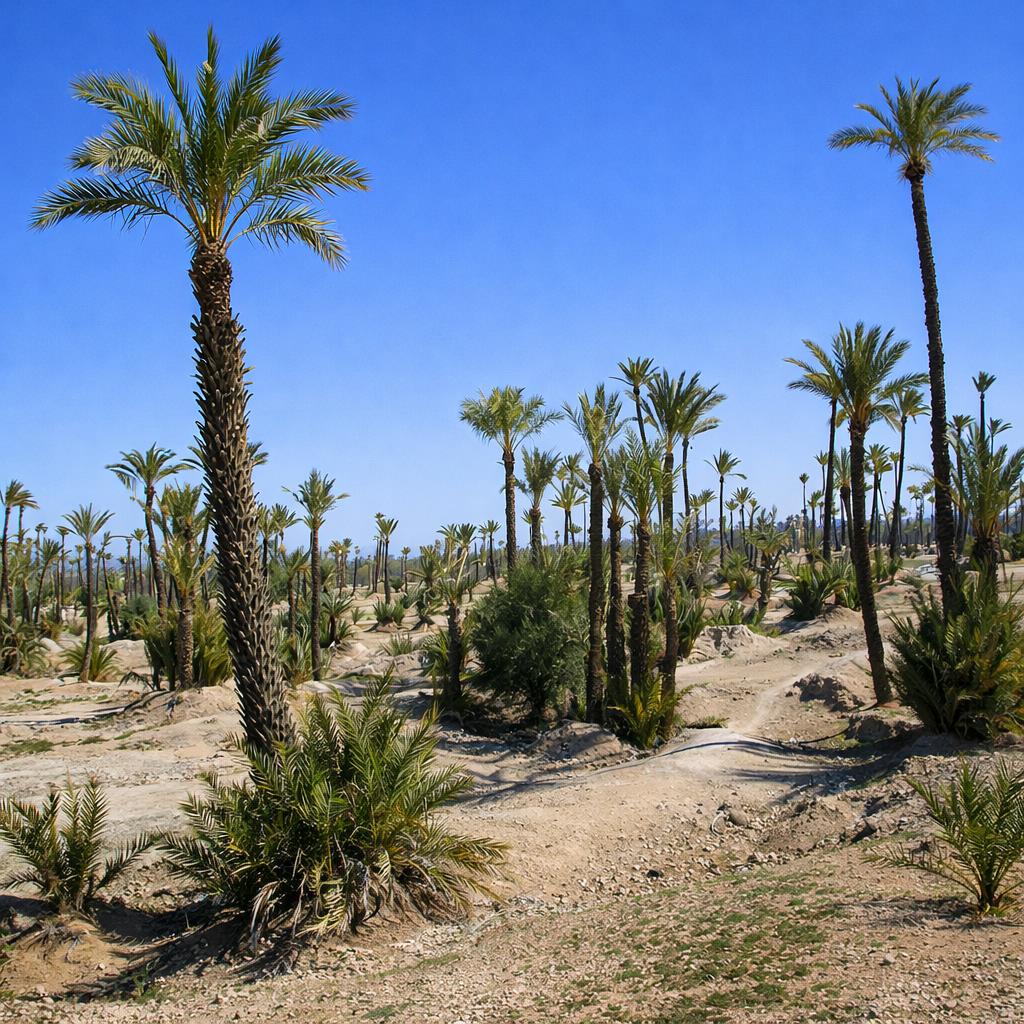
The palm grove that spreads across the land north of the city, an ancient agricultural landscape whose transformation into a zone of luxury villas is one of the region's more dramatic urban stories. At its outer edges, the grove still works as it historically did: dense rows of date palms, irrigation channels, small plots of vegetables in the shade beneath. At the right hour, usually early morning or late afternoon, it is genuinely beautiful: the quality of light through the fronds, the smell of earth and water, and on clear days the High Atlas rising to the south. It is a landscape best taken slowly, on foot or on horseback, rather than from a vehicle. Entrance: free, open access (individual sites within it charge their own fees). Hours: open area.
Rte Douar Tamsna, Marrakech, Marocco
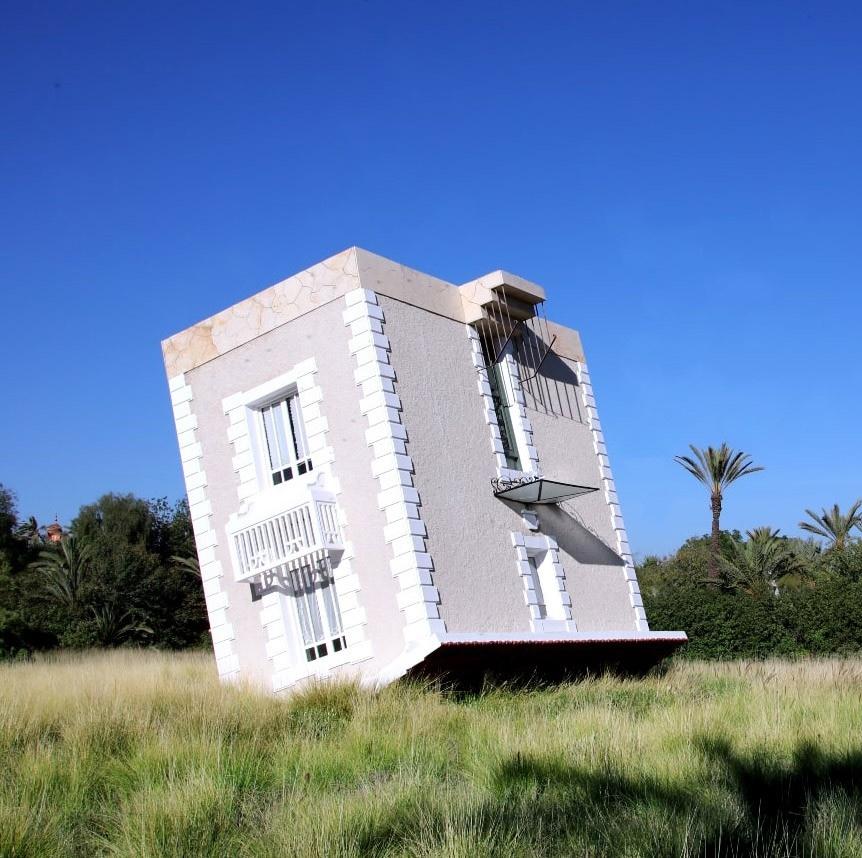
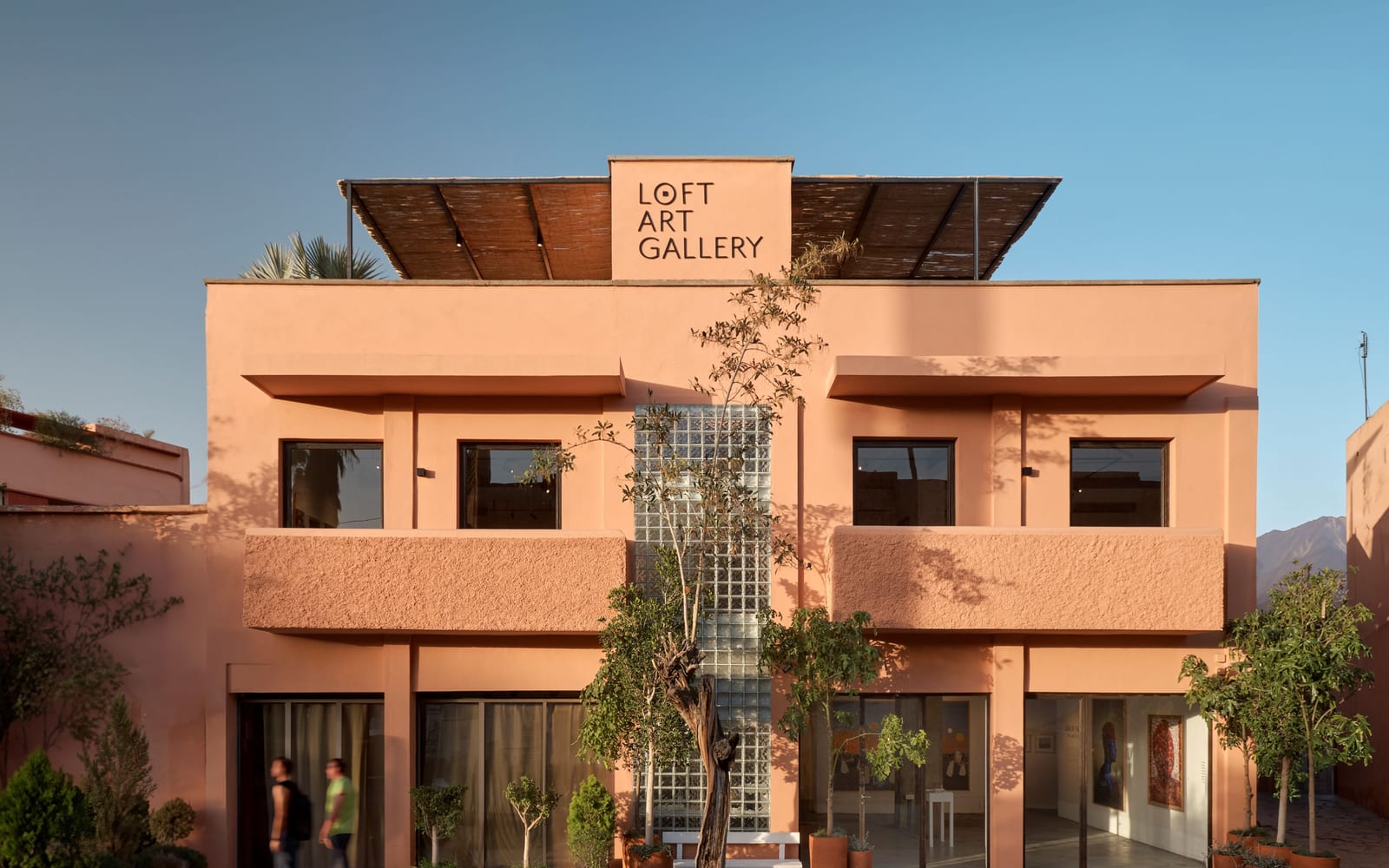
A sculpture park at the edge of the Palmeraie where a French visual artist has assembled one of the more genuinely surprising spaces in the region. Monumental animal figures move through the landscape in configurations that suggest interrupted narratives: dogs, snails, horses, ants rendered at a scale that shifts the proportions of everything around them. The architecture is equally charged. One house appears to have fallen from the sky and embedded itself at an angle; another is inverted, its roof in the ground. The references are to childhood, and to scale as something experienced rather than measured. Accessible only by reservation, as a guided immersive visit, a format that suits the content: arriving without context would miss much of it. Entrance: by reservation, priced per group from 3000 Dh (last-minute 500 Dh per person). Hours: Wednesday to Sunday, 10:00 to 17:00, last entry 15:30.
Museums
Nine collections, several housed in palaces and riads as remarkable as what they hold. Most cluster in the Medina and around the Majorelle complex in Gueliz; MACAAL is the exception, beyond the walls to the south. All reward an unhurried hour or two.
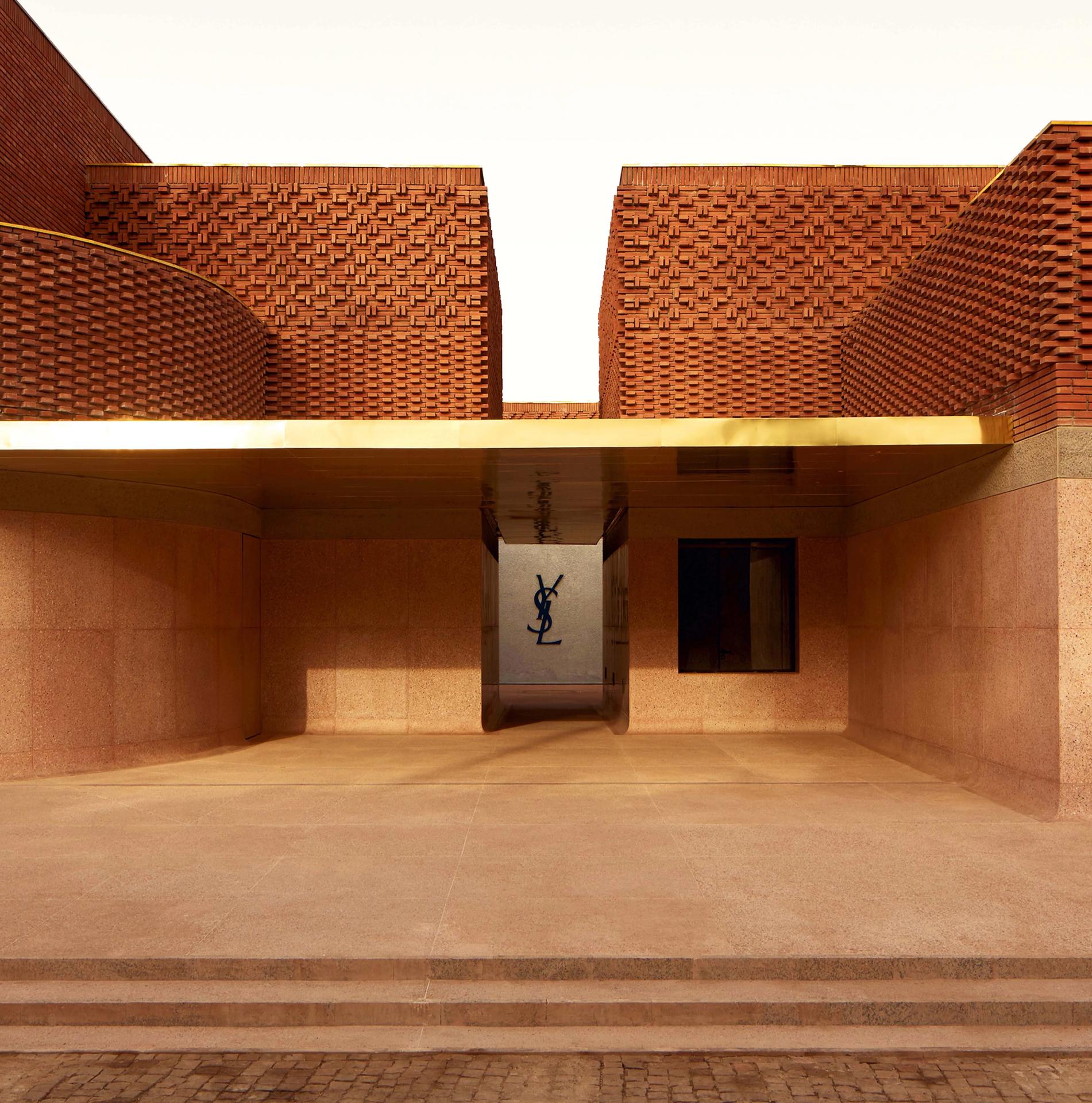
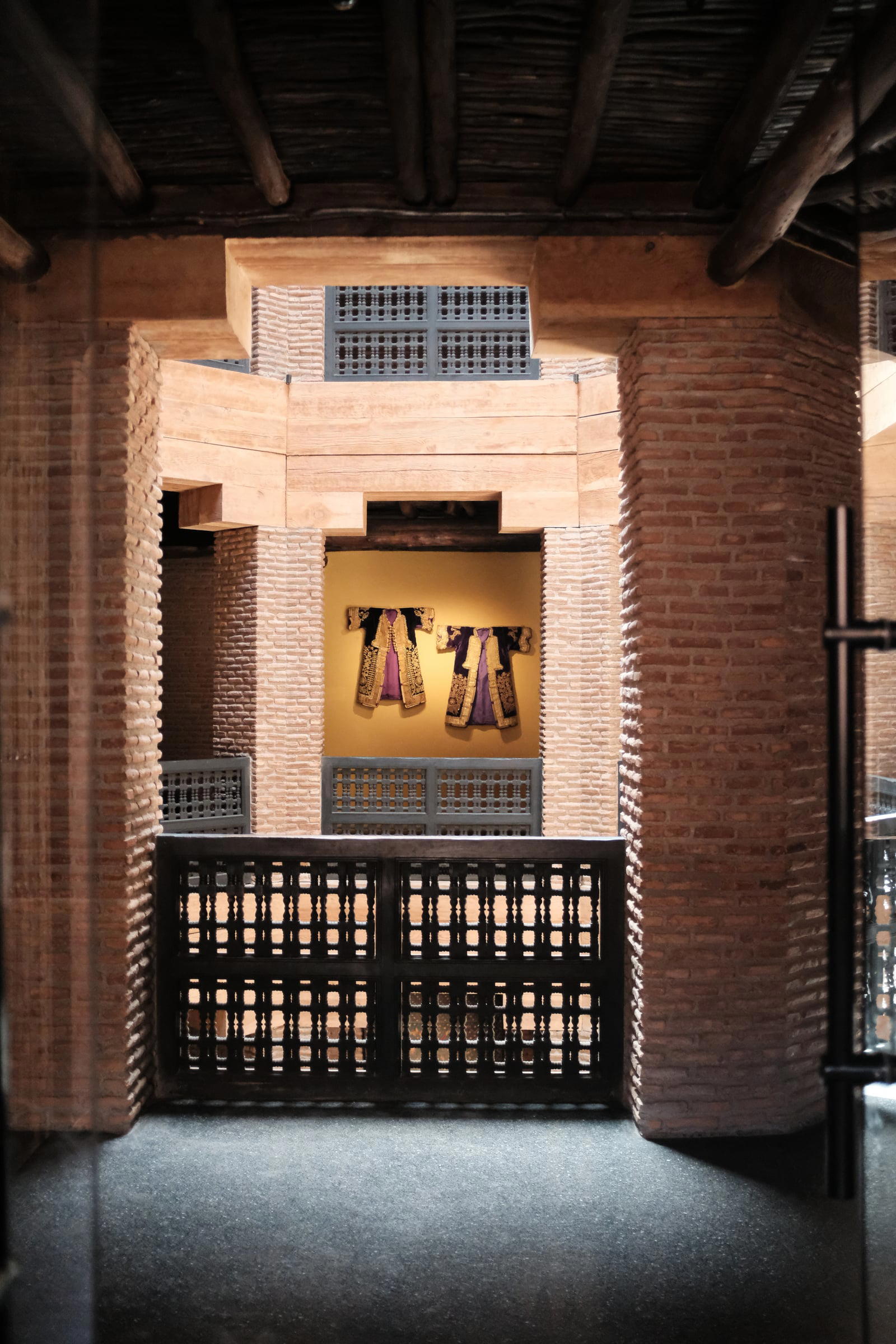
Opened beside the Jardin Majorelle in 2017 in a Studio KO building whose terracotta brick facade draws on the red of Marrakech without copying it. Its collection belongs to the Pierre Bergé and Yves Saint Laurent foundation, an archive of more than five thousand haute couture garments, from which the museum shows a rotating selection. The display moves items through large, carefully lit rooms designed for the presentation of clothing as object, tracing both the evolution of a visual language and its relationship to the Morocco that shaped the designer's colour and form. The curved reading room and the quality of light in the galleries make the building itself worth attention, and the bookshop is unusually well stocked. Entrance: 140 Dh. Hours: daily except Wednesday, 10:00 to 18:00 (last entry 17:30), 10:00 to 17:00 during Ramadan.
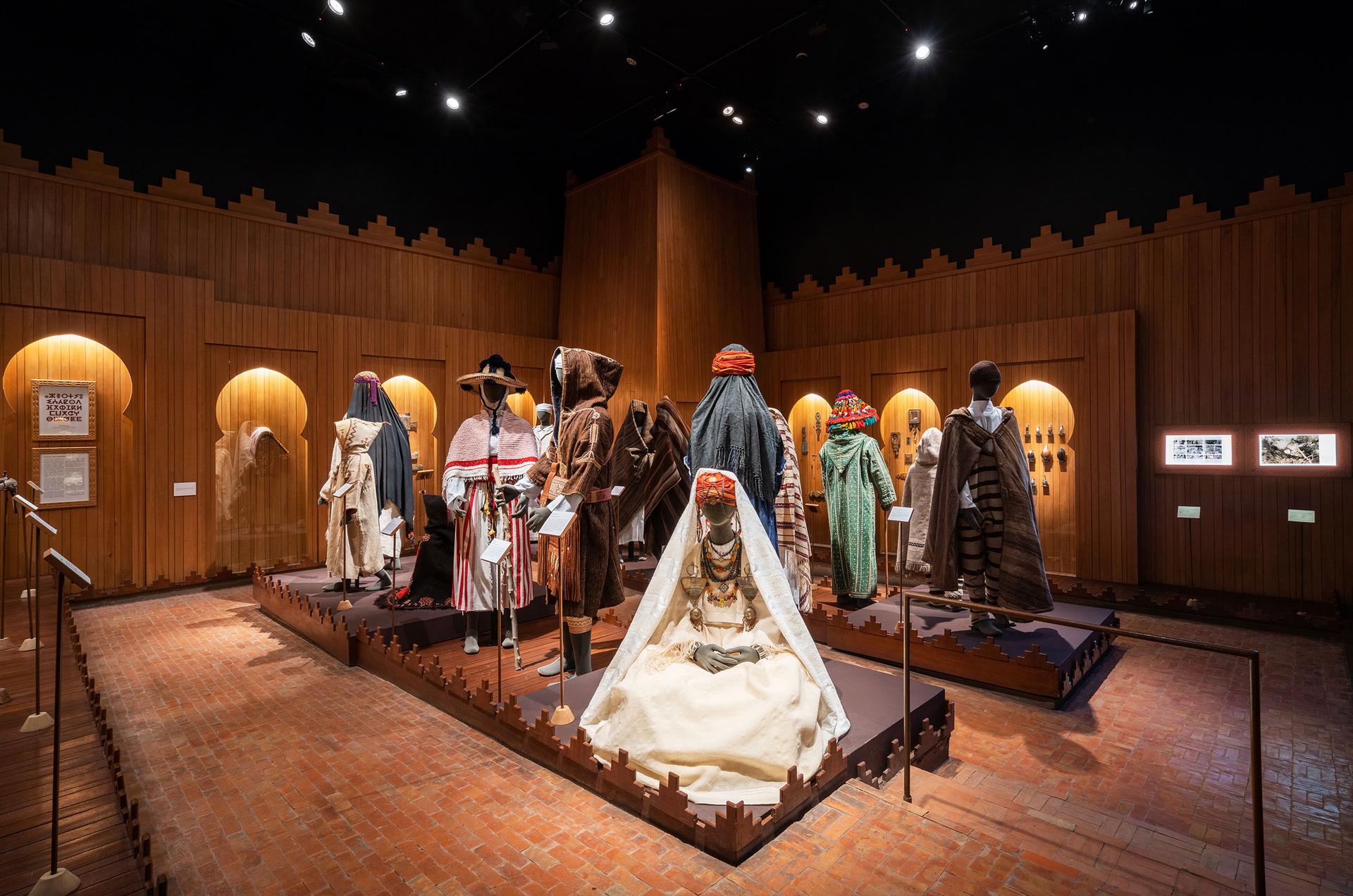
Inside the original Art Deco studio villa at the heart of the Majorelle complex, its cobalt exterior designed in the 1920s by the garden's founder. The collection documents the material culture of Morocco's Amazigh communities, moving from the personal to the ceremonial. Jewelry forms the core: silver fibula pins, amber and coral necklaces, bracelets stacked as worn for festivals and weddings, each piece carrying regional markings legible to those who know how to read them. Textiles, tools, and instruments fill out the rooms. Small enough to absorb in an hour and dense enough to deserve two, it benefits from the intimacy of a space never designed for museum use. Entrance: 60 Dh (Moroccan residents 35 Dh). Hours: daily, 8:30 to 18:00.
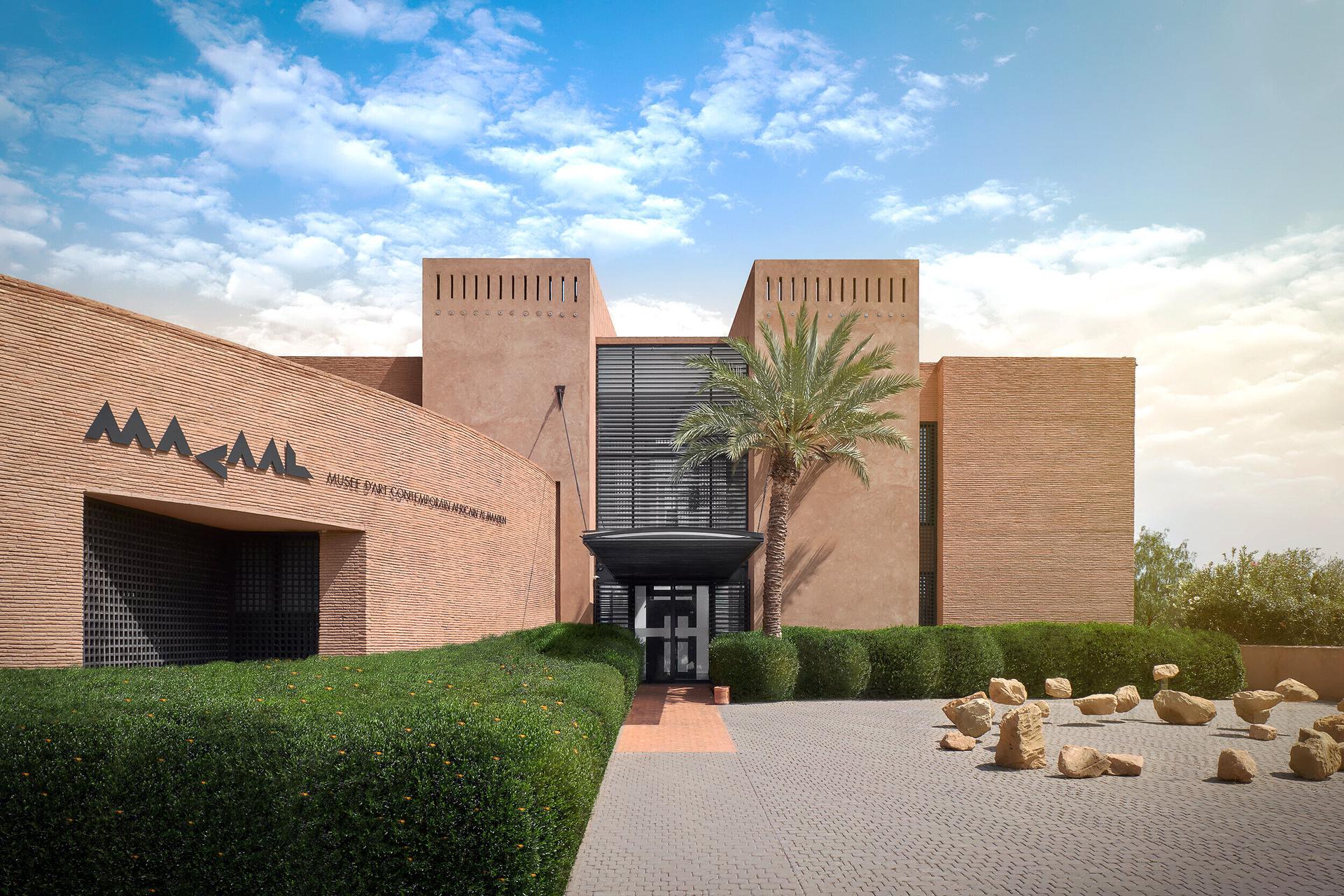
The Museum of African Contemporary Art Al Maaden, south of the city, built around a permanent collection and rotating programme of contemporary work from across the continent. Opened in 2016, it filled a real gap: a dedicated space for African contemporary art in a region where that work has had limited institutional support. The collection runs to painting, sculpture, photography, and video by artists from Morocco and sub-Saharan Africa, with particular strength in work engaging identity, history, and the relationship between tradition and contemporary form. Residencies and educational partnerships extend the programme beyond the galleries. Within a complex of golf courses and luxury amenities, its presence is itself an argument about where this art belongs. Entrance: 120 Dh (African residents 60 Dh, includes the sculpture park), free under 12. Hours: Wednesday to Sunday, 10:00 to 18:00, closed Monday and Tuesday.
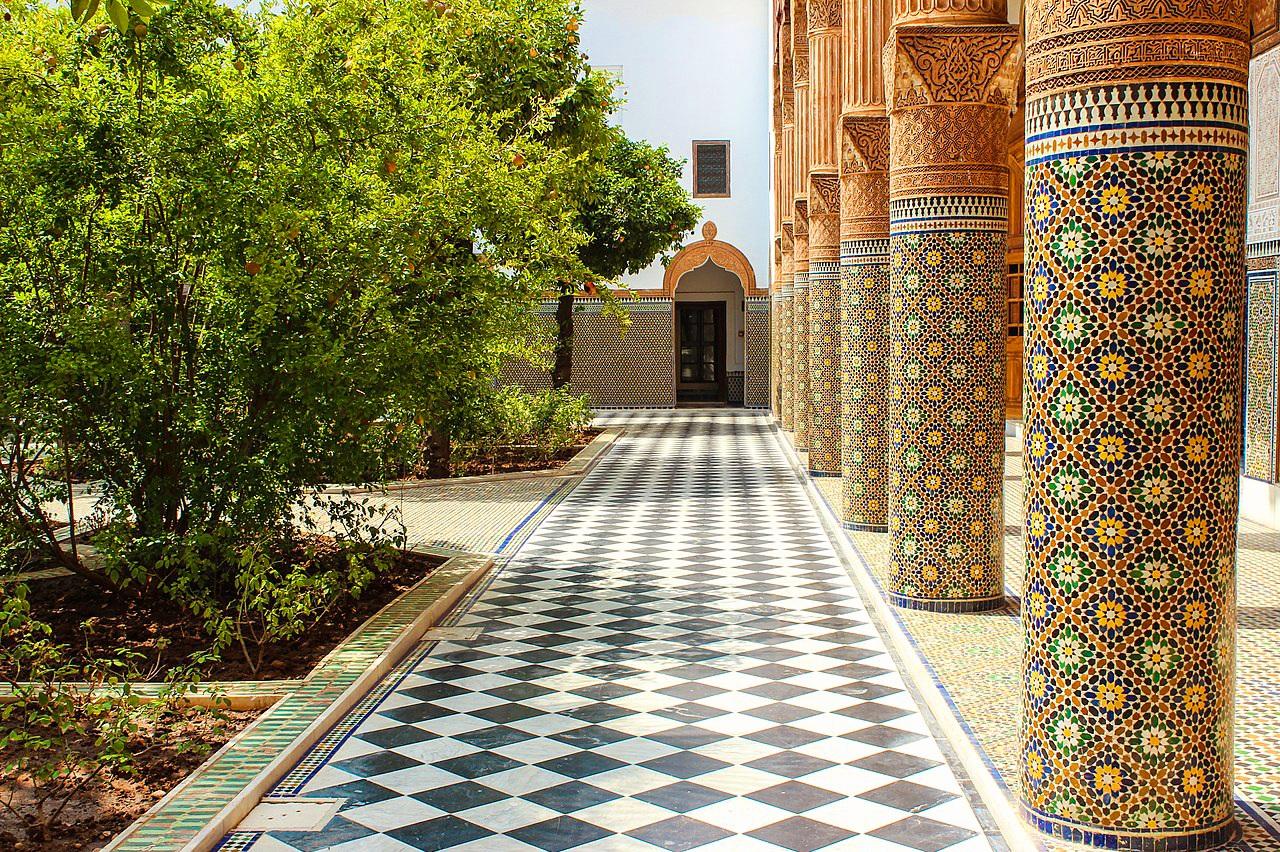
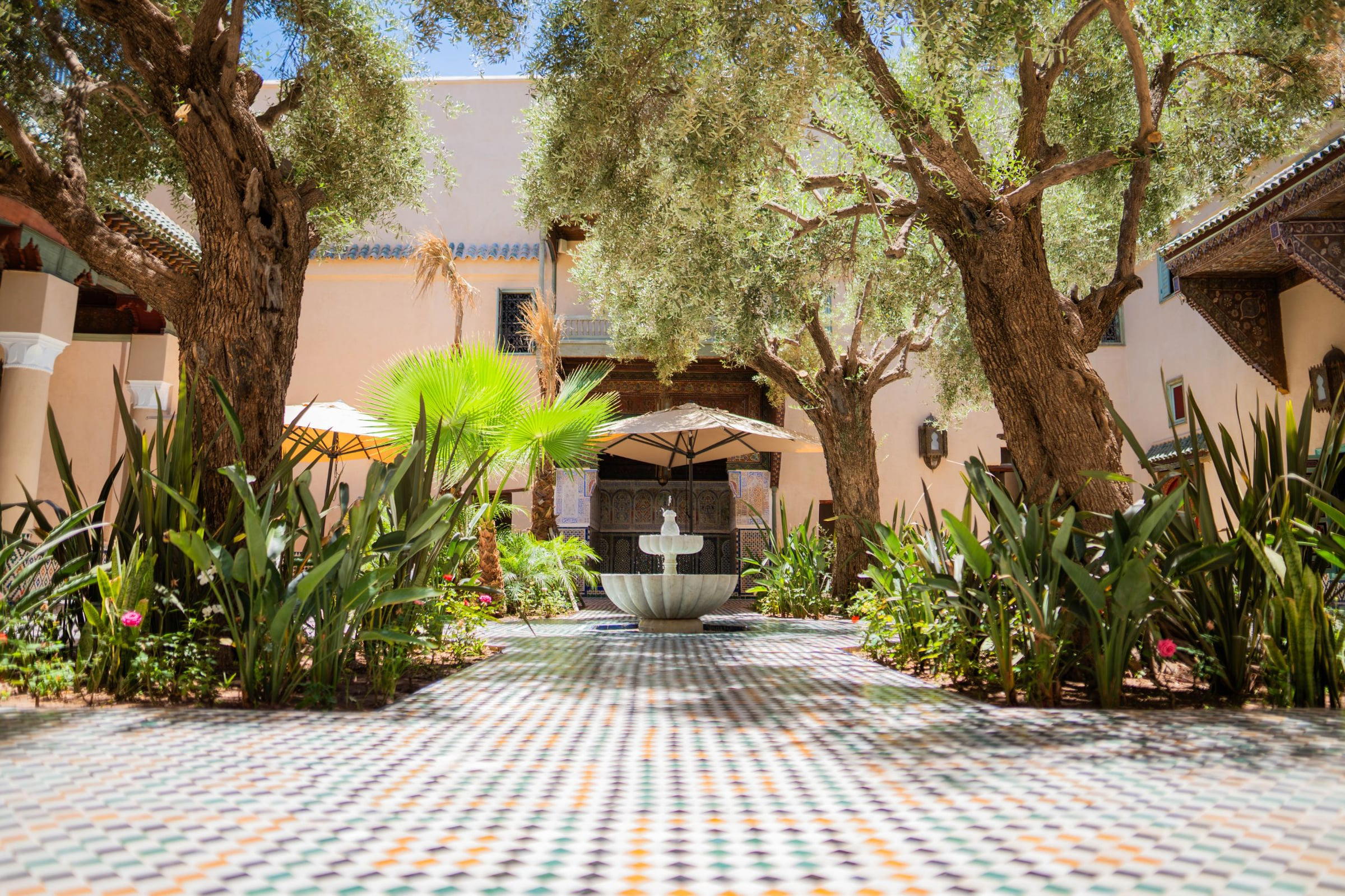
One of the most architecturally complex palatial residences of twentieth-century Marrakech, in the Dar el Bacha quarter near Bab Doukkala, the former residence of Thami El Glaoui, Pasha of Marrakech, restored and reopened in 2017 as the Musée des Confluences, where the building is the primary exhibit. The sequence of spaces is the revelation: a monumental entrance hall gives onto a large tiled courtyard with a central fountain, then smaller courts at different levels, each with its own light. Carved plaster, painted ceilings, and zellige floors accumulate from room to room without ever feeling identical, and the collections occupy them without crowding. Morning light enters the main courtyard at an angle that changes quickly and makes the tilework appear to shift colour, so it is worth arriving early. Entrance: 70 Dh (Moroccan residents 20 Dh, free on Fridays). Hours: daily except Monday, 9:00 to 18:00.
Dar El Bacha, Rue Fatima Zahra, Marrakech 40000
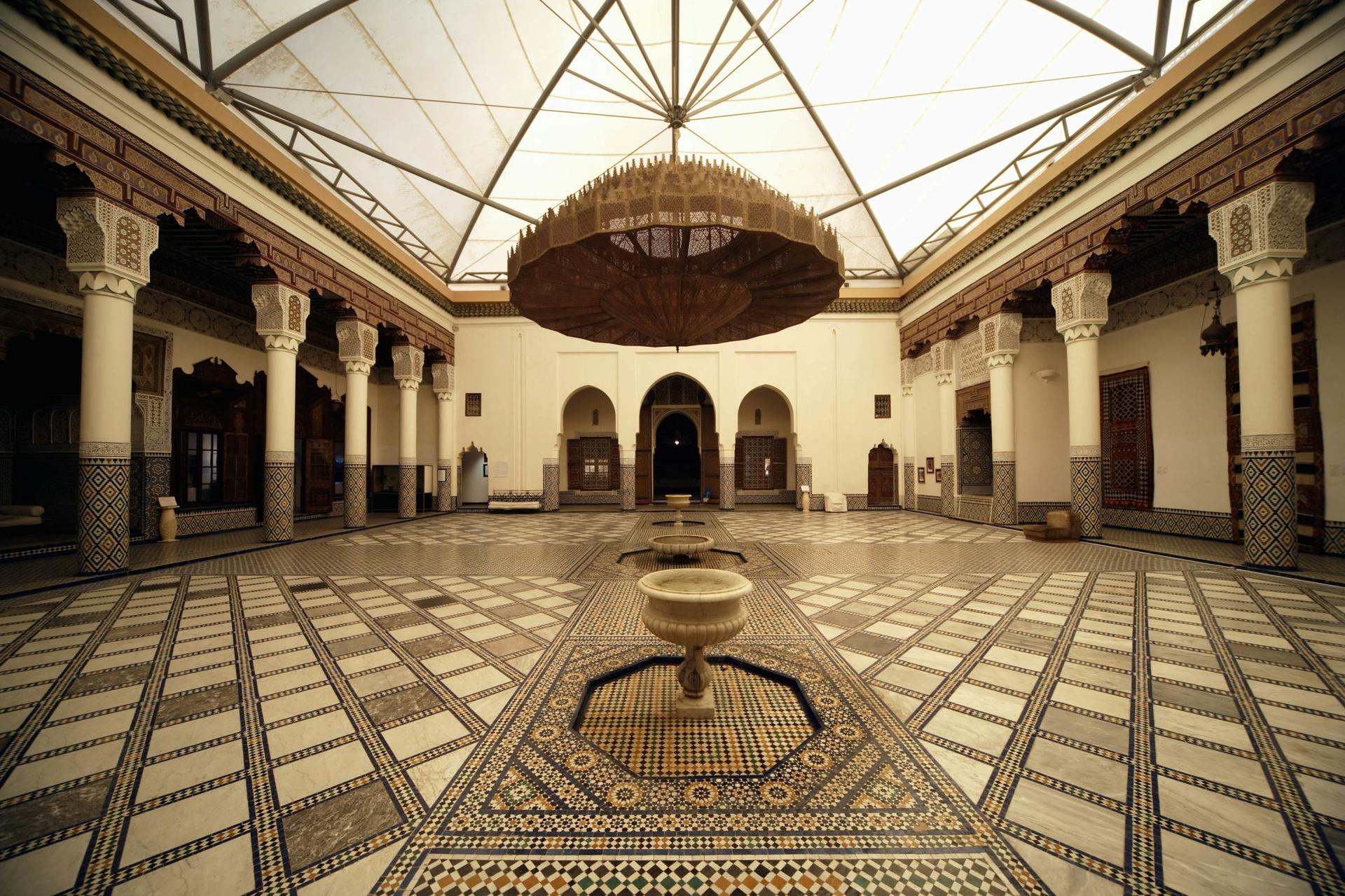
Housed in the late nineteenth-century Mnebhi Palace near Ben Youssef, the building announces itself immediately: one of the largest riad courtyards in the Medina, lit by an enormous spherical chandelier of hammered metal hanging from the carved cedar ceiling above the central basin. The court doubles as an exhibition space for temporary shows. The permanent collection fills the surrounding rooms with Moroccan arts across materials and periods: coins, Fez and Safi ceramics, embroidered textiles, Berber jewelry and carpets, calligraphy. The palace also keeps its historic hammam as an exhibit, the tiled basins and cedar-screened dressing rooms showing how water was built into Moroccan domestic space. Entrance: around 50 to 70 Dh, confirm on arrival. Hours: 9:30 to 18:00.
Place Ben Youssef, Marrakesh 40000
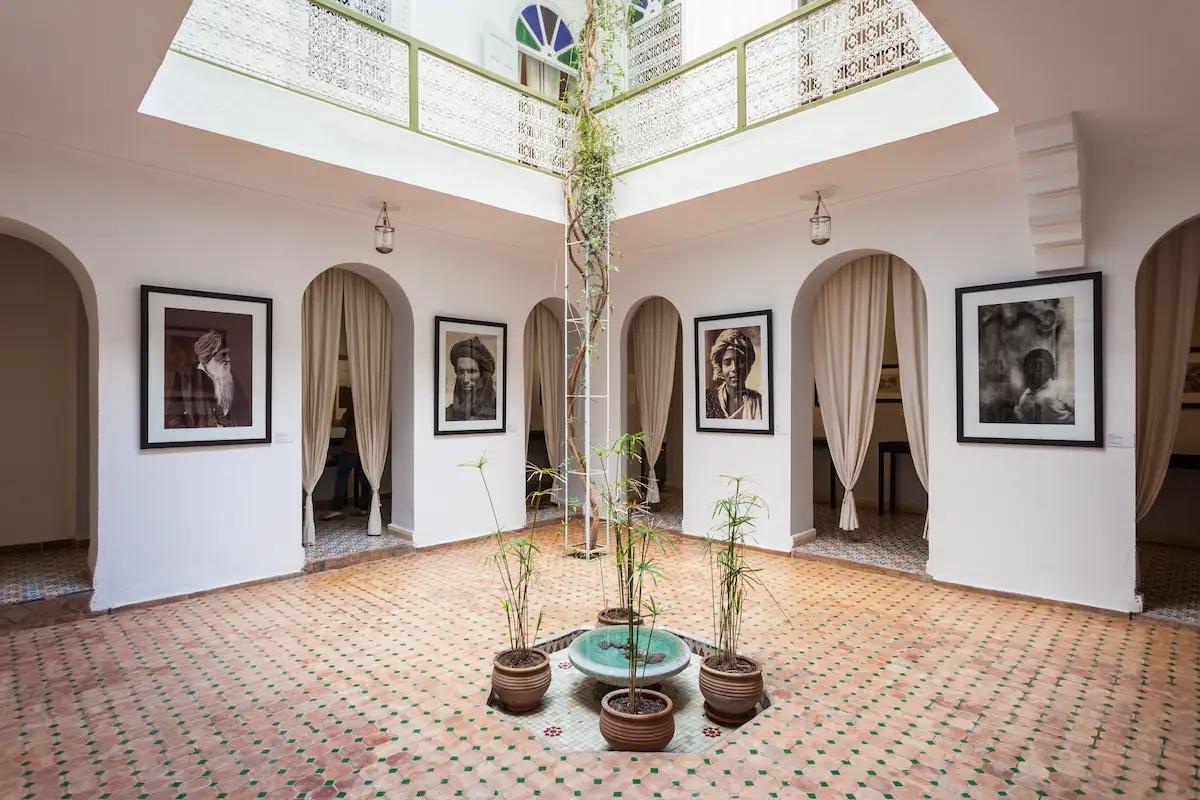
A restored fondouk, a former merchant inn, in the northern Medina near Ben Youssef, holding a collection of historic photographs of Morocco assembled by two private collectors. The archive spans roughly 1870 to 1960, a body of work that is at once historical evidence and a study in perspective. Prints, glass negatives, postcards, and albums move across several floors from landscape and architecture to portraiture and market scenes, captioned with honesty about what is known and uncertain in each image. The rooftop café looks over the northern Medina toward the Atlas, a view rarely accessible at this elevation. On a clear winter morning the mountains feel part of the same composition as the minaret below. Entrance: 80 Dh (residents 50 Dh, under 15 free). Hours: daily, 9:30 to 19:00.
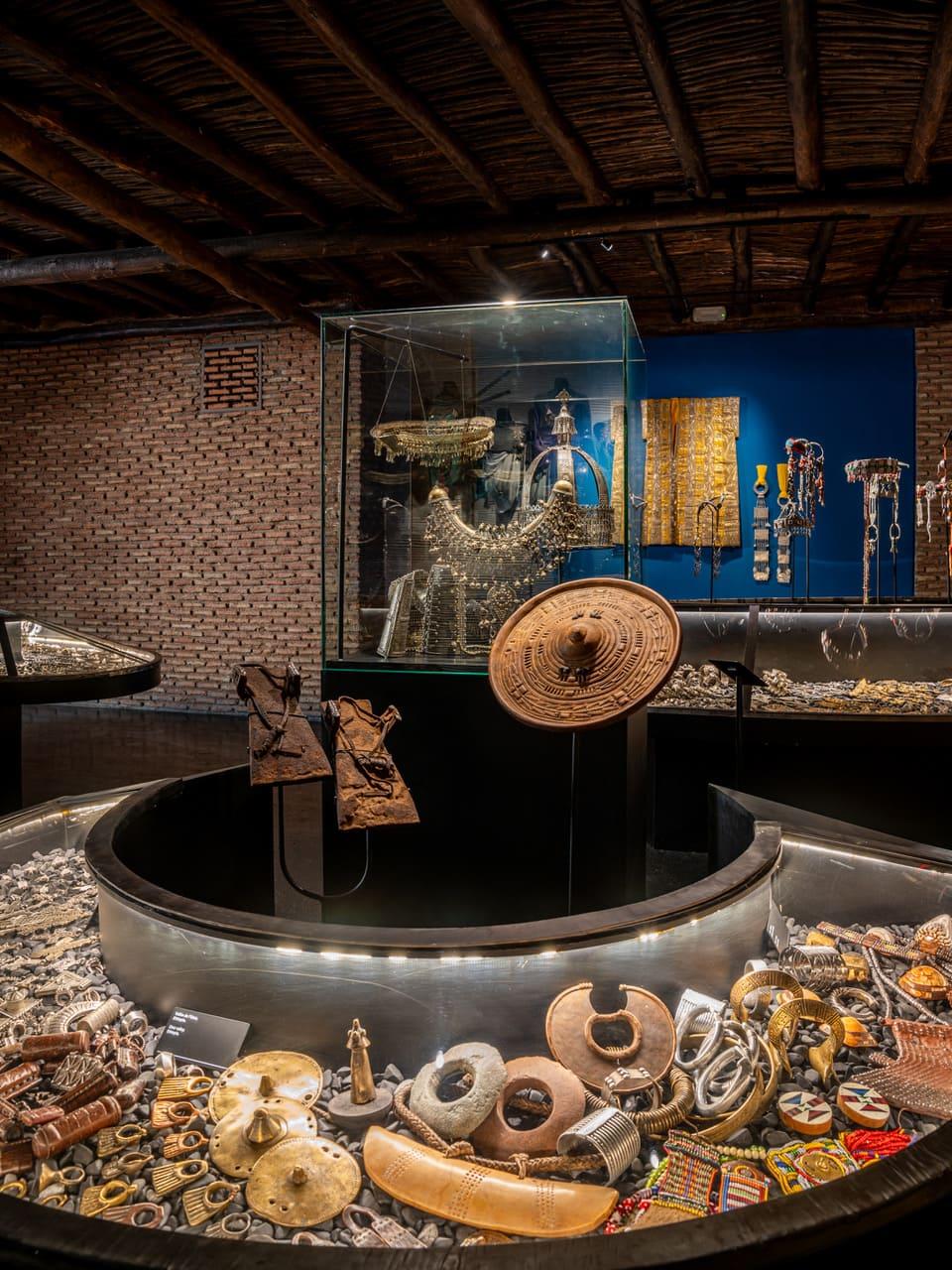
Le MAP, the Monde des Arts de la Parure, is a museum dedicated to adornment: jewelry, ceremonial dress, and the textiles through which cultures across the world have shaped and displayed identity. It occupies a purpose-built structure of three levels in the Kasbah district, designed in terracotta and cedar with a clear debt to the Ben Youssef Madrasa, and opened in 2022. The collection is global rather than regional, drawing roughly three thousand pieces on display from a holding of some seven thousand gathered across more than fifty countries, assembled by the Swiss collectors Marlène and Paolo Gallone. Heavy silver and amber from the Moroccan south sit alongside goldwork, beadwork, and ceremonial dress from sub-Saharan Africa, Asia, and beyond, with the craft process itself explained through pieces shown at different stages of completion. Entrance: 100 Dh (Moroccans and residents 70 Dh, students and under 25 50 Dh). Hours: Tuesday to Sunday, 10:00 to 17:30, closed Monday.
A museum dedicated to the culinary heritage of Morocco, presenting the country's food culture as a layered tradition drawing on Berber, Arab, Andalusian, and sub-Saharan African influences accumulated across centuries. It addresses a domain everywhere visible in the city's markets and communal spaces but rarely examined with the depth its complexity warrants. The exhibitions move through the history and geography of the cuisine: the role of spice routes in shaping the flavour palette, the regional variations that distinguish a Marrakchi table from one in Fez or Tetouan, and the ceremonial dishes tied to specific occasions. It also addresses the social history of food, who cooked, where, and for whom. For visitors whose sense of Moroccan cooking has come only from restaurants, MCAM offers a framework that changes how every subsequent meal reads. Entrance: 80 Dh (one-hour guided tour). Hours: daily, 9:00 to 20:00, last entry 18:00.
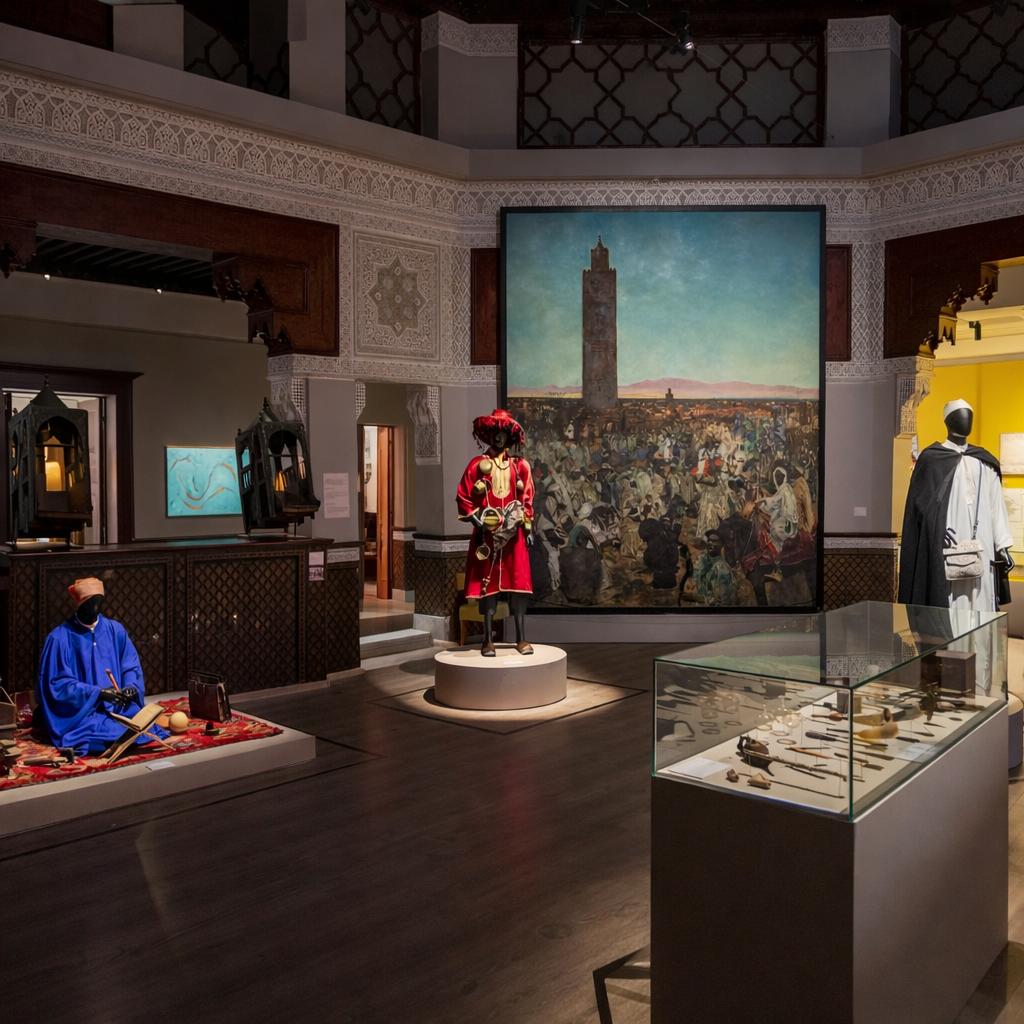
A museum beside Jemaa el-Fnaa dedicated to the square's intangible heritage, the living traditions of storytelling, music, and performance recognised by UNESCO in 2001. It exists to give depth to what can be watched, but not fully understood, by simply standing in the space outside. The exhibitions document the halqa circle storytellers who held audiences through voice and gesture alone, the Gnawa musicians whose ceremonies blend African spiritual practice with Islamic tradition, the herbalists, acrobats, and water sellers of the square's human ecosystem. Recordings gathered over decades from practitioners no longer active make this the strongest argument for visiting Jemaa el-Fnaa with prior knowledge rather than without. Entrance: 30 Dh (reduced 15 Dh, day pass 50 Dh), tickets online. Hours: Tuesday to Sunday, 10:00 to 18:00, closed Monday.
J2G6+385 Jamaâ El-Fna, Marrakesh 40000
Gardens
Seven gardens. The Jardin Majorelle and Le Jardin Secret are central; the Ménara and the botanical worlds along the roads south, Anima, Cactus Thiemann, and Jardin Ocre, lie beyond the walls. The cooler hours, early morning and late afternoon, reward all of them.
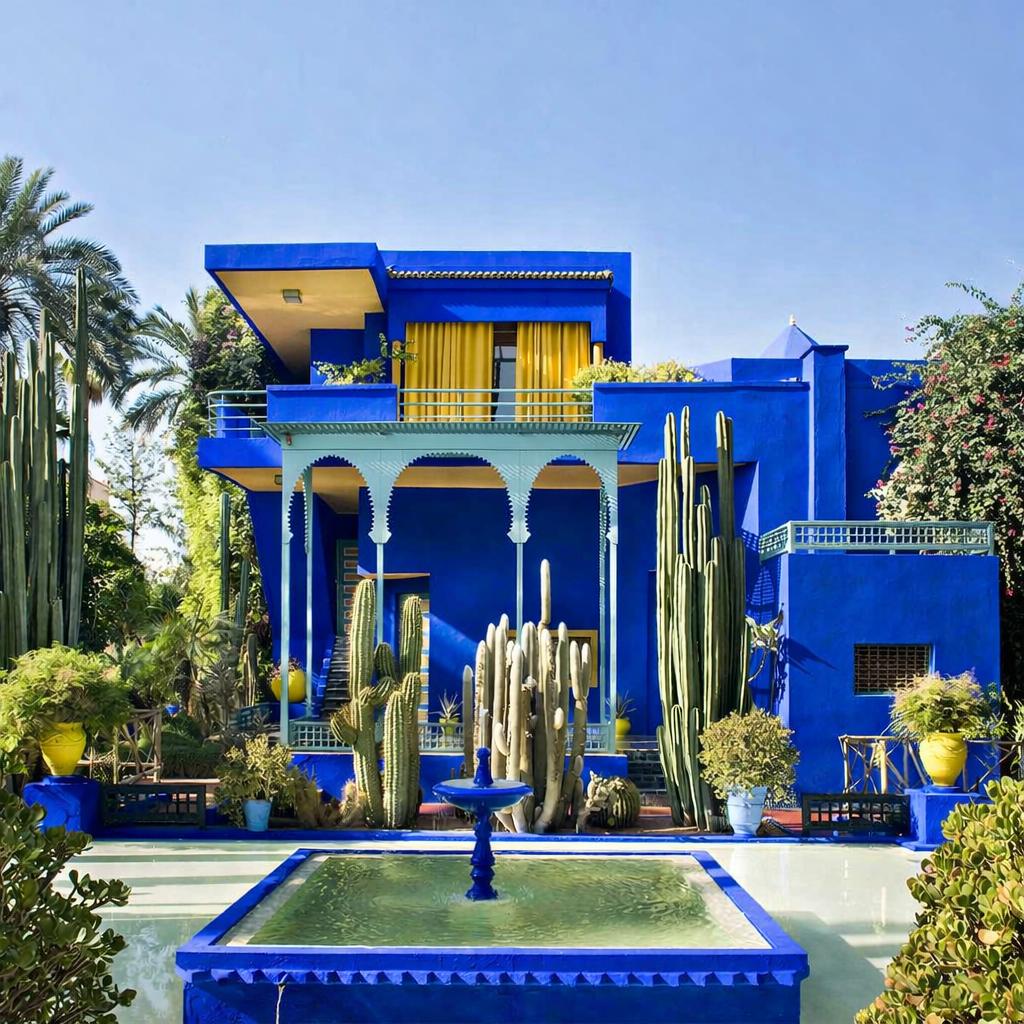
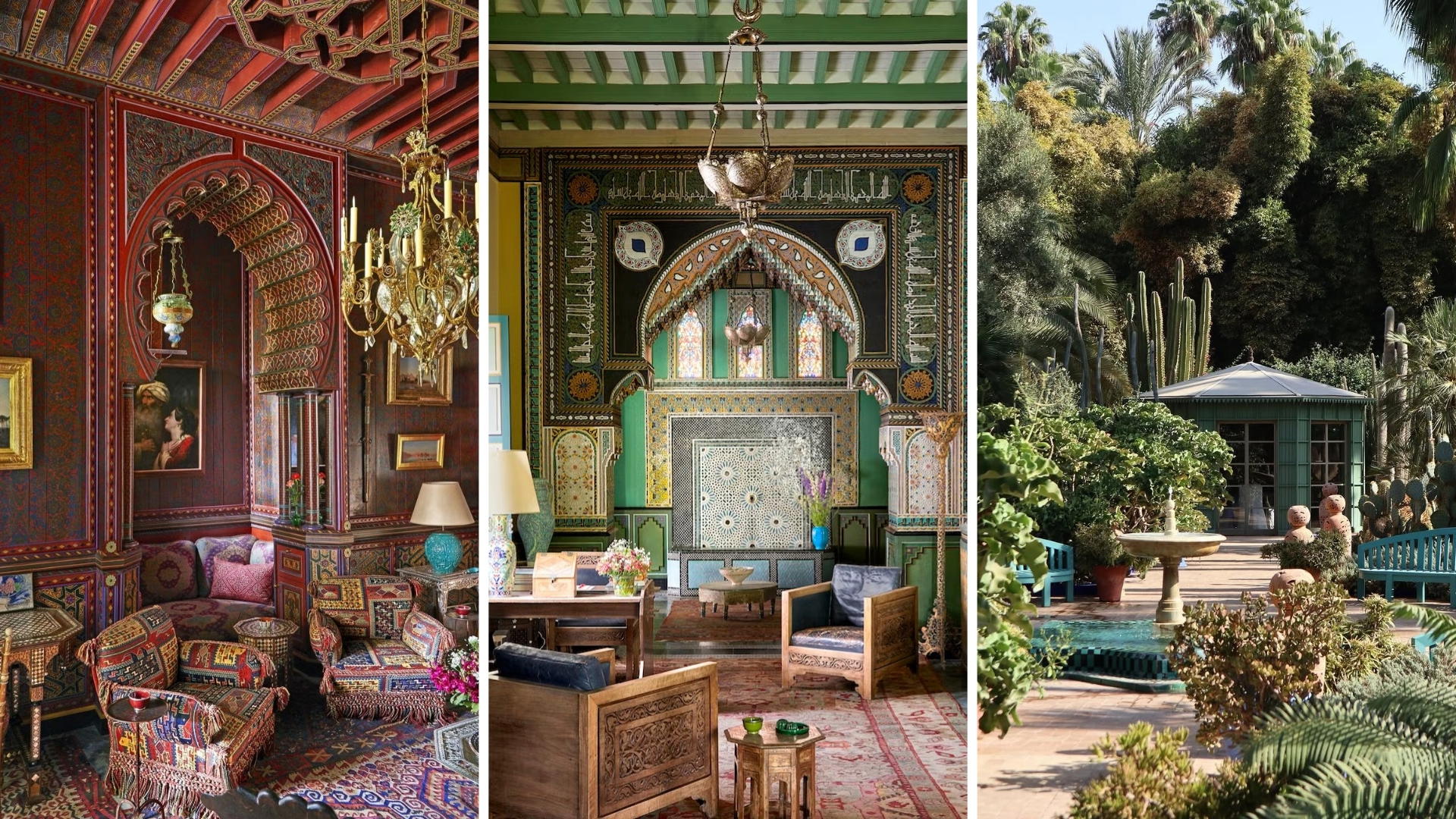
One of the great gardens of the twentieth century, a garden of roughly nine thousand square metres in Gueliz that the French painter Jacques Majorelle began in the 1920s and that two fashion designers saved from development in 1980. The cobalt blue covering the studio and structures has become one of the colours most associated with Marrakech, a shade its creator eventually registered as his own. The planting is as considered as the colour: bamboo thickets that hold sound, water lily pools, rare palms from across the tropics, bougainvillea trained over pergolas. In the early morning, before the light goes flat and the crowd arrives, the combination of cobalt and vegetation has a quality photographs struggle to reproduce. The Berber Museum sits in the studio, and the YSL Museum is steps away. Entrance: 170 Dh (Moroccan residents 75 Dh); combined with the YSL Museum and Berber Museum, 330 Dh. Hours: daily, 8:00 to 18:30, last entry 18:00.
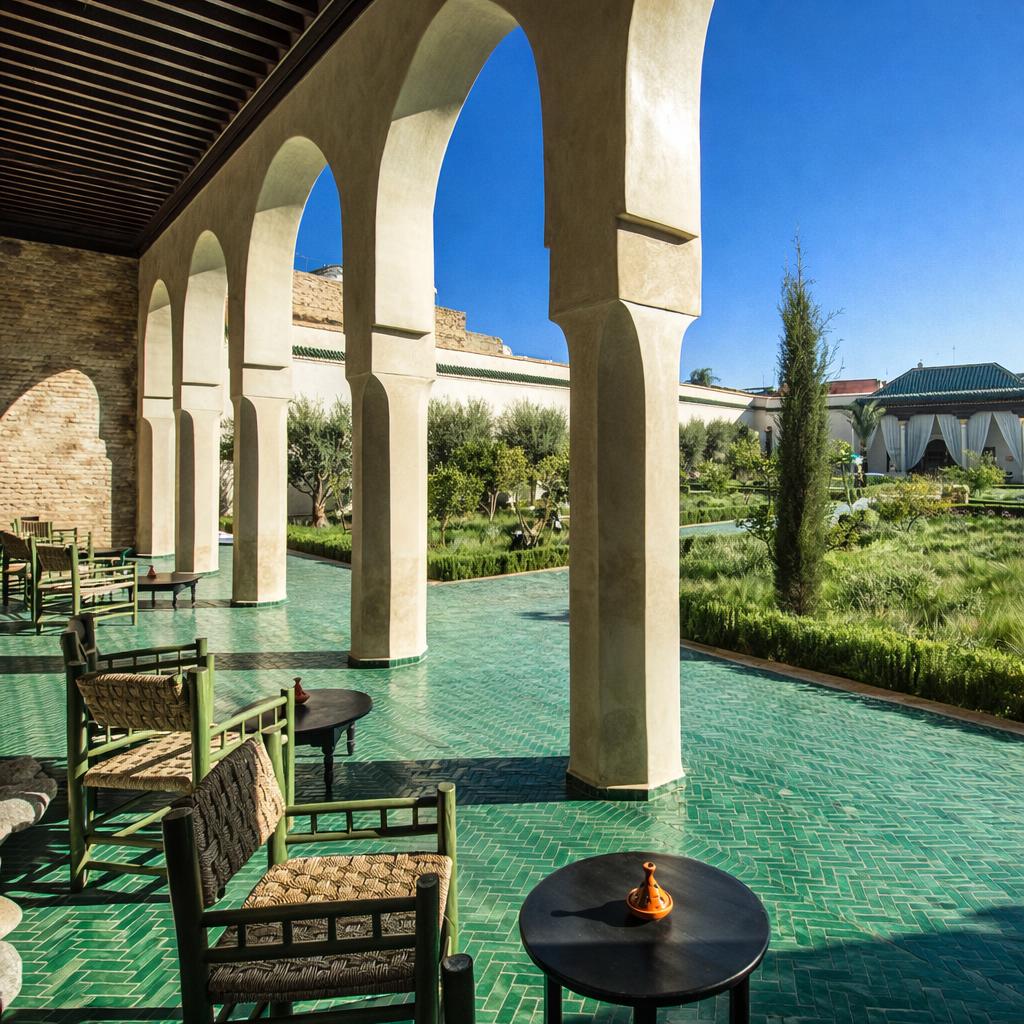
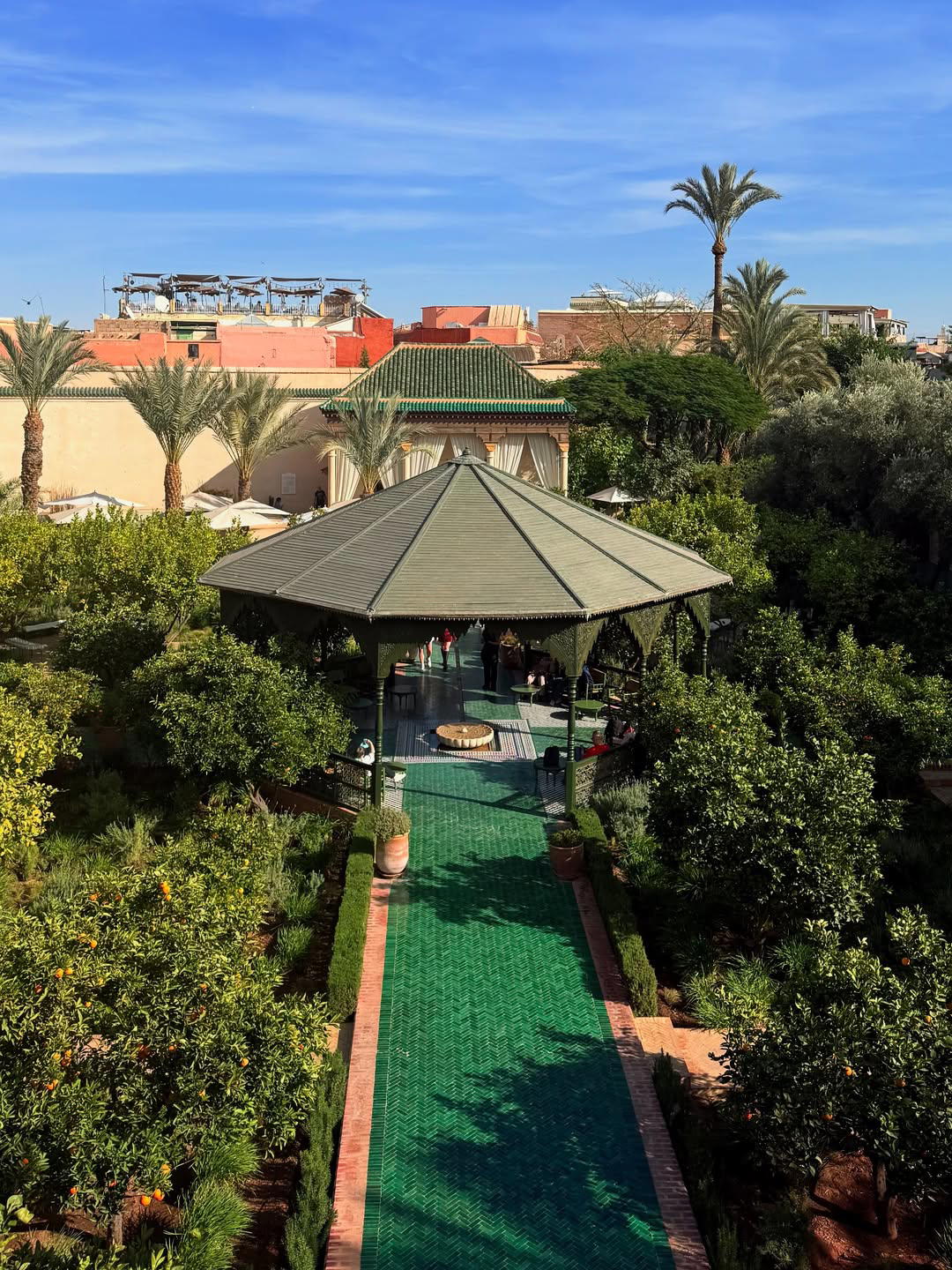
A historic riad compound in the heart of the Medina, reached through a narrow derb that gives no hint of its scale. Laid out in the sixteenth century as part of a larger palace, it fell into decades of neglect before a careful restoration, completed in 2016, returned it to something close to its historical form. Two gardens occupy the compound: an Islamic garden of axial paths and central fountains, and an exotic garden assembled with a more romantic logic. Between them stands the water tower that once fed the fountains, now one of the site's most interesting structures. Its rooftop terrace looks toward the Koutoubia, and the garden is one of the few places in the Medina where sustained quiet is possible at midday. Entrance: 100 Dh, plus 40 Dh for the tower (Moroccan residents 50 Dh). Hours: 9:30 to 19:30 from March to September, shorter in winter.
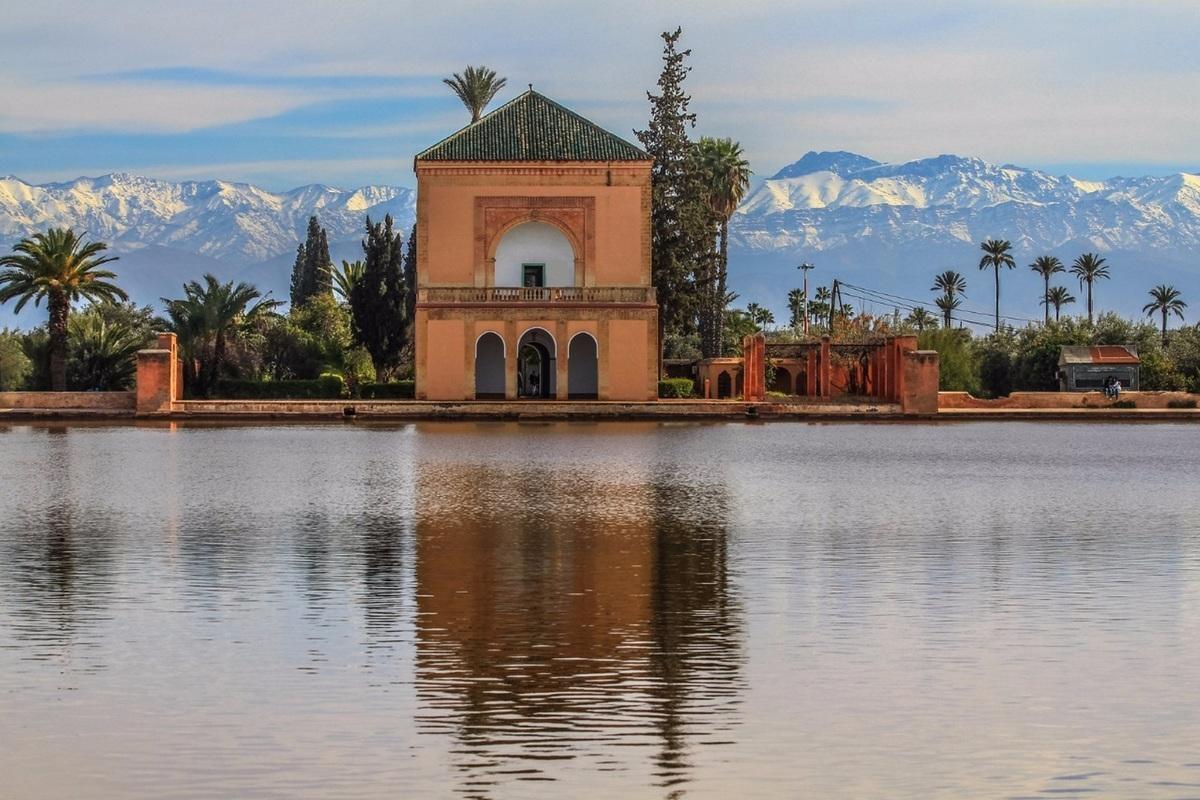
A vast olive grove at the western edge of the city, established in the twelfth century by the Almohads and maintained ever since. The trees are old enough to be massive, and the grove stretches far enough that the city noise fades to nothing after a few minutes of walking. At its centre is a large rectangular basin fed by an ancient underground network still in use, with a nineteenth-century green-roofed pavilion at its edge and, on clear days, the snow-covered High Atlas completing the view behind. The opposite of the curated intensity of the Medina, the Ménara is large, unpretentious, and quietly ancient, and the families who come in the afternoons treat it as their own. Entrance: free, with a small fee for the pavilion. Hours: open daily during daylight.
Les Jardin De La, Marrakesh 40000
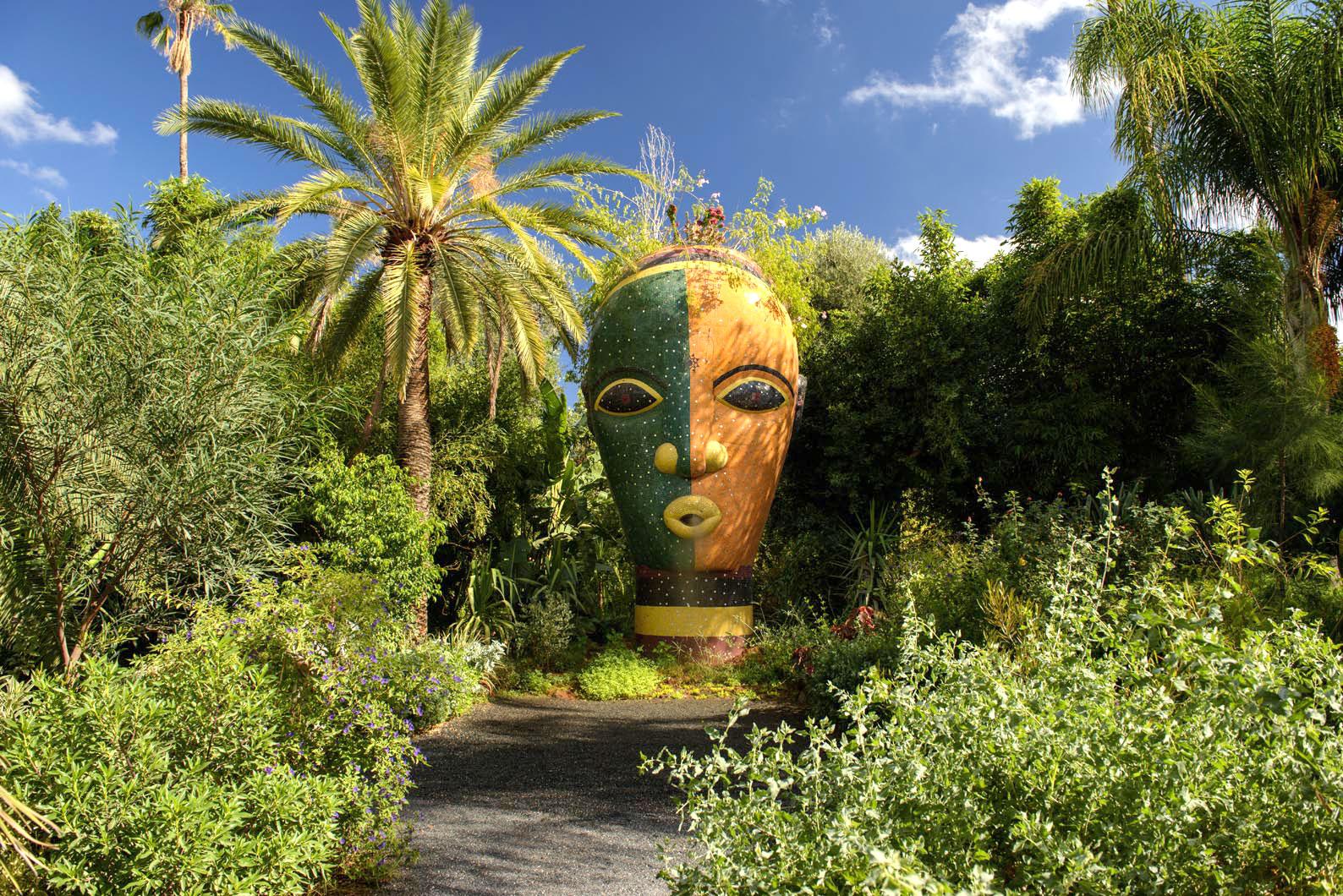
Along the Ourika road, some twenty-seven kilometres south of the city, less a conventional garden than a meditation on botanical abundance: dense tropical planting, towering palms, bamboo corridors, and water channels that follow the slope of the land. Sculptures appear at turns in the path, placed by someone who understands both horticulture and meaning. The planting is extraordinary in breadth, gathered from across Africa, the Americas, and Asia, reaching heights that make the garden feel far from Morocco, until the Atlas light and the ochre walls through the canopy return you to where you are. A morning here, or the cooler late afternoon, tends to stretch longer than intended. The drive along the Ourika road is part of the experience. Entrance: 140 Dh (residents 60 Dh), with a free shuttle from the Medina. Hours: daily, 9:00 to 18:00.
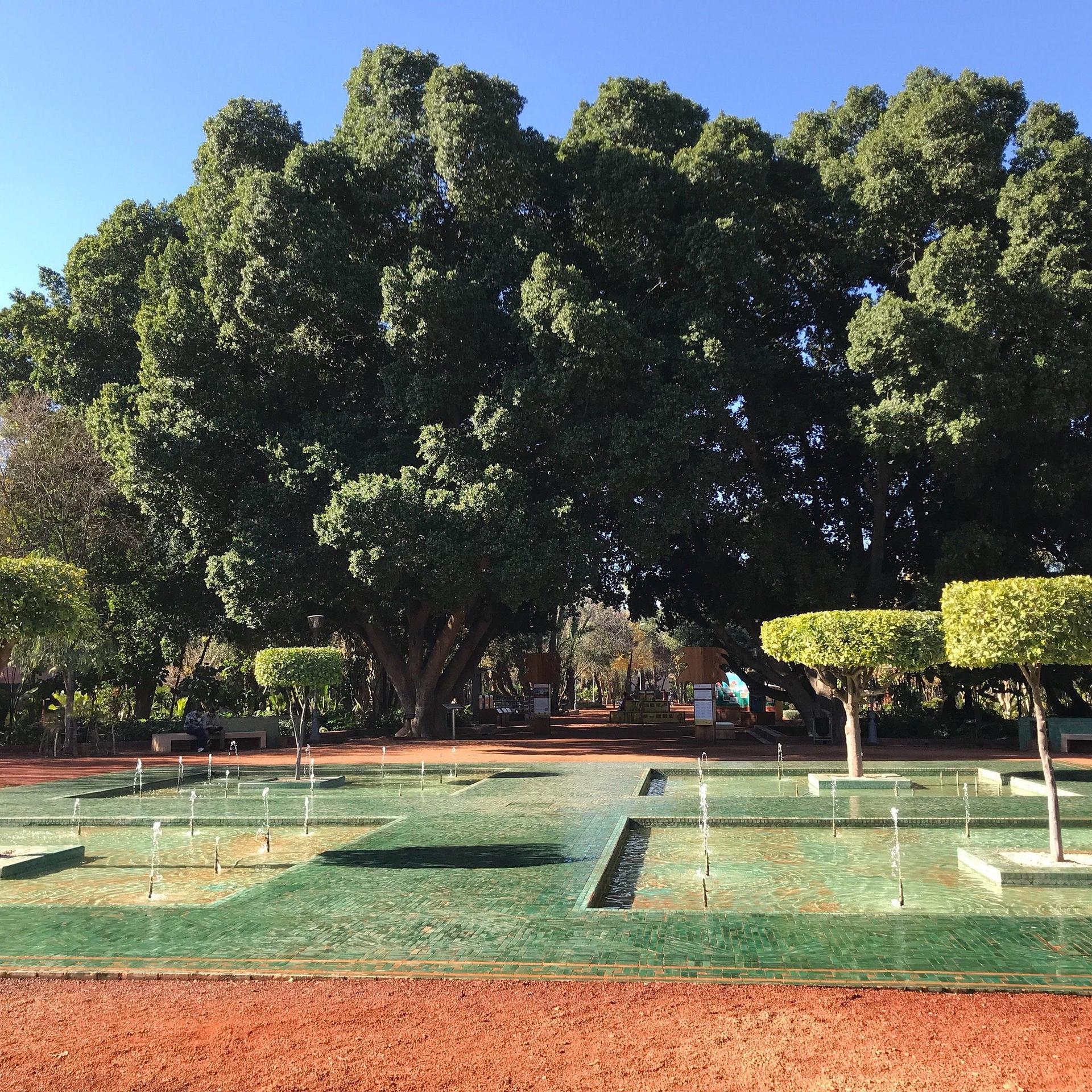
A public garden on Avenue Mohammed V, between the Koutoubia and Gueliz, one of the green spaces the city has kept as an urban lung at the edge of the Medina. Reopened as the Cyber Parc in 2005, its eight hectares of mature palms and olive trees give shade that transforms the space at midday, with benches and paths that make it possible to spend time here without any particular purpose. It is not a destination the way Majorelle or the Ménara are, but it offers something they cannot: the atmosphere of a genuinely local space, used by Marrakchi residents in the ordinary course of the day, with no ticket booth and no entrance queue. Go in the cooler hours, before the midday heat, when the birds are more audible than the traffic. Entrance: free. Hours: open daily during daylight.
Boulevard mohamed V, Marrakech 40000
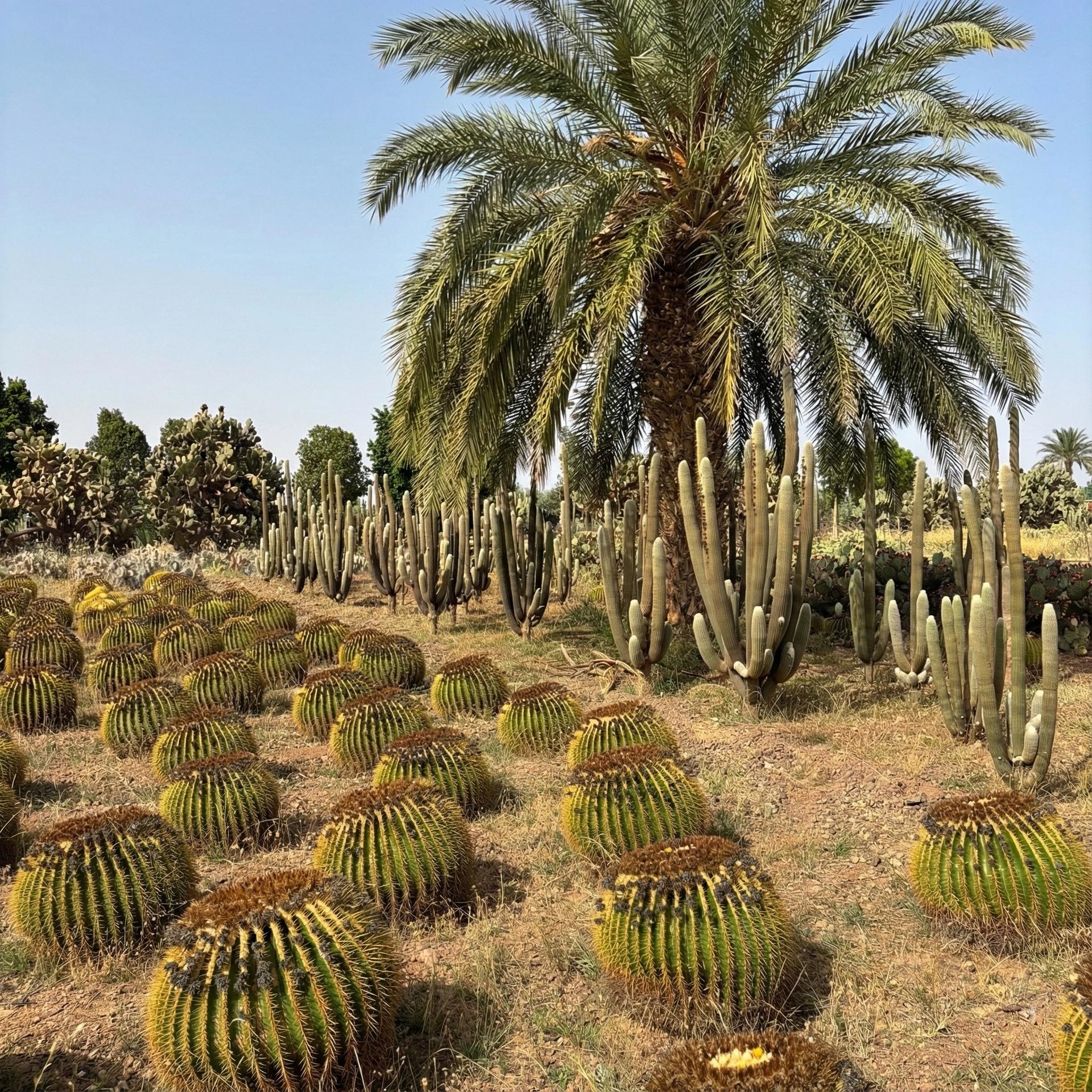
A private botanical collection along the Casablanca road, ten kilometres northwest of the centre, and one of the most remarkable concentrations of cacti and succulents in North Africa. Assembled over decades, its scale is hard to register on arrival: columns and candelabras of cactus reaching several metres, agaves with leaves like grey blades. The collection draws from across the Americas, Africa, and Madagascar, arranged with an eye for form that makes the geography of succulent plants strangely legible. The dry Marrakech climate has proved hospitable, and many specimens have reached dimensions rarely seen outside specialist collections. Not widely publicised and outside the mainstream circuit, it suits visitors with a genuine interest in botany or in landscape beyond the conventional. Entrance: by reservation only, price on request. Open Monday to Saturday by appointment, closed 3 to 30 August.
en face du grand stade de Marrakech, Km 10 Route de casablanca, Ouahat Sidi Brahim 40000
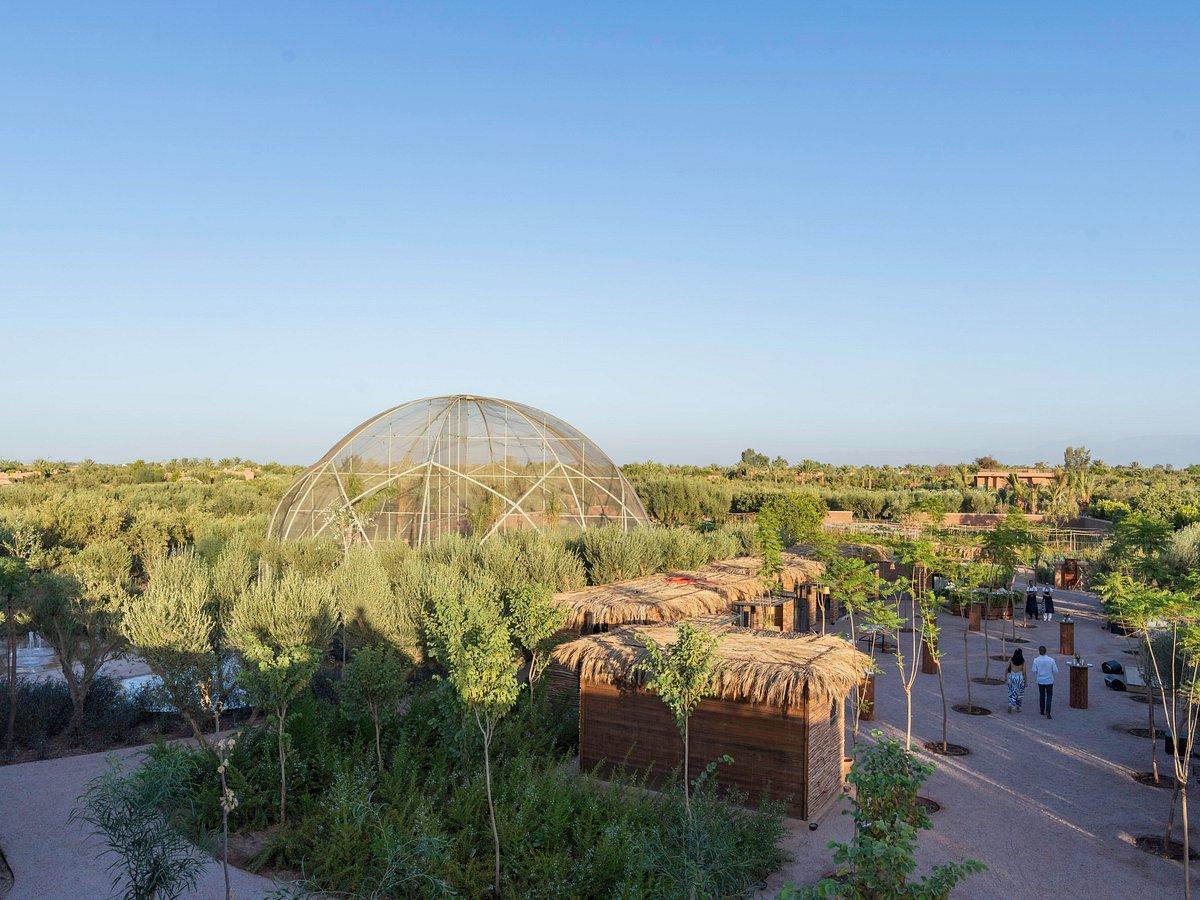
On the southern edge of the city, named for the warm terracotta tones of Marrakech's walls and soil, a botanical and educational garden opened in 2025, assembled with attention to the specific conditions of the local climate: arid, sunny, long dry periods broken by short, intense rain. Rather than specimen displays, it presents plant communities grouped by habitat, anchored by Moroccan natives from the High Atlas foothills, the pre-Saharan zones, and the Atlantic coast. The effect is more educational than decorative, though the planting has a formal care that makes it beautiful in its own right. In the morning, before the heat rises, it holds a silence unusual in a city this dense. Entrance: 140 Dh (Moroccan residents 80 Dh). Hours: Tuesday to Sunday, 9:00 to 18:00, closed Monday.
Souks and Squares
The market heart of the Medina, where the sights are not monuments but the trade itself. Both reward weekday mornings, when the density is lower and the working transactions are still visible.
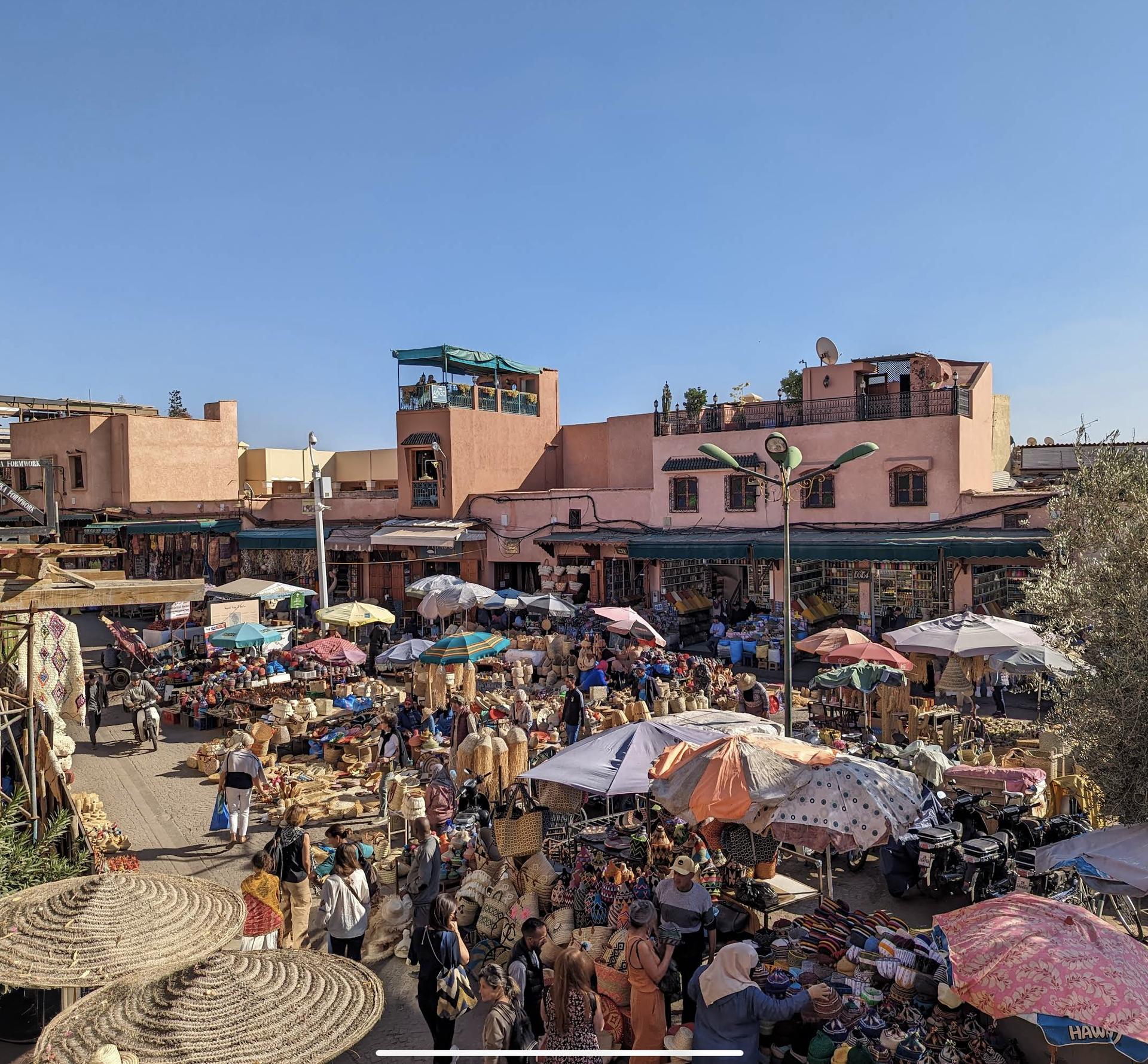
Known also as Rahba Kedima, this square opens in the middle of the souk district as a relief: rough paving and afternoon sun after the covered passages around it. Smaller and less theatrical than Jemaa el-Fnaa a few minutes south, that reduction in scale is exactly its character. The vendors deal in spices, dried herbs, and folk remedies sold here for generations. Café tables line the raised edges, and in the afternoon the light comes at an angle that makes the coloured spice mounds glow. Carpet sellers occupy some of the surrounding buildings, and the terrace views from a couple of the cafés above are among the more useful vantage points in the souk. It works best mid-morning, when the heat is manageable and the vendors are most attentive. Entrance: free, public square. Hours: open access, individual stalls keep daytime hours, quieter on Fridays.
Place des epices Marrakesh 40000
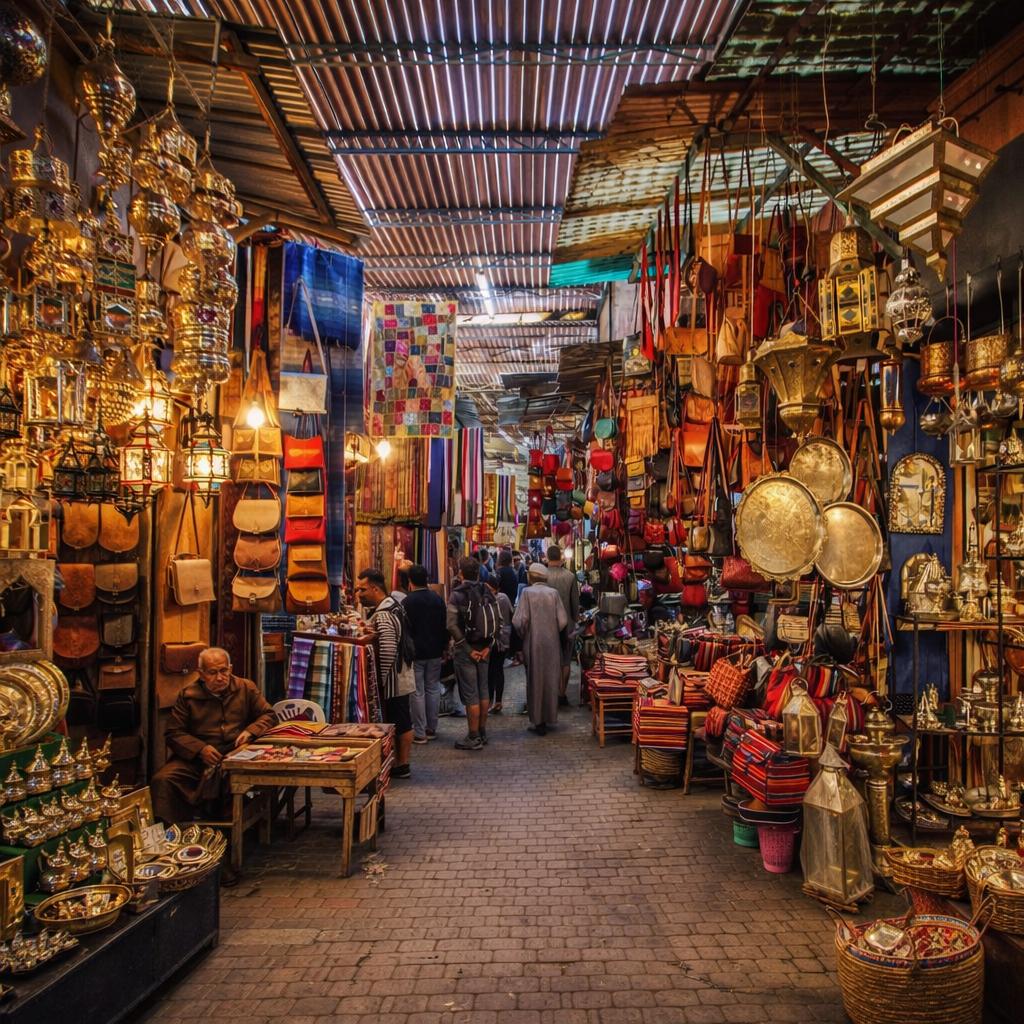
The main artery of the Medina's market district, the principal covered passage running north from the edge of Jemaa el-Fnaa into the labyrinth of specialised souks. The name refers to the textile trade that once dominated it, though what is sold now covers a broader range of craft and commercial goods. The passage is roofed with a latticed structure that filters the light to a warm, intermittent quality, opening and contracting at intersections where routes diverge toward the leatherworkers, the dyers, the spice district, and the metalwork and woodcarving quarters. Its logic looks labyrinthine but becomes legible after several visits. Go on a weekday morning, when wholesale transactions are still visible alongside the retail trade. Entrance: free, public street. Hours: open access, shops keep their own daytime hours, quieter on Fridays.
Souk Semmarine, Marrakesh 40000
You may also like…